Ants in a commercial kitchen aren't just annoying; they're a food safety risk, a compliance problem, and a quick way to lose customer trust. When kitchen ant control is handled with home remedies or random sprays, you can end up contaminating food while still failing inspections.
The good news is you don't need to choose between a clean kitchen and a safe one. With the right hygiene habits, targeted products, and clear rules for staff, you can keep ants out of kitchens, restaurants, and food businesses without putting food or people at risk.
Why Ants In Food Areas Are More Than A Nuisance
In a home, a few sugar ants on the counter are irritating. In a restaurant or cloud kitchen, they signal gaps in your restaurant pest control system and can invite questions from FSSAI inspectors. Ants move through drains, garbage, and cracks, then walk over chopping boards and food-contact surfaces.
They can spread bacteria, trigger complaints, and quickly reach the dining area or service counter. Even a small trail around a buffet line or juice counter suggests your food safety pest control standards aren't being taken seriously, the same standards covered in our guide to HACCP and pest control.
Failed an audit because of ant activity? Get an audit-ready ant control plan built for your kitchen.
Book Free Inspection Call NowSafe Vs Unsafe Ant Control In Food Premises
Most food businesses start with what they know from home: spray, wipe, forget. In commercial spaces, that approach usually fails and can violate basic commercial ant control guidelines. Aerosol sprays on counters, shelves, or inside fridges are a red flag in any food audit.
Safe control focuses on three things: stop access, remove attraction, and apply low-toxicity baits where ants actually move — the same core logic behind residential ant control, just applied at commercial scale. This sits alongside your regular kitchen pest control plan instead of replacing it.
Where Sprays Go Wrong In Kitchens
Contact sprays kill the ants you see, but they rarely reach the nest. In busy kitchens, staff often spray near food prep areas, then wipe quickly and continue work. This creates chemical residues exactly where they shouldn't be and undermines any professional ant treatment schedule you've put in place.
Sprays also make ants scatter and split into multiple colonies — the same pattern we cover in why ants keep coming back after spraying. You think you've solved the problem because the trail disappears, then two weeks later you find ants inside storage racks, bain-maries, or display counters.
Step-By-Step Safe Kitchen Ant Control Workflow
Start by treating ants as a symptom, not the root problem. A structured workflow helps your team handle incidents consistently and shows auditors you take professional ant control seriously.
Here's a practical sequence you can train every shift supervisor to follow when ants appear during service.
1. Contain The Area And Protect Food
First, stop service from the affected section. Cover or discard exposed food, depending on your food safety policy. Then record the incident: time, area, and what ants were seen on. This sounds basic, but in commercial pest control audits, documentation is one of the first things checked.
Place temporary signs or barriers so staff don't keep walking through the area and spreading ants into other parts of the kitchen or serving zone.
2. Clean Trails, Then Remove What Attracts Ants
Follow the visible trail with a bright torch. Wipe ants and trails with hot water and a food-safe detergent, not with pesticides. The goal is to remove pheromone tracks and everything that drew them in before you think about long-term pest management measures.
Pay special attention to spill-prone spots: sugar stations, tea and coffee counters, bar guns, sauce shelves, and under tandoor or fry stations where crumbs and oil build up between deep cleans.
3. Use Gel Baits Correctly, Away From Food
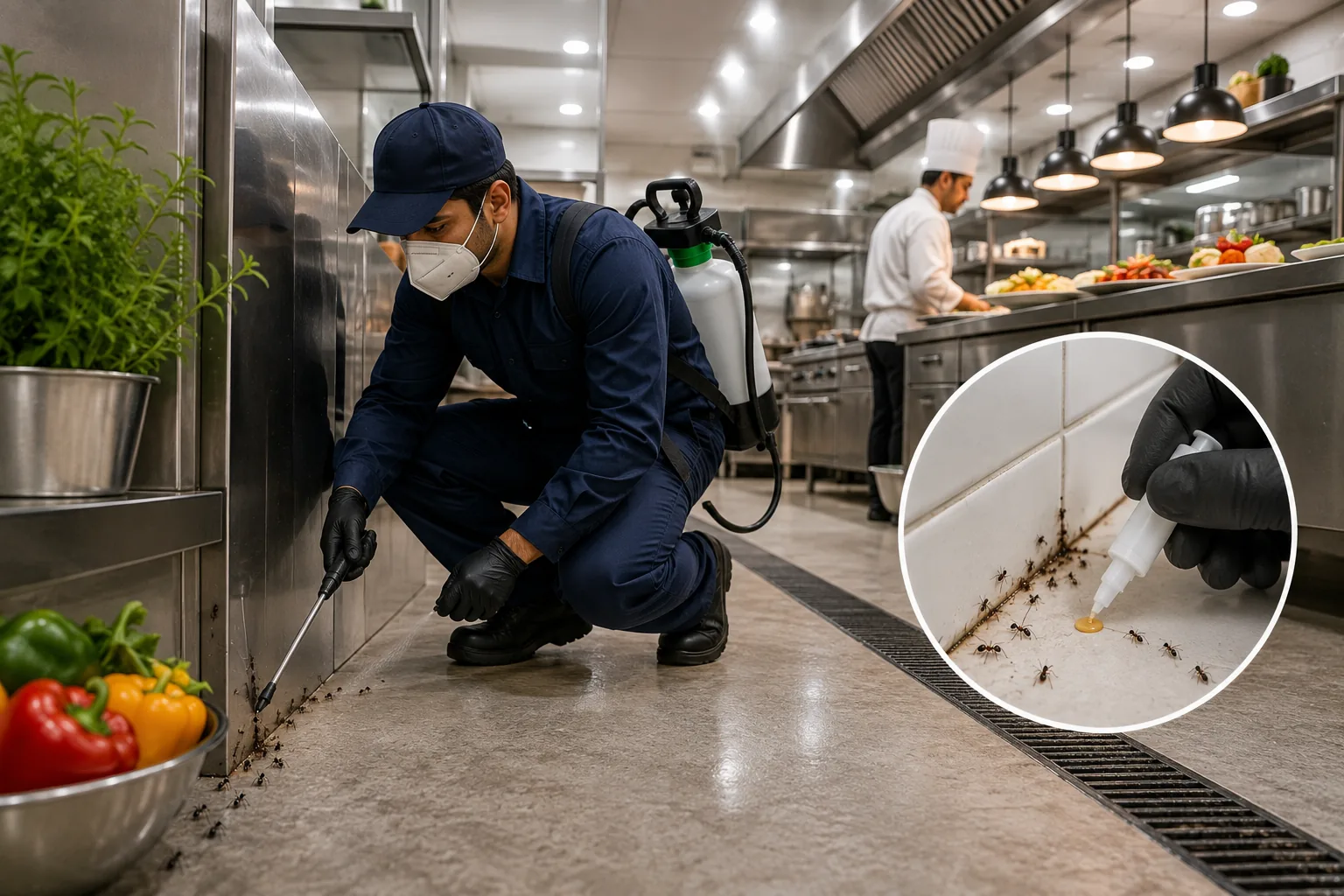
For ongoing control, gel baits are usually safer than sprays in food premises. Place tiny bait spots near ant trails but away from food-contact surfaces, inside cracks, under equipment legs, or along wall edges planned as part of your ant exterminator service.
Don't clean or spray right over bait placements for a few days. The aim is for worker ants to carry bait back to the colony, reducing activity across the area instead of just killing ants you can see.
Seeing ants near your dishwash or storage area daily? Bring in Standard Pest Control before it affects service or inspections.
Book Free Inspection WhatsApp UsHygiene Habits That Keep Ants Away
You can't fully stop ants in Indian cities, but you can make your premises a low-priority target. Most successful food business pest control programs pair regular treatments with very boring, very consistent cleaning, the kind covered in our sanitation best practices for commercial pest prevention.
The goal is simple: no easy food, no easy water, no easy shelter. That comes down to routines, not one-off deep cleans.
Daily Practices For Front-Of-House And Kitchens
- Empty and wash drip trays under coffee machines, juice dispensers, and beer taps.
- Clean sugar and chutney stations between every service, not just at closing.
- Use tight-fitting lids on storage bins holding sugar, jaggery, flour, and dry snacks.
- Wipe external surfaces of syrup bottles, squeezy sauces, and honey containers.
These habits don't look like classic restaurant pest control tasks, but they cut off the exact spots ants discover first.
Structural Fixes That Make A Big Difference
Many infestations come back because the building offers perfect hiding spots. Small one-time fixes can dramatically improve your food safety pest control results over the long term.
- Seal gaps around pipes and electrical conduits with food-grade sealant.
- Install door sweeps and brush strips on back entrances and delivery doors.
- Repair broken tiles and cracks where food particles and moisture collect.
- Lift shelving off the floor to allow proper cleaning underneath.
When You Need Professional Help
If you're seeing ants daily, or in multiple areas at once, it's time to call in structured commercial ant control support instead of relying only on in-house measures. Persistent activity near dishwash stations, bakery counters, or bulk storage suggests breeding points behind walls or in ceiling voids.
A service provider should start with a survey, identify species, and map entry points before treating, then fold ant control into a broader kitchen pest control contract so you're not chasing one insect at a time.
What To Expect From A Service Visit
During the first visit, technicians should walk your entire food flow from delivery bay to dispatch. They'll check drains, false ceilings, and hollow structures, then agree on safe ant treatment products for food zones, often based on gel baits and targeted dusting in inaccessible cavities.
Good providers will schedule follow-ups, train your supervisors on spotting early signs, and adapt treatment before each monsoon or festival rush when pest pressure typically rises.
Building An Audit-Ready Pest Management Plan
Auditors and brand QA teams don't just look for dead insects. They expect a written program that folds ant prevention into the wider professional ant control and hygiene system your business follows, backed by the kind of records covered in commercial pest control documentation.
This doesn't need to be complicated, but it does need to be clear enough that any new manager, chef, or stewarding lead can follow it without guesswork.
Key Elements Your Plan Should Cover
- Service schedule: Monthly or quarterly commercial pest control visits, with special attention before high season.
- Response protocol: Who acts when ants are spotted, and which areas must be shut immediately.
- Chemical controls: Approved product list for food and non-food areas, with SDS sheets on file.
- Non-chemical controls: Cleaning checklists, storage rules, and maintenance actions.
- Records: Treatment reports, incident logs, and corrective actions signed by managers.
When this framework is in place, pest management becomes a routine part of operations instead of a crisis response every time a trail appears during service.
Frequently Asked Questions
Why are ants in a commercial kitchen a bigger problem than at home?
Ants moving through drains, garbage, and cracks can spread bacteria onto chopping boards and food-contact surfaces, trigger customer complaints, and signal gaps in your pest control system to FSSAI inspectors during an audit.
Why shouldn't sprays be used near food prep areas?
Aerosol sprays leave chemical residue exactly where food is handled, only kill the ants you can see, and can cause colonies to scatter and split into multiple hiding spots like storage racks or display counters.
What's the safe first response when ants are spotted during service?
Stop service in the affected section, cover or discard exposed food, record the incident with time and area details, and place temporary barriers so staff don't spread ants into other parts of the kitchen.
How should gel baits be used safely in a food business?
Place small bait spots near ant trails but away from food-contact surfaces, inside cracks or under equipment legs, and avoid cleaning or spraying over them for a few days so workers can carry the bait back to the colony.
What should an audit-ready ant management plan include?
A clear service schedule, a response protocol for when ants are spotted, an approved chemical product list with SDS sheets, non-chemical controls like cleaning checklists, and signed treatment and incident records.
When should a food business call in professional ant control?
When ants appear daily or across multiple areas, especially near dishwash stations, bakery counters, or bulk storage — this usually points to breeding points behind walls or in ceiling voids that need professional access.
Conclusion
Safe kitchen ant control isn't about stronger chemicals; it's about smarter habits, the right products in the right places, and a clear plan your staff can follow even during rush hours. When you treat ants as a food safety issue, not just a housekeeping problem, you protect your brand, your guests, and your team.
If you're dealing with recurring trails, failed audits, or complaints from guests, partner with a specialist like Standard Pest Control and build a kitchen ant control program that keeps your food business protected all year.
Related reading: Pest Control for Restaurants: Maintaining Health Code Compliance | HACCP and Pest Control: Ensuring Food Safety Compliance | Documentation in Commercial Pest Control: Why Records Matter | Complete Guide to Ant Control in Bangalore: Treatment, Prevention & Cost | Why Ants Keep Returning Even After Spraying: Common Reasons & Permanent Solutions | Sanitation Best Practices for Commercial Pest Prevention | Common Types of Ants Found in Bangalore Homes and How to Identify Them