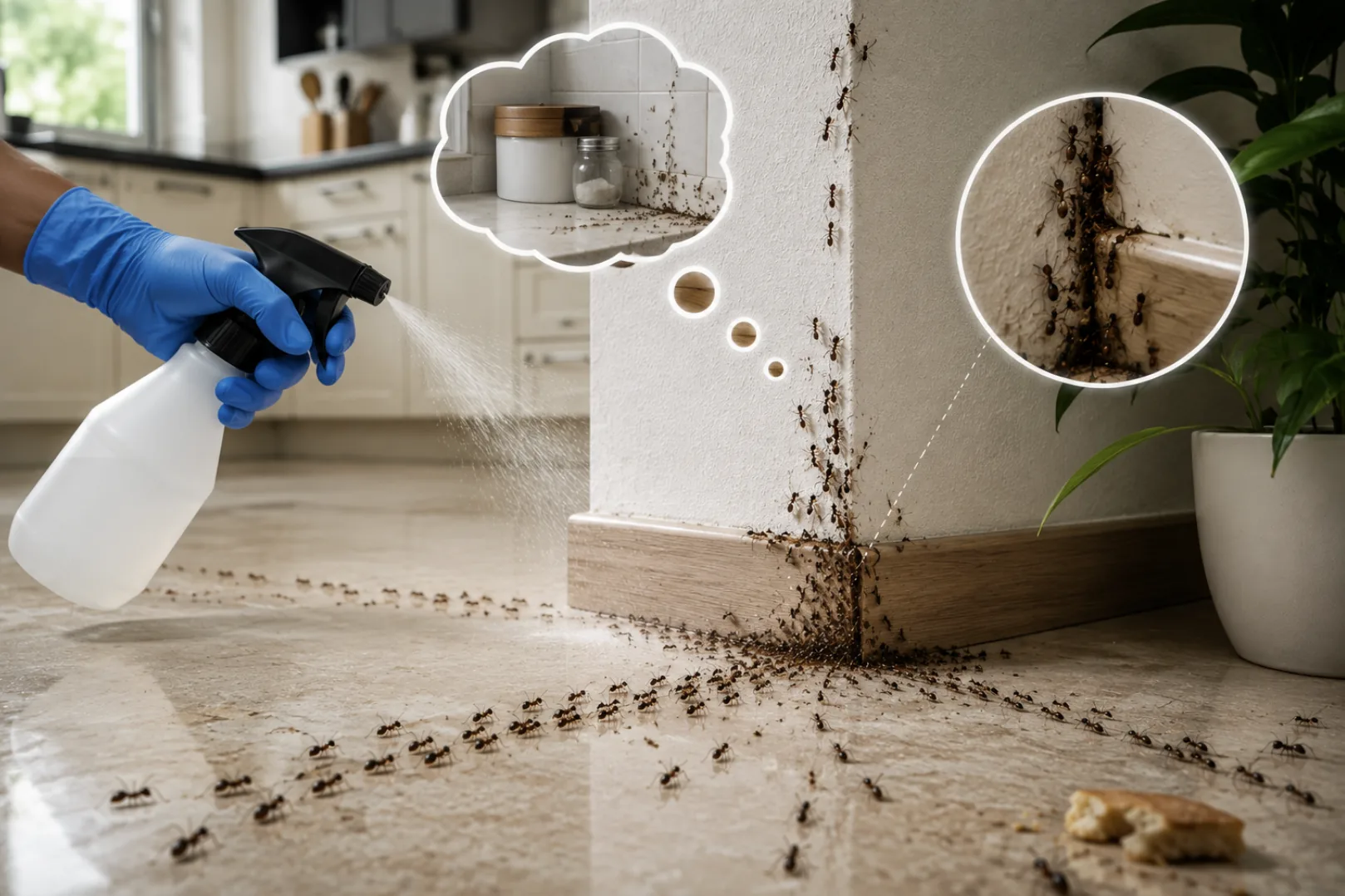
If ants keep coming back even after spraying, you're not alone. Many Indian homes see the same ant trails reappear days later, no matter how strong the spray or popular the brand.
The problem isn't that ants are "impossible" to kill. The problem is that most quick ant treatment methods only hit the ants you see, not the colony hiding deep in the walls, floors, or garden soil — the species and treatment differences are covered in more depth in our complete guide to ant control in Bangalore.
Main Reasons Ants Keep Coming Back After Spraying
Sprays feel satisfying because you see ants die on contact. But that visible trail is usually less than 10% of the real ant infestation inside your home.
Most household sprays are repellents. They kill or scare the foraging ants, which sends a warning back to the colony. The queen then shifts the nest slightly, and new workers find another path along a skirting, electrical wire, or window frame.
This is why you see patterns like: you spray the kitchen counter today, they disappear, and then two days later a fresh line appears near the sink, or from behind the fridge.
To actually stop this cycle, you need control methods that reach the queen, larvae, and hidden workers, not just the scouts wandering on your tiles.
Why Sprays Alone Rarely Solve An Ant Problem
Sprays are excellent for emergency control, but terrible as the only ant control strategy. They create a type of "pressure" on the colony without finishing the job.
Here's what often happens inside the nest after a heavy spray session in the kitchen or balcony:
- Scouts don't return, so the colony sends more workers to explore new routes.
- The queen may shift the nest a few feet into another crack or nearby potted plant.
- Ants split into satellite colonies, turning one problem into two or three smaller ones.
This is why a home ant control plan should combine contact sprays for short-term relief with slower, colony-focused products, like baits or non-repellent treatments.
Tried spraying and the ants just came back? Let Standard Pest Control target the colony, not just the trail you can see.
Book Free Inspection Call NowHidden Food Sources That Keep Ant Colonies Active
Most people clean the obvious surfaces. The real issue is the crumbs, spills, and residues that sit below eye level and quietly feed ants for weeks, leading to a stubborn ant infestation.
In Indian kitchens, common ant hotspots include:
- Ghee or oil drops under the gas stove or induction unit.
- Tea and sugar spills behind canisters and jars.
- Leaking honey bottles and jam caps in the back of cabinets.
- Poha, rice, or biscuit crumbs stuck in drawer channels.
You don't need a sterile kitchen, but you do need to remove the regular "free buffet" that ants find. Fix one or two repeat food sources and you'll see fewer trails even before any targeted ant treatment.
Why Baits Work Better Than Sprays For Long-Term Control
If you want ants gone for more than a week, you have to work with their behaviour, not against it. That means letting some worker ants live long enough to carry poison back to the nest.
Baits look simple, but they're designed so that ants eat the poison slowly and share it through the colony. This is the opposite of a standard ant killer spray, which kills on contact and stops the poison travelling deeper.
For small sugar ants on kitchen counters, gel baits placed right along their trails can be far more effective than repeated spraying.
Follow a basic 3-day baiting routine:
- Day 1: Do a light clean, then place small bait spots directly in the active trails.
- Day 2: Don't disturb the ants; let them feed and carry bait inside.
- Day 3: Wipe only non-baited areas and refresh bait spots if activity remains high.
During baiting, avoid using strong-smelling cleaners (phenyl, strong bleach) or fresh sprays around the bait points. Strong odours can make ants ignore the bait and ruin your home ant control efforts.
Common Mistakes That Keep Ants Coming Back
Homeowners usually make the same few mistakes with ant control. Fixing these can save you weeks of trial and error and reduce the need for repeat pest control visits.
Mistake 1: Spraying Directly On Bait
People often see ants crowding a bait station, panic, and spray them. That cancels the entire bait process. Let them feed. Dead ants on the counter for a day are better than live ants in the walls for months.
Mistake 2: Cleaning Trails Too Soon
Immediately wiping every ant trail with strong disinfectant sounds logical, but it also removes the pheromone path you're trying to turn into a poisoned food route.
Mistake 3: Ignoring Entry Points
Ants can enter through gaps around window frames, electrical conduits, and utility lines. If you never seal those, any ant prevention step you take indoors will only give slow, partial results.
Mistake 4: Using Random Home Remedies
Salt, coffee powder, and turmeric lines can temporarily interrupt a trail, but they don't remove the colony. Use them only as short-term barriers, not as primary pest control.
Not sure if it's time to call a professional? Get an inspection before another spray session backfires.
Book Free Inspection WhatsApp UsWhen You Need Professional Help With Ants
DIY methods work for light problems, but some infestations tell you it's time for professional ant control support from a properly licensed provider.
Consider calling an expert if you notice any of these patterns:
- Ants nesting in electrical boxes, switchboards, or air-conditioner units.
- Multiple trails across different rooms that return even after careful baiting.
- Ants associated with moisture damage around bathrooms, balconies, or wooden doors.
- Very large black or red ants that bite or sting, especially around children's play areas.
A trained technician can identify the ant species, locate likely nesting zones, and choose the right mix of non-repellent sprays, gels, and dusts for safer, more targeted pest management.
Why Ants Keep Coming Back Even After Spraying
The main reason ants keep coming back is that spraying never reaches the queen. As long as the queen is laying eggs and the colony has food, you're only removing the "delivery staff", not shutting down the kitchen.
Some species also create satellite nests in soil, potted plants, or wall cavities. When one nest is disturbed, another takes over food collection, which makes it look like the spray did nothing.
Simple Home Ant Control Steps That Actually Help
You don't need a complex checklist. A few consistent, boring habits beat one heroic cleaning day every month.
Useful daily and weekly routines include:
- Wiping kitchen counters at night with mild soap instead of sugary cleaners.
- Storing jaggery, sugar, and biscuits in tight containers, not open packets.
- Cleaning behind gas stoves and under microwaves once a week.
- Rinsing used teacups and plates instead of leaving them overnight.
Pair these routines with strategic ant prevention products, like gel baits near problem zones and silicone sealant around known entry gaps.
How Professional Ant Control Treatments Work
Professional services don't rely only on strong chemicals. The real advantage is the combination of inspection, correct product choice, and controlled application — the same checks worth confirming with any pest control company you're considering.
A typical service for recurring ants in an Indian apartment might include:
- Inspecting skirtings, window frames, balcony edges, and plumbing lines.
- Applying non-repellent sprays along hidden travel paths where you don't touch food.
- Placing gels in discreet spots inside cabinets and near appliances.
- Advising on simple building repairs, like sealing cracks or fixing damp patches.
This approach supports both short-term relief and long-term ant control without filling your home with unnecessary chemicals.
Frequently Asked Questions
Why do ants keep coming back after I spray them?
Most sprays are repellents that kill or scare only the foraging scouts, which is usually less than 10% of the colony. The queen simply shifts the nest slightly and new workers find a different route, so the colony itself is never affected.
Can spraying alone ever fully solve an ant problem?
Rarely. Spraying puts "pressure" on the colony without finishing the job — it can even cause the colony to split into two or three smaller satellite colonies instead of disappearing.
Why do baits work better than sprays for long-term ant control?
Baits let worker ants carry the poison back and share it slowly through the colony, including the queen and larvae. Contact sprays kill on the spot and stop the poison from ever reaching the nest.
What is the 3-day baiting routine for ants?
Day 1: do a light clean and place small bait spots directly on active trails. Day 2: don't disturb the ants and let them feed and carry bait inside. Day 3: wipe only non-baited areas and refresh bait spots if activity is still high — avoid strong-smelling cleaners near the bait the whole time.
What common mistakes stop ant treatments from working?
Spraying directly on a bait station, cleaning trails too soon (which removes the pheromone path), ignoring entry points around windows and conduits, and relying only on home remedies like salt or turmeric instead of removing the colony.
When should I call a professional instead of continuing DIY ant control?
Call a professional if ants are nesting in electrical boxes or AC units, trails keep returning across multiple rooms despite baiting, ants are linked to moisture damage, or you're seeing large biting or stinging ants near children's play areas.
Conclusion
If ants keep coming back after every spray, the issue isn't your luck, it's the method. You need a plan that removes food sources, targets the colony with bait, closes entry points, and uses sprays only where they actually help.
For persistent trails or biting species, a structured plan with professional support from Standard Pest Control can stop the cycle of repeat infestations and finally keep those ants from coming back.
Related reading: Complete Guide to Ant Control in Bangalore: Treatment, Prevention & Cost | Monsoon Pest Control Checklist for Bangalore Homes: Protect Your Family from Seasonal Pests | Top 20 Common Household Pests Found in Bangalore Homes and How to Eliminate Them | Why Government-Licensed Pest Control Companies Are the Safest Choice for Your Home | How to Choose the Best Pest Control Company in Bangalore: 12 Expert Tips | How Often Should Pest Control Be Done in Bangalore? Expert Recommendations for Every Home | How to Get Rid of Black Ants and Red Ants Permanently from Your Home