If you keep seeing lines of ants in your kitchen or bedroom and can't tell what they are, you're not alone. Understanding the types of ants in Bangalore that invade homes is the first step to stopping them for good instead of spraying randomly and hoping it works.
The problem is, ant species don't all behave the same way. Some are just a nuisance around sweets, while others can weaken wood or bite painfully. Once you know how to identify the common species inside Bangalore homes, you can choose the right treatment from our complete guide to ant control and avoid chasing the wrong problem for weeks.
Why Ant Identification Matters Before You Spray
Most people jump straight to buying a can of spray the moment they spot household ants near the sink or dining table. That usually gives a quick kill, but the colony hidden in the walls or garden keeps growing, so the trail returns a few days later.
Different species prefer different food, nesting spots, and entry routes. For example, some ants follow strong scent trails, while others spread out quietly and are harder to track. When you match your approach to the exact species, you stop the colony at its source instead of just killing the workers you can see.
Small Black Ants In Bangalore Kitchens
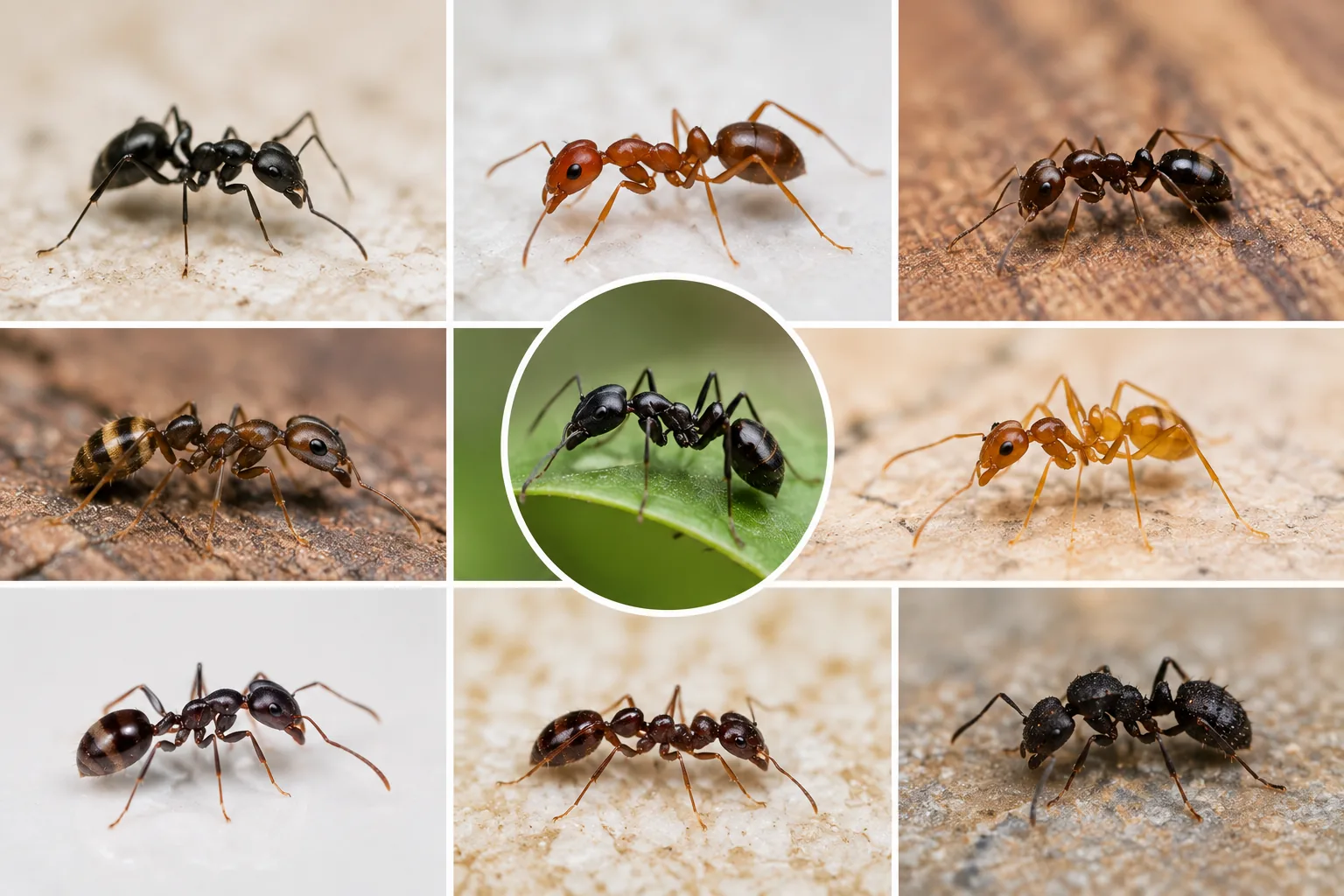
One of the most common complaints from Bangalore flat owners is about tiny black ants marching in neat lines around sinks, gas stoves, and leftover food. These are usually very small, only 1.5–3 mm long, and form long, clear trails from a crack in the wall or window frame to any food left open — the exact species covered in our guide on getting rid of black ants and red ants.
They move quickly, especially during warmer parts of the day, and usually go after crumbs, oil, and cooked food rather than large pieces. The nests are often hidden deep behind tiles, in wall cracks, or under kitchen counters, so simply sealing a visible gap rarely solves the problem on its own.
Identifying Sugar-Loving Ants
If the ants in your home are especially attracted to sweets—like jam droplets, soft drinks, or mithai—there's a good chance you're dealing with typical sugar ants that have adapted very well to apartment living. They can discover even tiny spills in minutes and quickly recruit others to the source.
These ants tend to appear suddenly in large numbers and then disappear just as quickly once the food is gone. The key sign is their strong response to sugary food and their habit of forming narrow, well-defined lines between the food and an invisible nest somewhere in the structure.
Not sure which type of ant you're dealing with? Get a species-specific inspection instead of guessing with random sprays.
Book Free Inspection Call NowRed Ants And Painful Bites
Many Bangalore residents complain specifically about red ants on balconies, garden pots, and sometimes inside bathrooms or near windows. These ants range from light brown to deep reddish in colour and are often more aggressive when disturbed.
They're known for their painful bites, which can cause a sharp burning sensation and small swollen bumps on the skin. If you see them nesting in plant pots, wall cracks, or near clothes drying areas, avoid brushing them off with bare hands and use caution with children and pets.
Red Ant Trails And Nesting Signs
Red species often build visible nests in soft soil, near roots, or under loose tiles, which makes them easier to spot than some other home pests. You might notice small soil mounds around potted plants on the balcony or in outdoor corners.
Their trails are usually shorter and more scattered than the long lines you see in the kitchen with smaller ants. Instead of focusing mainly on sweets, these ants may also target other insects, food scraps, and even pet food kept outdoors.
Carpenter Ants In Wooden Doors And Windows
Larger ants seen near wooden doors, window frames, or old furniture are often carpenter ants. These are much bigger than the common kitchen varieties, sometimes over 1 cm long, usually dark brown or black, sometimes with a reddish tinge.
Instead of eating wood, they tunnel through damp or damaged timber to make galleries for their nests. Over time, this can weaken door frames, wooden window sills, and built-in wardrobes, especially in older Bangalore buildings that already struggle with moisture problems.
How To Spot Early Carpenter Ant Activity
The first sign is usually the sight of a few larger ants wandering around the same wooden area at night, which many people mistake for random ant infestation. If you look closely near the base of the wood, you may notice fine wood shavings or powder collecting like sawdust.
Tap on the suspect wood with your knuckles; heavily infested pieces can sound hollow compared to solid sections. If you see winged ants emerging around lights during humid evenings, it can indicate a mature nest either inside or very close to your flat.
Ants Around Bathrooms, Sinks, And Drains
Another frequent issue in Bangalore homes is ants appearing around washbasins, shower areas, and drain corners, even when there's no visible food. These ants are usually attracted to moisture, and the constant humidity lets ant control problems build up quietly.
You might also spot them where water leaks from pipes, under the kitchen sink, or along silicone joints around basins. In many apartments, they use the plumbing lines as highways, moving vertically between floors and appearing in identical spots in multiple houses.
Why Moisture Ants Keep Coming Back
If you only spray the visible workers, they'll disappear for a few days, but the colony using the pipes as a pathway keeps sending more — the same pattern behind why ants keep coming back even after spraying. Without fixing leaks or sealing gaps around pipes and tiles, any effort at pest identification and targeted treatment will feel temporary.
That's why many residents notice that ants vanish during dry repairs or renovation and return as soon as there's dampness again. Treating just the bathroom floor isn't enough if the nest sits behind damp tile backing or in a common plumbing shaft.
Seeing large ants near wooden doors or window frames? Have Standard Pest Control check for carpenter ant damage before it spreads.
Book Free Inspection WhatsApp UsWhen Ants Signal A Bigger Problem
Not every ant sighting means you have a serious issue, but repeated trails in the same location almost always indicate an established ant infestation. If cleaning and basic sprays only help for a few days, you're likely only affecting the outer workers while the queen and brood stay safe.
Signs of a deeper problem include winged ants during certain seasons, piles of fine dust near wood, nests in electrical switch boxes, or trails emerging from wall cracks even in freshly cleaned rooms. In those cases, focusing only on surface treatment wastes time and money.
How Professionals Read Ant Activity
Trained technicians don't just follow the visible trail; they look at the size, colour, and behaviour of the household ants to estimate where the nest may be and what food they rely on. That guides whether to use baits, gels, or targeted residual treatments, the same inspection-first approach worth expecting from any government-licensed pest control company.
They also pay attention to outdoor factors such as garden beds against walls, stacked firewood, or debris that allows colonies to build close to your foundation. Reducing these outdoor sources often brings more lasting relief than repeated indoor spraying.
Simple Steps To Cut Ant Problems At Home
You don't need to turn your flat into a lab to get results. Start with basic hygiene and storage so ant identification becomes easier because you see where trails begin and end.
Wipe food spills quickly, store sweets and snacks in airtight containers, and avoid leaving pet food out for long periods. Regularly checking window frames, balcony doors, and utility ducts for gaps gives ants fewer hidden entry points into your rooms.
When To Call For Expert Help
If you've tried cleaning, home sprays, and blocking obvious gaps but still see regular trails, it's a sign the colony is either very large or well protected — this is the exact decision point covered in our DIY vs professional ant control comparison. Persistent home pests like carpenter ants or aggressive red species usually need a more systematic plan than DIY products.
A good professional service will identify the exact species, inspect indoor and outdoor areas, and use targeted methods that reach the nest instead of just the visible workers. That often means fewer repeat treatments over time and less chemical use inside the house.
Frequently Asked Questions
How can I tell the difference between common ant species in Bangalore homes?
Small black ants are typically 1.5–3 mm and form neat trails toward food; red ants are light brown to deep reddish, more aggressive, and nest in soil or plant pots; carpenter ants are much larger (often over 1 cm), dark brown or black, and tunnel through damp wood.
What are the signs of carpenter ant activity in wooden doors or windows?
Look for fine wood shavings or powder collecting near the base of the wood, a hollow sound when you tap the timber, and winged ants emerging around lights during humid evenings.
Why do ants keep appearing around bathrooms and sinks even without visible food?
They're usually attracted to moisture and use plumbing lines as highways between floors, so leaks under sinks or damp tile backing keep feeding the colony even when there's no food source visible.
What signs mean an ant problem is more serious than a routine trail?
Winged ants appearing during certain seasons, fine dust piles near wood, nests found in electrical switch boxes, or trails reappearing in freshly cleaned rooms all point to an established colony rather than a passing nuisance.
How do professionals figure out which ant species they're dealing with?
They examine the ants' size, colour, and behaviour to estimate the nest location and food preference, and also check outdoor factors like garden beds against walls or stacked firewood near the foundation.
When should I call a professional instead of continuing to clean and spray?
If trails keep returning despite cleaning, home sprays, and sealing obvious gaps, especially with carpenter ants or aggressive red species, it's time for a systematic professional plan rather than more DIY products.
Conclusion
Once you recognise the main types of ants in Bangalore homes—from tiny kitchen trails to large wood-nesting species—it becomes much easier to decide what you can handle yourself and when you need expert support. Paying attention to colour, size, food preference, and nesting spots tells you more than any spray can.
If you're tired of fighting the same trails again and again, consider a professional inspection from Standard Pest Control to identify the species correctly and put a long-term plan in place before the colonies spread further.
Related reading: Complete Guide to Ant Control in Bangalore: Treatment, Prevention & Cost | How to Get Rid of Black Ants and Red Ants Permanently from Your Home | Why Ants Keep Returning Even After Spraying: Common Reasons & Permanent Solutions | DIY Ant Control vs Professional Ant Treatment: Which One Works Better? | Ant Control Cost in Bangalore (2026): Complete Pricing Guide for Homes & Businesses | Safe Ant Control for Kitchens, Restaurants & Food Businesses | How to Prevent Ant Infestations During Summer and Monsoon in Bangalore | Why Sugar Ants Invade Your Kitchen and How to Stop Them Permanently