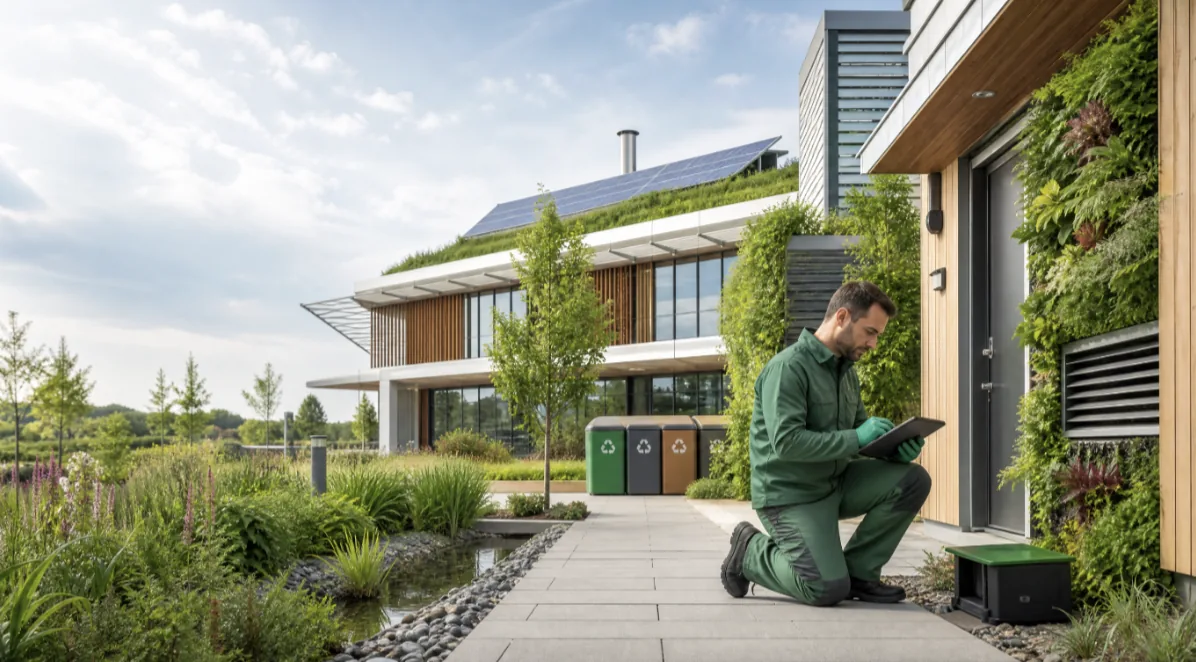
Green buildings are designed to reduce environmental impact, improve resource efficiency and create healthier indoor spaces. Energy-efficient lighting, water conservation, sustainable materials, green landscaping and responsible waste management may all form part of the building's environmental strategy.
Pest management should support these goals. Traditional pest control that relies heavily on routine pesticide spraying may not align with the sustainability objectives of a green building. Instead, modern facilities can use Integrated Pest Management (IPM) — a prevention-first approach combining sanitation, structural exclusion, monitoring, moisture management and carefully targeted treatments.
The objective is not simply to eliminate pests. The goal is effective pest management with the least practical impact on people, non-target organisms and the surrounding environment. For professional pest-management services in Bangalore, visit Standard Pest Control.
What Is Sustainable Pest Control?
Sustainable pest management focuses on preventing pest problems before pesticide treatment becomes necessary. It asks:
- Why are pests entering the building?
- What food or water is attracting them?
- Where are they hiding?
- Can structural changes prevent entry?
- Can sanitation remove the attraction?
- Is pesticide treatment actually necessary?
This creates a simple hierarchy: Prevent → Monitor → Identify → Correct → Treat Only Where Necessary → Review. This approach is closely aligned with Integrated Pest Management (IPM).
Why Green Buildings Need Pest Control
A green building is not automatically a pest-free building. In fact, some environmentally friendly features can create pest-management challenges if they are poorly designed or maintained, including:
- Green roofs
- Indoor plants
- Landscaped areas
- Composting
- Rainwater harvesting
- Water features
- Waste segregation
- Natural ventilation
- Recycling areas
These features provide valuable environmental benefits, but they also require appropriate maintenance. The objective should not be to remove sustainable features — it should be to manage them without creating pest opportunities.
Common Pests in Green Buildings
1. Cockroaches
Cockroaches may enter through drains, service ducts, pipe penetrations, deliveries and waste areas. Food, water and hidden harbourage can allow them to become established. High-risk areas include:
- Kitchens
- Staff pantries
- Cafeterias
- Garbage rooms
- Washrooms
- Utility areas
See Cockroach Pest Control Bangalore.
2. Rodents
Rats and mice may enter green buildings searching for food, water and shelter. Potential entry routes include:
- Door gaps
- Utility penetrations
- Drainage
- Loading docks
- Basements
- Landscaping
Rodents can damage electrical cables, insulation, stored products and other building materials. See Rodent Pest Control Bangalore.
3. Ants
Green landscaping and indoor plants may occasionally increase encounters with ants, which can enter buildings looking for sugar, food crumbs, water and shelter. Rather than simply spraying visible trails, determine where ants are entering and what is attracting them. See our complete guide to ant control.
4. Mosquitoes
Water conservation requires particular attention. Potential mosquito breeding locations can include:
- Rainwater systems
- Poorly maintained drains
- Plant trays
- Roof areas
- Landscaping
- Decorative water features
- Containers
Water sustainability and mosquito prevention can coexist when systems are properly designed and maintained. See Mosquito Pest Control Bangalore.
5. Flies
Waste segregation and composting areas can attract flies if organic waste is not properly managed. Fly management should therefore focus heavily on waste handling, container hygiene, drain cleaning and breeding-source removal. Repeatedly treating adult flies without removing the source is not sustainable pest management.
6. Termites
Buildings using timber or cellulose-containing materials still require termite protection. Termite prevention should be incorporated into building design and maintenance where appropriate. See Termite Control Bangalore.
Integrated Pest Management Is Ideal for Green Buildings
IPM supports sustainability because it prioritizes non-chemical prevention. A strong programme follows these steps.
1. Inspect
Understand the building and identify pest risks.
2. Monitor
Determine whether pests are actually present.
3. Identify
Different pests require different solutions.
4. Prevent
Remove food, water, shelter and entry points.
5. Treat
Use appropriate targeted methods when necessary.
6. Document
Record pest activity and corrective actions.
7. Review
Use data to continuously improve the programme.
Pest Exclusion: Stop Pests Before They Enter
One of the most sustainable pest-control methods is physical exclusion. Inspect:
- Doors
- Windows
- Pipe penetrations
- Cable openings
- Ventilation systems
- Drainage
- Roof gaps
- Loading docks
Appropriate sealing and proofing can reduce the need for repeated pesticide treatment.
Green Building Design Should Consider Pest Prevention
Pest prevention is most effective when incorporated into building design. Architects, facility managers and pest-management professionals can consider:
- Easy-to-clean spaces
- Accessible inspection areas
- Proper drainage
- Sealed utility penetrations
- Pest-resistant waste areas
- Well-designed landscaping
- Proper food-storage areas
A building designed without pest harbourage is easier to manage sustainably.
Moisture Management
Water is one of the most important resources pests need. Inspect for:
- Leaking taps
- Condensation
- Roof leaks
- Plumbing problems
- Poor drainage
- Persistent dampness
Correcting leaks can reduce cockroach and moisture-associated pest activity without pesticide application. It also supports the building's water-efficiency goals.
Sustainable Waste Management and Pest Prevention
Green buildings often emphasize waste segregation. This is excellent environmental practice, but waste areas need careful pest management. Organic waste can attract flies, cockroaches, ants and rodents. Use suitable covered containers, regular waste removal, clean collection areas and proper drainage. Recycling should not become pest recycling.
Composting Requires Good Management
On-site composting can be environmentally beneficial, but poorly maintained compost may attract pests. Locate compost appropriately and follow proper management practices. Avoid allowing exposed food waste, overflow, excess moisture or poorly maintained containers to create pest attractions.
Not sure what's causing the problem? Get a professional inspection before you decide on treatment.
Book Free Inspection Call NowGreen Roof Pest Management
Green roofs can support biodiversity and reduce heat gain, but they should be included in pest inspections. Monitor for standing water, rodent activity, ant colonies and drainage problems.
The objective is not to eliminate insects from a green roof — many insects are beneficial. The objective is to prevent pest species from creating building or health problems.
Indoor Plants and Pest Management
Indoor plants can improve the appearance of green buildings but may occasionally introduce ants, small flies and plant pests. Avoid overwatering, inspect new plants before introducing them into sensitive areas, and remove stagnant water from plant trays.
Protect Pollinators
Outdoor landscaping can provide habitat for bees, butterflies and beneficial insects. These organisms should not automatically be treated as pests. Avoid unnecessary pesticide applications to flowering plants. When treatment is necessary, consider location, timing, target pest, application method and pollinator activity.
Beneficial Insects Have a Role
Green landscapes contain many insects that help control other pest populations. Predatory insects may feed on aphids, caterpillars and other plant pests. A sustainable pest-management programme should distinguish between pests that require management and beneficial organisms that should be protected.
Use Cultural Control Methods
Cultural controls modify environmental conditions so pests are less likely to thrive. Examples include better sanitation, improved drainage, vegetation management, food-storage improvements and waste management. These methods often provide long-term benefits without routine pesticide application.
What About Eco-Friendly Pest-Control Products?
The words natural, organic, green and eco-friendly can be misleading when used without explanation. A product derived from a natural source is not automatically harmless. Likewise, a synthetic product used in a very small, carefully targeted quantity may sometimes create less overall environmental exposure than repeated broad applications of another product.
The better question is: what is the least-impact effective solution for this specific pest problem? Product selection should consider:
- Target pest
- Application location
- Exposure potential
- Non-target organisms
- Product label
- Required effectiveness
Targeted Application Reduces Chemical Use
Instead of routine wall-to-wall spraying:
- Cockroach harbourage → target cracks and crevices
- Ant trail → identify colony and entry route
- Rodent activity → proof entry points and monitor
- Mosquito problem → remove breeding water
- Fly activity → correct breeding source
This approach can significantly reduce unnecessary pesticide application.
Monitoring Makes Pest Control Smarter
Monitoring devices help determine whether pests are present, where activity is occurring, whether populations are increasing, and whether treatment worked. Monitoring can include insect monitors, rodent stations, fly monitoring and visual inspections. A green pest-management programme should be driven by evidence rather than routine spraying schedules alone.
Create a Pest-Monitoring Map
Number monitoring points, for example:
- R01 – Loading Bay
- R02 – Garbage Room
- C01 – Staff Pantry
- C02 – Cafeteria
- M01 – Roof Drainage
Record activity during each inspection. This creates measurable data.
Establish Pest Action Thresholds
Not every insect requires pesticide treatment. For example, one occasional outdoor ant may not justify chemical intervention, but repeated cockroach activity in a commercial kitchen requires action. Define thresholds based on pest species, location, health risk, building use and population level. This prevents unnecessary treatment while ensuring important problems are addressed quickly.
Ready to get this sorted? Ask us about a structured, documented treatment plan.
Book Free Inspection WhatsApp UsSustainable Rodent Management
Rodent control in green buildings should prioritize:
- Food-source reduction
- Waste management
- Structural exclusion
- Habitat modification
- Monitoring
- Appropriate targeted control
Rodenticide should not automatically be the first response to every rodent sighting.
Sustainable Mosquito Management
The strongest sustainable mosquito programme begins with water management. Inspect roofs, gardens, drains, water features and rainwater systems, and remove or manage breeding sources wherever practical. Adult mosquito treatment may sometimes be necessary, but source reduction should remain central.
Sustainable Cockroach Management
Cockroach IPM focuses on food sanitation, moisture reduction, drain management, crack sealing, monitoring and targeted treatment. This can reduce reliance on repeated broad spray applications.
Staff Training Is Essential
Housekeeping, security, maintenance, landscaping and food-service teams all influence pest conditions. Train employees to recognize:
- Rodent droppings
- Cockroach activity
- Standing water
- Ant trails
- Fly breeding
- Structural gaps
This is the same principle behind our Employee Training for Pest Awareness in the Workplace programme.
Create a Pest-Sighting System
Use a simple format: date, location, pest, number seen and corrective action. This makes pest control part of the building's environmental management system, and fits naturally alongside documentation-first commercial pest control.
Document Non-Chemical Corrective Actions
Don't document only pesticide treatments. Record actions such as:
- Leak repaired
- Door gap sealed
- Waste area cleaned
- Standing water removed
- Drain repaired
- Vegetation trimmed
These records demonstrate that the pest-management programme is genuinely prevention-focused.
Measure Pesticide Use
Where practical, green facilities can track number of pesticide treatments, treatment locations, reasons for treatment, non-chemical corrective actions and pest activity trends. The objective should not necessarily be zero pesticide use. The more practical goal is no unnecessary pesticide use.
Pest Control and Indoor Environmental Quality
Green buildings often prioritize indoor environmental quality. Pest-management practices should support that objective by avoiding unnecessary pesticide applications, using targeted treatments, following product labels, scheduling treatments appropriately and protecting occupied areas. Preventive pest management can reduce the need for disruptive emergency treatments later.
Green Buildings and LEED-Style IPM Programmes
Buildings pursuing environmental certifications may have specific requirements for pest-management policies, pesticide selection, notification or record keeping. Facility managers should check the requirements of the specific certification system and version applicable to their project rather than assuming that one pest-control programme satisfies every green-building standard. A well-documented IPM programme, in line with the same principles covered in IPM for commercial properties, can make compliance and auditing easier.
Professional Sustainable Pest Management in Bangalore
Standard Pest Control provides professional pest-management solutions for residential and commercial properties in Bangalore. A customized green-building pest programme can include:
- Pest-risk assessment
- Integrated Pest Management
- Rodent monitoring
- Cockroach management
- Mosquito management
- Ant control
- Termite management
- Structural pest-proofing recommendations
- Sanitation and moisture recommendations
- Pest-monitoring maps
- Service documentation
- Trend analysis
- Follow-up inspections
Related Services
- Cockroach Pest Control Bangalore
- Rodent Pest Control Bangalore
- Mosquito Pest Control Bangalore
- Termite Control Bangalore
Frequently Asked Questions
What is green pest control?
Green pest control generally refers to pest-management practices designed to reduce environmental and human exposure while maintaining effective pest control. Prevention and IPM are central principles.
Does sustainable pest control mean no chemicals?
No. Chemical treatment may sometimes be necessary. Sustainable pest management aims to use preventive and non-chemical methods first and targeted treatments when required.
Is natural pest control always safer?
Not necessarily. Natural products can also present risks. Products should be evaluated based on their actual properties, application and exposure rather than marketing terminology alone.
How can green buildings prevent cockroaches?
Control food and moisture, maintain drains, seal harbourage areas, monitor activity and use targeted professional treatment when necessary.
How can green buildings prevent rats?
Maintain waste areas, remove food sources, proof structural openings, manage landscaping and use a monitored rodent-management programme.
Can rainwater harvesting increase mosquito problems?
Poorly maintained water systems may create mosquito breeding opportunities. Properly designed, covered and maintained systems can reduce this risk.
Are green roofs likely to attract pests?
Green roofs support biodiversity, which is not the same as pest infestation. Regular inspection and good drainage can help prevent problematic species from becoming established.
How can pesticide use be reduced?
Improve sanitation, proof buildings, manage moisture, monitor pest activity and treat only confirmed problem areas.
What is IPM?
Integrated Pest Management combines prevention, monitoring, identification and targeted intervention to achieve effective long-term pest management.
What is the best pest-control strategy for a green building?
A customized IPM programme combining structural exclusion, sanitation, moisture management, monitoring, landscaping practices and targeted treatment provides a strong sustainable approach.
Final Thoughts
A green building shouldn't have to choose between effective pest control and sustainability. The two can work together.
The strongest strategy is: prevent entry, remove food and water, manage waste, monitor activity, protect beneficial organisms, use targeted treatments, document results, and continuously improve.
Sustainable pest control is not simply replacing one chemical with a product labelled "green." It is about changing the entire approach from routine treatment to intelligent prevention. A truly green building manages pests by changing the conditions pests need to survive, not simply by spraying them after they arrive. For professional pest-management services in Bangalore, visit Standard Pest Control.
Related reading: IPM for Commercial Properties: A Strategic Approach to Business Protection | Sanitation Best Practices for Commercial Pest Prevention | Employee Training for Pest Awareness in the Workplace: Building a Pest-Smart Team | Documentation in Commercial Pest Control: Why Records Matter | Safe Pest Control for Babies, Pets & Senior Citizens: Everything You Need to Know