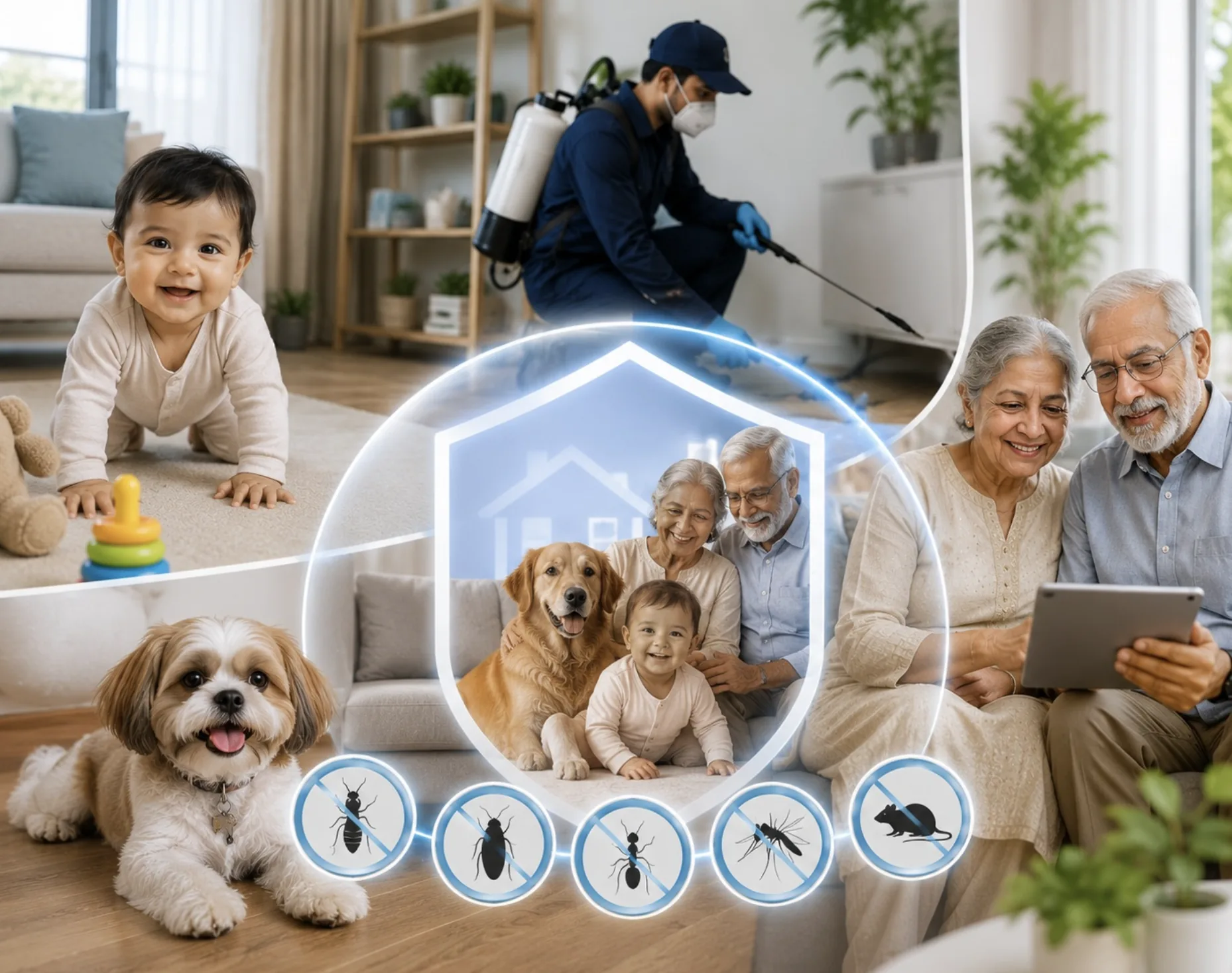
Safe pest control is non-negotiable when you have a baby crawling on the floor, pets licking every surface, or senior parents with weaker immunity. You want pests gone fast, but you can't afford to gamble with sprays that leave strong odours and mystery residues on toys, food counters, or bedding.
The good news is you don't have to choose between a pest-free home and your family's health. With the right approach, products, and timing, you can keep cockroaches, ants, mosquitoes, and rats under control while staying well within safe limits for babies, pets, and older family members.
What Makes Pest Control Safe For Babies, Pets And Seniors?
Not all pest treatments are the same. Some old-school methods use strong chemicals that spread everywhere and linger for days, which is risky for child safe pest control in a busy Indian home. Modern methods focus on targeted application, low-toxicity products, and strict safety gaps so your family is never exposed to wet chemicals.
For babies and senior citizens, their skin, lungs, and immune systems react faster to irritants, and existing allergy or asthma risks can make exposure worse. For pets, especially cats, some common insecticides can be toxic even in small amounts. A genuinely safe approach focuses on dose, exposure time, and where the product is applied, not just the brand name on the bottle.
Choosing Truly Pet Safe Pest Control Products
Marketing labels can be misleading. A spray sold as "herbal" doesn't automatically mean pet safe pest control if the product is still used in large quantities all over the house. For cats and small dogs, even essential oils in high concentration can trigger vomiting, drooling, or breathing issues.
Look for professionals who use gel baits for cockroaches inside cracks instead of fogging, slow-release ant baits instead of surface drenches, and precise rodent bait stations that lock away poisons from curious paws — the same secondary poisoning risks that threaten pets and wildlife apply just as much indoors. Ask explicitly which chemicals are used, their WHO toxicity class, and how long pets must stay away from treated areas.
Eco Friendly Pest Control Starts With Housekeeping
Eco friendly pest control isn't a product you buy once a year; it's a routine. In Indian homes, cockroaches and ants thrive on uncovered food, dripping dustbins, and stagnant water in bathrooms or balcony planters. A cleaner kitchen and regular decluttering often cut infestation levels by half before any technician arrives.
Simple habits help: washing dishes before bed, sealing grains and pulses in airtight containers, wiping counters at night, and fixing minor leaks under the sink. These steps reduce the need for harsh treatments and support any professional work done later.
Have a baby, pet, or elderly parent at home? Ask for a family-first treatment plan built around who actually lives in your house.
Book Free Inspection Call NowHow Non Toxic Pest Control Works In Real Homes
Non toxic pest control focuses on methods that either avoid chemical use entirely or limit it to extremely low, targeted doses. Sticky traps for insects, glue boards for rodents, mosquito nets, and physical barriers under doors all fall into this category and are safe even in homes with toddlers and elderly parents.
In practice, this might mean a combination of fine-mesh window screens, sealing entry points with silicone, and placing bait gels only inside deep cracks that children and pets cannot reach. The idea is to break the pest life cycle with minimal interference in how you live at home.
Organic Pest Control: What It Can And Cannot Do
Many families ask for organic pest control thinking it means zero risk. In reality, "organic" usually refers to plant-based or naturally derived products, not total safety — much like the tradeoffs covered in our guide to natural mosquito repellents. Neem oil, boric acid, diatomaceous earth, and certain plant extracts can be effective against insects but still cause skin or eye irritation if misused.
Organic options work best for mild to moderate infestations, especially for ants and some types of cockroaches. For serious termite damage or heavy rodent activity, relying only on organic sprays may drag the problem out for months and frustrate everyone in the house.
Designing A Family Safe Pest Control Plan
A proper family safe pest control plan looks at who lives in the house first, not what pests you hate most. A two-bedroom flat with a premature baby and an elderly diabetic grandparent needs a more conservative schedule and product choice than a bachelor pad with the same cockroach problem.
Before booking any service, share details on pregnancy, asthma, kidney issues, or pets that stay indoors full-time. This helps the technician choose gel-based treatments, odourless formulations, and areas that can be isolated during and after the visit, instead of defaulting to a one-size-fits-all package.
Safe Pest Control Steps Room By Room
Start with the kitchen, since food and water attract the most pests. For safe pest control here, insist on gel baits inside hinges, under sinks, and behind appliances instead of broad spray on open shelves. Ask for minimal treatment near baby bottles, spice racks, and pooja shelves.
In bedrooms, focus on sealing cracks, bed legs, and window gaps rather than heavy spray on mattresses or pillows. For bathrooms, pay attention to drainage traps, exhaust vents, and wall gaps around pipes. Each room gets a combination of blocking entry, reducing moisture, and targeted treatment.
Not sure which products are safe to use around pets? Get a technician who explains every chemical before it touches your home.
Book Free Inspection WhatsApp UsChild Safe Pest Control Guidelines You Should Follow
For babies and toddlers, distance and timing matter more than anything. Plan treatments when the child is away at daycare or with grandparents for at least four to six hours, which supports truly child safe pest control in a small flat.
Pack away toys, play mats, feeding chairs, and any cloth books in sealed bags before the technician arrives. After the treatment dries, wipe reachable surfaces like low tables and cot rails with a damp cloth before letting the child back into the room.
Best Practices For Senior Citizens At Home
Senior citizens, especially those with allergies or breathing issues, should avoid being present during spraying. Ask for low-odour or gel-based products, good cross-ventilation, and a clear re-entry time that accounts for their health conditions and daily routine.
If a parent uses a wheelchair or walker, make sure pathways stay dry and non-slippery after mopping treated areas. If they rest in a particular chair most of the day, request that the area around it be treated last and allowed extra drying time.
Green Pest Control Techniques You Can Use All Year
Green pest control focuses on prevention methods that reduce chemical use over time. Simple measures like fixing mesh on windows, installing door sweeps, and covering balcony drains stop many insects from entering in the first place. Regular deep cleaning after festivals and during season changes also helps, and timing any outdoor treatments the way our safe spraying and fogging guide recommends keeps the process family-friendly.
Insects in Indian cities often ride in with groceries, cardboard boxes, and online deliveries. Unpack boxes outside the kitchen, throw cartons away quickly, and avoid stacking them near beds or cupboards. This small change quietly cuts down new cockroach introductions every month.
How Professional Residential Pest Control Keeps Homes Safer
Professional residential pest control teams in India now have access to WHO-approved chemicals, precise applicators, and training on family health risks. The difference shows in how they work: less visible spray, more spot treatment, and clear safety instructions tailored to your home layout.
A good technician should walk you through where products are applied, how long they take to dry, and what cleaning to avoid immediately after. This dialogue matters more than any brand brochure, because correct use often decides whether a safe pest treatment stays safe in real life.
Questions To Ask Before You Book A Service
Before you confirm a booking, ask which gels, sprays, or baits will be used and how they rate on toxicity scales. Clarify re-entry times for babies, pregnant women, and pets, and check if protective covers or masking tape are needed for aquariums or bird cages during home pest control visits.
Ask if the company offers written instructions after service and a clear complaint process if pests return too soon. The most reliable providers answer these questions confidently instead of brushing them aside — our guide to choosing the best pest control company has a fuller checklist.
Frequently Asked Questions
Are herbal or natural pest sprays automatically safe for pets?
No. A product labelled "herbal" isn't automatically pet safe if it's still applied in large quantities all over the house — even essential oils in high concentration can trigger vomiting, drooling, or breathing issues in cats and small dogs.
Does organic pest control mean there's zero risk?
No. "Organic" usually means plant-based or naturally derived, not totally risk-free — neem oil, boric acid, diatomaceous earth, and certain plant extracts can still cause skin or eye irritation if misused.
How long should a baby stay away from a room after pest treatment?
Plan treatments for when the child is away for at least four to six hours, then wipe reachable surfaces like low tables and cot rails with a damp cloth before letting them back into the room.
Should senior citizens be present during pest spraying?
No. They should avoid being present during spraying — ask for low-odour or gel-based products, good cross-ventilation, and a clear re-entry time that suits their health conditions.
What should I ask before booking a pest control service?
Ask which gels, sprays, or baits will be used and their toxicity ratings, clarify re-entry times for babies, pregnant women and pets, check if aquariums or bird cages need protective covers, and confirm written instructions and a complaint process are provided.
What's the difference between eco friendly and non toxic pest control?
Eco friendly pest control is a housekeeping routine — sealing food, fixing leaks, and decluttering — that reduces the need for chemicals, while non toxic pest control uses methods like sticky traps, glue boards, mosquito nets, and sealed entry points that avoid or minimise chemical use directly.
Conclusion
Safe pest control for babies, pets, and senior citizens is less about fear and more about planning: choose targeted methods, prepare the house, and follow re-entry instructions closely.
If you want a customised plan that respects your family's health conditions and routine, speak to a trusted local expert such as Standard Pest Control and ask specifically for family-first options that keep safety and comfort ahead of convenience.
Related reading: The Dangers of Using Poison for Rodents | Mosquito Control Bangalore: Safe Spraying & Fogging Tips | Natural Mosquito Repellents: Do They Really Work? | How to Safely Clean Up Rodent Droppings and Urine | Are Cockroaches a Health Risk? Allergies, Asthma and Disease Transmission | How to Choose the Best Pest Control Company in Bangalore: 12 Expert Tips | Pest Control for Smart Homes: Integrating Technology for Smarter Pest Management | Pest Control for Salons and Spas: Cleanliness and Client Comfort