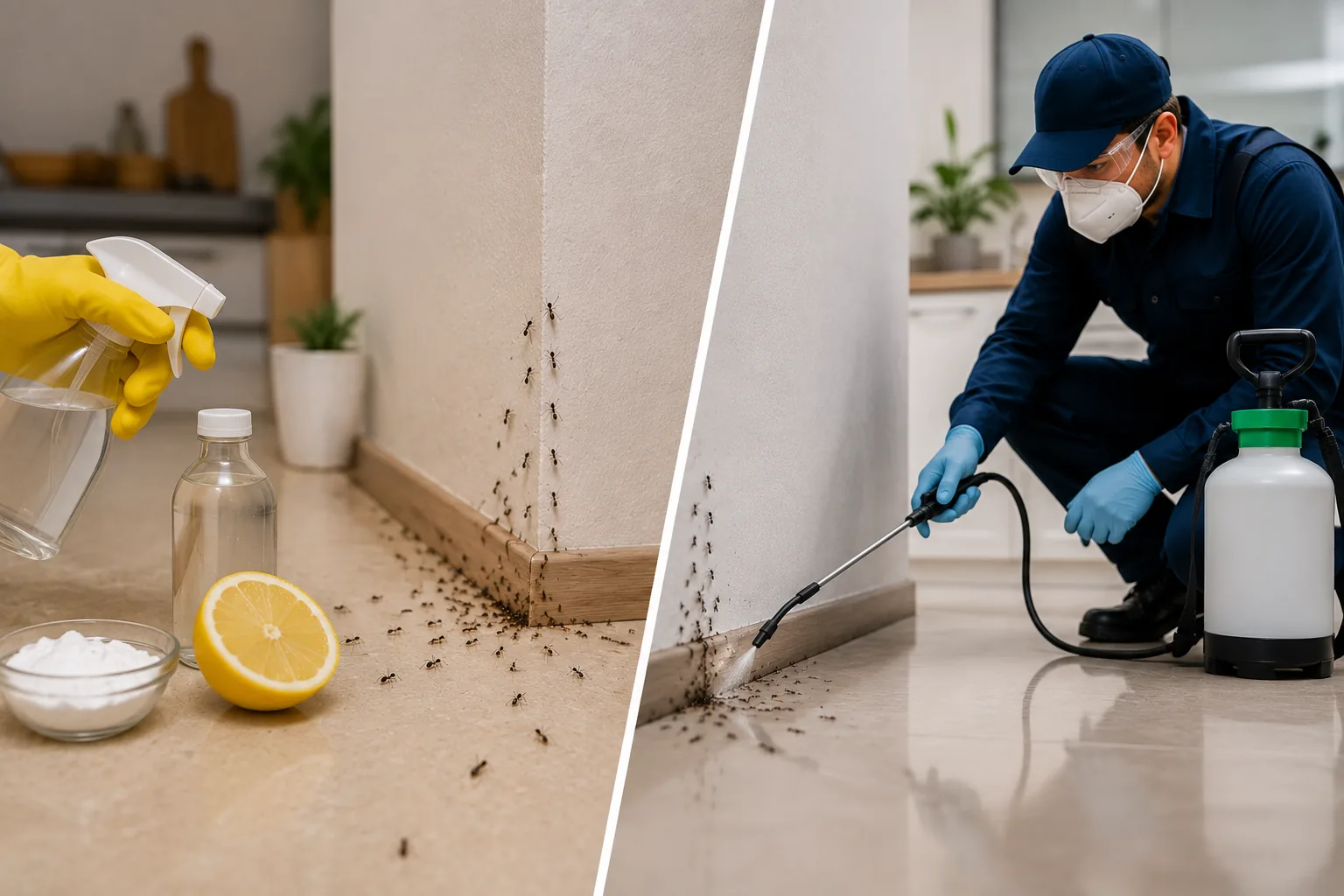
DIY ant control sounds simple: buy an ant killer, spray the trail, and wait for them to vanish. If you live in India and share your kitchen with sugar trails every summer, you already know it rarely works that cleanly.
The real question is not "Can I kill a few ants?" but "How do I stop this ant infestation from coming back again and again without wasting money or risking my family's health?" That's where you decide between doing it yourself and calling in professional ant control.
What DIY Ant Control Actually Gets Right
DIY methods do help in some situations, especially when the problem is fresh and limited to a small corner of your home. If you spot a light line of ants near the sink or a few foragers near the sugar jar, home ant control can be enough — the same light-infestation cases covered in our complete guide to ant control in Bangalore.
Most people in Indian homes start with three things: cleaning up food spills, following the ant trail, and blocking entry points with tape or caulk. That alone can cut activity by half because you're removing easy food and access.
On top of that, simple tricks such as using soapy water on trails or wiping surfaces with vinegar can break the scent paths ants use to guide the rest of the colony. It won't destroy the nest, but it stops the rush for a while.
If you're disciplined with daily cleaning, storing food in airtight containers, and closing gaps around windows, you can often keep seasonal ant visits under control with minimal effort.
Where DIY Methods Fail Against Real Infestations
Problems start when the ants are not just scouting but fully settled inside walls, under tiles, or behind kitchen cabinets. At this point, basic ant treatment from a local shop usually only hits the workers you can see.
Sprays and chalk lines may give a quick sense of relief, but they rarely reach the queen or the hidden brood. In many cases, the colony simply shifts a few feet away and reappears near another crack, keeping the ant removal incomplete.
Different ant species in India behave differently. Sugar-loving ghost ants, protein-hungry carpenter ants, and red fire ants do not all respond to the same bait — our guide on how to get rid of black ants and red ants breaks down these differences. Using a random ant killer without knowing the species often means feeding them instead of controlling them.
People also underestimate how many nests they're dealing with. What looks like one long trail can be several satellite colonies linked together. Killing a portion only pushes the rest to spread deeper into the structure.
Tried DIY for weeks with no real change? Get a professional inspection before the colony spreads further.
Book Free Inspection Call NowCost Comparison: DIY Vs Professional Ant Control
Money is usually the main reason people stick to DIY, and that's fair. A basic spray or chalk stick costs under a few hundred rupees, and a bottle of gel bait is still cheaper than most pest control services.
The hidden cost is repetition. If you're buying sprays every month and spending weekend after weekend chasing ants, the yearly spend often comes close to one structured ant treatment plan from a professional — see our full ant control cost guide for real 2026 pricing.
There's also the cost of damage. Carpenter ants and some other wood-nesting species can weaken door frames, furniture, and even structural timber over time. Those repairs quickly outweigh the fee of a good ant exterminator.
Professional services usually work out cheaper over 6–12 months because they focus on the colony source, repeat visits if needed, and prevention tips that cut your future spend.
What Professional Ant Control Does Differently
A trained technician doesn't start with a spray can; they start with an inspection. They'll follow trails, look for moisture issues, tap on wood, and identify entry points the average person misses during basic pest management at home — the kind of process worth expecting from any government-licensed pest control company.
Once the technician identifies the species, they select targeted products and methods. For some ants, non-repellent sprays are used so the workers walk through treated areas and carry the active ingredient back to the nest without alarming the colony.
For others, slow-acting baits are placed where ants are actively feeding. The goal is not to kill on contact but to let the workers share the bait throughout the colony, including the queen, delivering reliable ant removal over a few days.
Good professionals also balance effectiveness with safety. They'll choose formulations, dosages, and application spots that protect children, elderly family members, and pets, while still wiping out the infestation.
DIY Ant Control Vs Pro Methods: Safety And Health
Households often overapply sprays, especially in kitchens and around food storage, thinking more chemical equals faster results. This can leave residues in places you really don't want them. Professional pest control services are trained and licensed to avoid that.
They also know how to manage situations where ants are nesting near electrical fittings, water tanks, or drains. Instead of flooding everything with aerosol, they'll use gels, dusts, or targeted applications that don't contaminate your living space.
For asthma patients, small children, or homes with pets that lick floors and surfaces, this controlled approach is safer than guesswork with off-the-shelf products.
Not sure if your ant problem is light or serious? Let Standard Pest Control assess it and recommend the right approach.
Book Free Inspection WhatsApp UsWhen DIY Is Enough And When To Call A Professional
DIY steps are perfectly fine for light activity: a few trails in the monsoon, new construction making ants shift briefly, or occasional visitors in the balcony garden. In these cases, simple ant prevention measures like sealing cracks and improving cleaning habits can hold them back.
If you see ants pouring out of electrical sockets, cracks in tiles, or gaps under skirting boards, that's a different story. Repeat activity within 24–48 hours of spraying is a clear sign the infestation is deeper than you can reach — this is exactly the trap we cover in why ants keep coming back even after spraying.
Also pay attention to where you find them. Ants in bathrooms and around water pipes often mean nesting in damp cavities. Ants near wooden frames can signal hidden damage, which calls for professional ant control sooner rather than later.
As a rule of thumb: if you've tried two or three different DIY methods over a month and the problem looks as bad or worse, it's time to book expert help.
How Professionals Make Ant Treatment Last Longer
Good companies don't just treat and leave; they build a plan. First, they map out high-risk spots such as kitchen plumbing, garden borders, and drain areas to guide future ant treatment visits if required.
Second, they often use a mix of methods: baits indoors, barrier sprays outdoors, and physical changes like recommending silicone work around windows. This layered approach makes it hard for ants to re-establish routes.
Third, they schedule follow-up checks. A quick visit a few weeks later to see if any stragglers remain can make the difference between a one-season fix and long-term ant control.
Practical DIY Ant Control Steps That Actually Help
Not all DIY is a waste of time. Used smartly, it supports professional ant treatment or keeps minor problems from turning major. Think of it as daily hygiene for your home.
Start with food control. Wipe spills quickly, avoid leaving dirty dishes overnight, and use sealed containers for sugar, jaggery, flour, and snacks. This alone breaks the reward cycle that brings ants back to your kitchen.
Next, track their routes. Follow the line to see where it disappears: window frame, under a tile, or behind a power socket. Take photos and mark these spots; they'll help any ant exterminator treat precisely instead of guessing.
Then, seal what you can. Simple silicone or acrylic fillers around window gaps, under doors, and along cable entries close many of the obvious highways ants use to access your rooms.
Choosing The Right Ant Killer Products At Home
If you still want to try DIY products, skip the random mix of powders and sprays. For small trails, a gel ant killer applied along the path is usually more effective than repeated surface spraying.
Use sprays mainly on outdoor entry points such as balcony railings, door thresholds, and exterior wall cracks. Indoors, focus on minimal use in non-food areas while keeping your family's safety in mind.
Avoid mixing multiple chemical brands in the same area. Overuse does not improve results; it only adds to odour, residue, and potential risk.
Frequently Asked Questions
When is DIY ant control actually enough?
DIY works well for light, fresh activity — a few trails in the monsoon, ants shifting briefly during nearby construction, or occasional balcony visitors. Cleaning food sources, blocking entry points, and using gel bait can cut activity by half in these cases.
Why does DIY often fail against an established infestation?
Once ants are settled inside walls, under tiles, or behind cabinets, sprays and chalk lines usually only kill the workers you can see and rarely reach the queen or hidden brood. The colony often just shifts a few feet and reappears near another crack.
Is DIY actually cheaper than professional ant control in the long run?
Not always. Buying sprays every month and losing weekends to chasing ants can add up to close to the cost of one structured professional plan over 6–12 months, and wood-nesting species can cause damage that costs even more to repair.
What does a professional ant control visit actually involve?
A technician starts with an inspection to find moisture issues and entry points, identifies the species, then uses targeted non-repellent sprays or slow-acting baits so workers carry the product back to the colony, choosing dosages safe for children, elders, and pets.
What's a clear sign it's time to call a professional instead of continuing DIY?
Ants pouring from electrical sockets or tile cracks, activity returning within 24–48 hours of spraying, ants near wooden frames suggesting hidden damage, or no improvement after trying two or three different DIY methods over a month.
What DIY steps are still worth doing even if I plan to call a professional?
Wipe spills quickly and store food in sealed containers, track and photograph the ant's route before the visit, and seal obvious gaps with silicone or acrylic filler — this makes any professional treatment more precise and longer-lasting.
Conclusion
DIY ant control has its place for small, early problems, but once colonies move into walls, wiring, or wood, you're usually guessing against a well-organised insect city. That's when professional ant control shifts from "nice to have" to "stop wasting time."
If repeated trails, spreading nests, or damage signs sound familiar, it's smarter to call a trusted local provider like Standard Pest Control, combine expert ant treatment with simple habits at home, and finally get your house back from the ants.
Related reading: Complete Guide to Ant Control in Bangalore: Treatment, Prevention & Cost | Why Ants Keep Returning Even After Spraying: Common Reasons & Permanent Solutions | How to Get Rid of Black Ants and Red Ants Permanently from Your Home | Ant Control Cost in Bangalore (2026): Complete Pricing Guide for Homes & Businesses | Why Government-Licensed Pest Control Companies Are the Safest Choice for Your Home | How to Choose the Best Pest Control Company in Bangalore: 12 Expert Tips | Common Types of Ants Found in Bangalore Homes and How to Identify Them