Searches for how to get rid of ants usually start the same way: a neat little trail along your kitchen counter, and then, a week later, they're in your sugar jar, behind switchboards, and marching through the bathroom too. Spraying random chemicals only scares them for a day or two, then they're back as if nothing happened.
If you want black ants and red ants gone for good, you need a simple plan: identify the ant, cut off what attracts them, hit the colony (not just the visible trail), and then block future entry. This guide walks you through that process step by step, with options that make sense for Indian homes and weather.
How To Get Rid Of Ants The Right Way
The first mistake most people make is only killing the workers they can see. Those are less than 10% of the colony. The rest are hidden in wall cracks, under tiles, in planters, or in ceiling voids, which is why basic ant control sprays keep failing — the same trap covered in our piece on why ants keep coming back even after spraying.
A better approach is to follow a three-part method: clean and remove food sources, use targeted baits and gels to reach the nest, then seal routes and repeat-check for a week or two until the movement stops.
Baited and sealed, but still seeing trails? Get a professional inspection to find the colonies you can't reach.
Book Free Inspection Call NowSpotting The Difference Between Black Ants And Red Ants
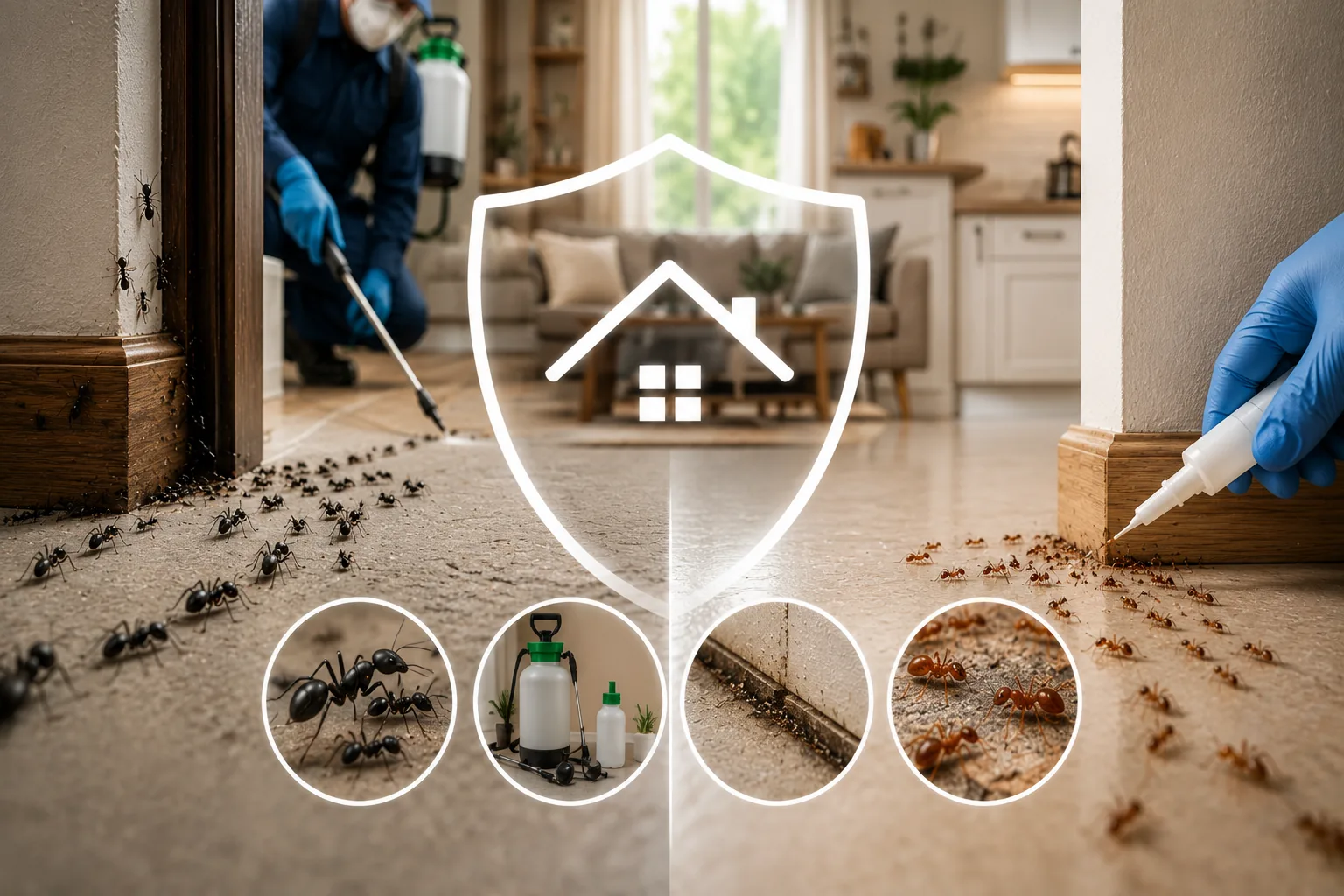
Before you jump to ant treatment, spend two minutes actually looking at the ants — our complete guide to ant control in Bangalore has a fuller species breakdown if you're not sure what you're dealing with. Small, black or dark brown ants in a perfect line, often around sweets and leftover tea, are usually sugar-loving house ants nesting in walls or under flooring.
Red ants in India tend to be more aggressive, give a sharp sting, and build nests in plant pots, garden soil, tree trunks, and sometimes roof or balcony corners. They often go after oily or protein-rich food, which changes how well different baits work on them.
Step-By-Step Home Ant Control Plan
Start with the one thing most people skip: a deep clean around where you see trails. A small smear of jam under a jar lid, ghee splashes behind the gas stove, or sugar grains in the drawer are enough to keep an entire ant removal effort from working.
Wipe counters with regular dish soap water instead of only plain water. Soap breaks the scent trail that ants use to guide each other, so fresh workers can't easily follow the path back into your kitchen.
Use Baits Instead Of Only Sprays
Sprays feel satisfying because you see instant results, but as a primary ant killer they're usually the wrong tool. Spraying directly on the trail kills the foragers before they can carry poison back to the colony.
Gel baits and ready-made ant bait stations work better because ants collect the slow-acting poison and share it with the queen and larvae. Place small dots or stations near the trail, not on top of it, and leave them undisturbed for 24-72 hours.
Seal Common Entry Points
Once movement slows, finish the job by closing gaps. Focus on cracks near window frames, loose tiles, sink pipe openings, and electrical conduits, since these are popular routes ants use for long-term ant control inside flats.
Use white cement, silicone sealant, or even transparent adhesive for hairline gaps. For larger holes around pipes, stuff in a bit of steel wool first, then seal over it to make it harder for ants to chew through again.
Use Natural Repellents Carefully
Home remedies can help, but they don't replace proper ant treatment. Chalk lines, salt, coffee powder, vinegar, and turmeric confuse scent trails for a short time and may push ants to take another route, not leave the house.
If you use strong-smelling repellents, keep them away from bait zones. Repellents can stop ants from reaching the bait, which means the colony survives and your effort is wasted.
Targeted Tips For Black Ants Inside The House
Black ants in kitchens usually come for sugar, biscuits, jaggery, soft drinks, and even toothpaste. Store all sweets in airtight containers, wipe sticky bottles, and don't leave used cups with tea or coffee on the sink for hours, as this weakens any ant killer you apply.
For heavy trails, use a thin line of gel bait along the side of the path. Avoid cleaning the exact line for a day so they feel safe using it, then clean thoroughly once movement stops.
Dealing with stinging red ants outdoors? Let Standard Pest Control handle outdoor nests safely.
Book Free Inspection WhatsApp UsDealing With Painful Red Ants Indoors And Outdoors
Red ants in plant pots and balconies can quickly turn daily chores into a stinging mess. For this kind of ant infestation, start by moving pots slightly away from walls so branches and leaves don't touch your windows or grills.
Wear gloves, gently tap pots to see where the nest exits are, then dust an appropriate outdoor insecticidal powder or use a granular bait suited for protein-loving ants. Avoid over-watering after treatment so the product isn't washed away immediately.
When To Call Professional Help
Some infestations don't respond to home ant control methods. If you keep seeing fresh trails even after a week of baiting and sealing, there are probably multiple colonies linked through cracks in the building structure, and it's worth involving a properly licensed pest control company.
Multi-storey buildings, ground-floor flats near gardens, and food businesses often need expert pest control services because nests hide deep in walls, false ceilings, and behind heavy fixed cabinets where you can't safely access them.
What Professional Ant Control Involves
A trained technician will first inspect for moisture issues, structural cracks, and food sources, then recommend a mix of gels, baits, and sometimes residual sprays. Good professional ant control doesn't depend on one strong chemical but on a planned, low-toxicity treatment over key areas — the same checks worth confirming with any pest control company you shortlist.
Ask what chemicals are being used, how long you should stay out of treated rooms, and how safe they are for children, elderly family members, and pets so you can plan accordingly.
Preventing Ants From Coming Back
Prevention isn't complex, but it has to be consistent. Daily habits like wiping counters after each meal and taking out kitchen waste every night reduce the need for frequent ant removal and re-treatment.
Keep outside dustbins covered, clear fallen food from balconies after evening snacks, and trim plants touching walls or grillwork. These habits make your home far less attractive to foraging ants.
Frequently Asked Questions
How can I tell black ants and red ants apart?
Black or dark brown ants are small, move in a perfect line, and go after sugar and leftover tea, usually nesting in walls or under flooring. Red ants are more aggressive with a sharp sting, build nests in plant pots, garden soil, or tree trunks, and often prefer oily or protein-rich food.
Why doesn't spraying alone get rid of ants for good?
Spraying only kills the workers you can see, which is usually less than 10% of the colony. The rest stay hidden in wall cracks, under tiles, in planters, or in ceiling voids, so the colony keeps sending new workers out.
How long should I leave ant bait undisturbed?
Place bait dots or stations near the trail, not directly on top of it, and leave them undisturbed for 24-72 hours so ants have time to carry the poison back to the nest.
How do I safely get rid of red ants in outdoor pots?
Move pots away from walls, wear gloves, gently tap the pot to find nest exits, then use an outdoor insecticidal powder or a granular bait suited for protein-loving ants, and avoid over-watering right after treatment.
Do home remedies like salt, vinegar, or turmeric actually remove an ant colony?
No. They confuse scent trails for a short time and may push ants to another route, but they don't remove the colony. Keep them away from bait zones, since strong smells can stop ants from reaching the bait.
When should I call a professional instead of continuing DIY ant treatment?
If fresh trails keep appearing even after a week of baiting and sealing, there are likely multiple linked colonies. This is especially common in multi-storey buildings, ground-floor flats near gardens, or food businesses where nests are hidden beyond safe DIY reach.
Conclusion
Getting rid of black ants and red ants for good means changing the way you attack the problem: clean first, bait the colony, close the gaps, then keep food and moisture under control. If home methods don't hold, bringing in Standard Pest Control for a planned treatment can save you a lot of frustration.
Follow this simple structure for how to get rid of ants, and you'll move from constant firefighting to long-term prevention, with a home that actually stays clear of crawling trails.
Related reading: Complete Guide to Ant Control in Bangalore: Treatment, Prevention & Cost | Why Ants Keep Returning Even After Spraying: Common Reasons & Permanent Solutions | Monsoon Pest Control Checklist for Bangalore Homes: Protect Your Family from Seasonal Pests | Top 20 Common Household Pests Found in Bangalore Homes and How to Eliminate Them | Why Government-Licensed Pest Control Companies Are the Safest Choice for Your Home | How to Choose the Best Pest Control Company in Bangalore: 12 Expert Tips | DIY Ant Control vs Professional Ant Treatment: Which One Works Better?