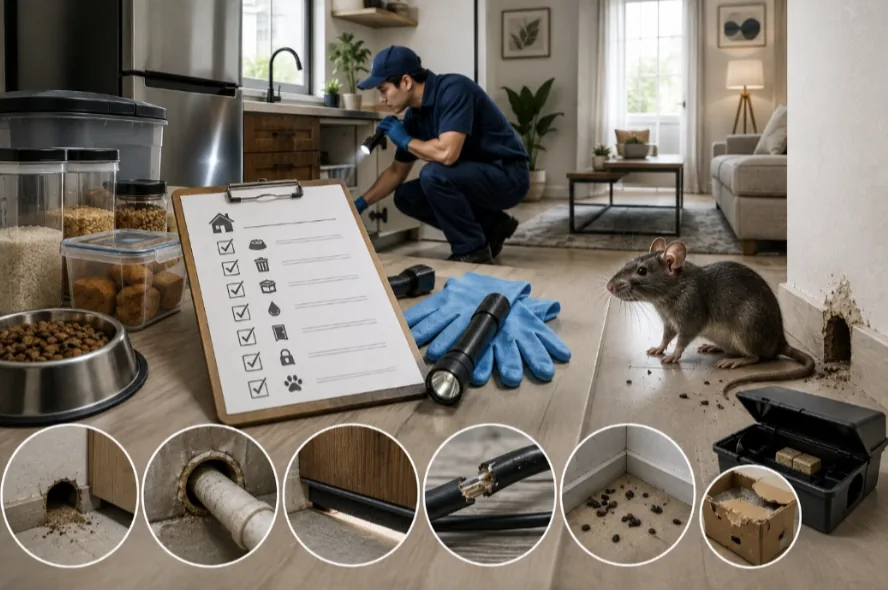
Booking professional rodent control is an important step when you discover rats or mice in your home. But successful rodent management doesn't depend only on what happens during the pest-control visit.
How you prepare your home before treatment can make a significant difference.
Rodents are highly adaptable. They can hide behind appliances, inside storage areas, above false ceilings, around utility spaces and in structural gaps. Food, water, clutter and easy entry points can allow them to remain established even after control measures begin.
Preparing your home helps the pest-control technician inspect potential harbourages, identify rodent movement routes, locate droppings and gnaw marks, find possible entry points, position monitoring or control devices appropriately, and recommend sanitation and proofing measures.
This comprehensive checklist explains what homeowners should do before, during and after professional rodent treatment.
Why Preparation Matters Before Rodent Control
Professional rodent management should begin with understanding three questions: where are the rodents entering, where are they hiding, and what food, water or shelter is supporting them?
If rooms are heavily cluttered or food is easily accessible, these questions become harder to answer. Preparation gives technicians better access to areas where rats and mice commonly travel.
The goal isn't simply to catch a rat — the better approach is: inspect, identify entry points, remove resources, control rodents, proof the building, then monitor.
Step 1: Don't Clean Away All Evidence Before Inspection
This may sound surprising. If you discover rodent droppings, gnaw marks, nesting material or damaged food packages immediately before the scheduled inspection, don't remove every sign before the technician sees the location — these clues can help identify rodent movement.
If cleaning is necessary for hygiene reasons, take clear photographs first and tell the technician exactly where activity was found. Important evidence includes droppings, gnaw marks, grease or rub marks, damaged packaging, nesting material, footprints and entry holes — these signs can help reconstruct the rodent's movement route.
Step 2: Store All Food Properly
Food availability is one of the biggest factors supporting rodents. Before treatment, inspect your kitchen and food-storage areas. Store suitable foods in secure containers, including rice, flour, cereals, pulses, biscuits, snacks, nuts, dry fruits and pet food.
Avoid leaving food in thin plastic or paper packaging where rodents can access it — rodents have strong teeth and can gnaw through many packaging materials. See our guide on rodents and food contamination for more on protecting your pantry.
Step 3: Clean Food Crumbs And Spills
A few crumbs may not seem significant to humans. For a mouse, they can be a meal. Clean kitchen counters, dining tables, floors, under appliances, behind refrigerators, under cabinets and pantry shelves.
Pay special attention to areas that are rarely moved or cleaned — food residue underneath appliances can support pest activity without anyone noticing.
Getting ready for a rodent inspection? Book your free assessment and we'll walk you through what to prepare.
Book Free Inspection Call NowStep 4: Check Your Garbage
Garbage can provide both food and shelter. Before rodent treatment: empty kitchen waste, keep bins covered, clean food residue around bins, remove overflowing garbage, and inspect the garbage-storage area.
Outdoor waste should also be managed carefully. If rodents have a reliable food source outside, they may continue approaching the building even after indoor control begins — see our guide on rodent control for apartment garbage areas.
Step 5: Store Pet Food Correctly
Pet food is often overlooked. Leaving a bowl of food on the floor overnight can provide rodents with an easy meal. Where practical, store pet food in secure containers, remove leftover food after feeding, clean spills around feeding areas, and avoid leaving large quantities of food accessible overnight. Also inform the technician if you have pets so control devices can be positioned appropriately.
Step 6: Reduce Clutter
Rodents prefer protected areas where they can remain undisturbed. Heavy clutter provides shelter, nesting material and hidden movement routes. Reduce unnecessary cardboard boxes, paper, plastic bags, old newspapers, fabric piles and unused packaging.
You do not need to empty your entire house. The objective is to make walls, corners, storage areas and suspected harbourages accessible for inspection.
Step 7: Organize Storage Rooms
Storage rooms are common rodent harbourage areas because they are often dark and rarely disturbed. Before treatment: move boxes slightly away from walls where practical, remove unnecessary cardboard, organize stored materials, check damaged packages, look for droppings, and inspect corners.
Rodents frequently travel close to walls, so providing inspection access around room edges can be useful.
Step 8: Inspect The Kitchen Carefully
The kitchen is one of the most important areas during rodent inspection. Look around the refrigerator, sink, kitchen cabinets, gas-pipe openings, drainage pipes, utility openings, exhaust areas and door gaps.
Do not seal suspicious holes immediately before the professional inspection unless there is an urgent safety reason — the technician may need to determine whether the opening is an active rodent route.
Not sure what counts as a suspicious opening? Let our technicians assess it during the inspection.
Book Free Inspection WhatsApp UsStep 9: Check Behind The Refrigerator
Refrigerators can create protected spaces that rodents may investigate. Where safe and practical, provide access around the refrigerator for inspection. Technicians may look for droppings, gnawing, nesting material, food debris and structural gaps.
Do not dismantle electrical appliances yourself. If electrical cables appear damaged, stop using affected equipment where appropriate and seek qualified electrical assistance — see our guide on rodents and electrical fires for the risks of chewed cables.
Step 10: Check Under The Kitchen Sink
Plumbing openings are common structural vulnerabilities. Inspect where pipes enter walls, cabinets and floors. Large gaps around plumbing can provide potential rodent access — a professional can determine whether proofing is required.
Step 11: Inspect Door Gaps
Rodents can enter through surprisingly small openings. Mice can exploit gaps much smaller than many homeowners expect, while rats can also squeeze through relatively narrow openings. Inspect main doors, utility doors, balcony doors, store-room doors and garage entrances, paying particular attention to the gap beneath the door.
Suitable rodent-proof door sweeps or other exclusion measures may be recommended — see our full guide on how small a hole a rodent can squeeze through.
Step 12: Check Utility And Service Openings
Modern buildings contain numerous openings for electrical cables, internet cables, air-conditioning pipes, plumbing, gas lines, drainage and ventilation. Improperly sealed service penetrations can create rodent entry routes. Mark suspicious openings so the technician can inspect them.
Step 13: Don't Seal An Active Rodent Inside
Rodent proofing is essential — but timing matters. If you simply seal every opening without understanding where rodents are located, you may trap an animal inside a wall, ceiling or room, which can create additional problems.
The better sequence is generally: inspect, determine activity, control existing rodents, proof entry points, then monitor. The exact sequence depends on the property and infestation — see our detailed guide on rodent exclusion.
Step 14: Inspect False Ceilings
Scratching sounds above a false ceiling should never be ignored. Rodents may use ceiling voids as protected movement routes. Tell the technician which room the noise comes from, what time you hear it, how frequently it occurs, and where activity seems strongest. Do not climb into unsafe ceiling spaces yourself — professional inspection may be necessary.
Step 15: Check Balconies And Utility Areas
Apartments can experience rodent entry through balconies and utility areas. Inspect drainage pipes, utility shafts, AC lines, service ducts, door gaps and stored materials. Avoid leaving food waste or excessive clutter in these areas.
Step 16: Inspect Outdoor Areas
For independent houses and villas, rodent control should not stop at the front door. Inspect garden areas, garbage zones, drains, compound walls, utility rooms, storage sheds, vegetation and building foundations — outdoor rodent activity may be contributing to the indoor problem.
Step 17: Trim Excessive Vegetation
Vegetation touching buildings can provide shelter or movement opportunities for some rodents. Where appropriate: trim overgrown plants, remove unnecessary vegetation near walls, keep storage away from the building, and remove accumulated debris. Roof rats are skilled climbers, so branches contacting roofs or upper structures deserve attention — see our full guide on landscaping for rodent prevention.
Step 18: Tell The Technician About Children And Pets
This is extremely important. Before treatment, tell your pest-control provider if the property has young children, dogs, cats, birds or other pets. Rodent-control devices and products should be selected and positioned with safety in mind. Never move, open or tamper with professional bait stations.
Step 19: Never Leave Rodenticide Loose Around The Home
Rodenticides require careful handling. They should not simply be scattered around accessible household areas — improper placement can create risks to children, pets and non-target animals. Professional rodent-management programs may use tamper-resistant bait stations or other control methods depending on the situation. Always follow product labels and applicable safety requirements — see our guide on the dangers of secondary rodenticide poisoning.
Step 20: Prepare A List Of Rodent Sightings
Before the technician arrives, write down where rodents have been seen. For example: "kitchen, 10:30 PM," "utility area, early morning," "false ceiling, scratching after midnight," "store room, droppings near back wall." This information can help identify movement patterns.
What Should You Tell The Rodent-Control Technician?
Share as much information as possible. Mention where rodents were seen, where droppings were found, scratching noises, damaged food packages, gnawed cables or materials, previous rodent-control attempts, possible entry holes, pet locations, and recent construction or plumbing work. Small details can help locate the source.
What Happens During Professional Rodent Treatment?
A professional rodent-control visit may begin with a detailed inspection. The technician may assess the rodent species (mice, Norway rats, roof rats, or another rodent), where activity is strongest, how rodents are entering, what food sources are supporting them, where they might be nesting, and which movement routes they're using. Treatment is then selected based on the findings.
Common Professional Rodent-Control Methods
Depending on the property and infestation, a professional program may include trapping, monitoring, secured bait stations, rodent proofing, sanitation recommendations, habitat modification, and follow-up inspections. There is no single method suitable for every rodent infestation — the best program is based on species, location, risk and building structure.
Rodent Proofing Is Essential
Removing existing rodents without correcting entry points may allow new rodents to enter later. Rodent proofing may involve suitable materials to address pipe gaps, door gaps, utility penetrations, vent openings, structural holes and roofline vulnerabilities. Rodents can gnaw through many weak materials, so proofing materials should be selected carefully.
What NOT To Do Before Rodent Treatment
Avoid these common mistakes:
- Don't scatter poison everywhere — this creates unnecessary risks and makes monitoring difficult.
- Don't block every hole immediately — you could trap rodents inside.
- Don't move professional stations — their location may be based on rodent behaviour.
- Don't use multiple DIY products randomly — this can interfere with a structured control program.
- Don't hide evidence — tell the technician where activity has occurred.
- Don't leave food accessible — food competition can reduce the effectiveness of some control strategies.
After Rodent Treatment: What Should You Expect?
Rodent control is not always instantaneous. The timeline depends on infestation level, rodent species, building structure, food availability, control method, entry points and neighbouring activity. Continue following sanitation and proofing recommendations — monitoring is essential.
Don't Immediately Move Traps Or Stations
Rodents often follow established movement routes. Professional devices may be deliberately positioned along walls, near harbourages, close to entry routes, or around activity zones. Moving them may reduce their effectiveness. If a station is inconvenient, contact the pest-control provider rather than relocating it yourself.
How To Clean Rodent Droppings Safely
Rodent droppings should not be handled carelessly. Avoid sweeping or vacuuming dry droppings in a way that may disturb contaminated dust. Use appropriate hygiene precautions and follow applicable public-health guidance for cleaning rodent-contaminated areas. For extensive contamination, professional cleaning may be appropriate — see our full guide on how to safely clean up rodent droppings and urine.
What If You Find A Dead Rodent?
Do not handle a dead rodent with bare hands. Use appropriate protective measures and follow local guidance for safe disposal. If a rodent dies inside an inaccessible wall or ceiling void, odour may sometimes develop — inform your pest-control technician if this occurs.
Monitor For New Droppings
After treatment, look for fresh evidence. Old droppings can remain long after activity has stopped. Monitoring helps answer the important question: is the infestation still active? Look for fresh droppings, new gnaw marks, new food damage, fresh noises and new sightings. Report continuing activity during follow-up visits — see our guide on signs of rodent infestation.
Rodent Control In Apartments
Apartment rodent problems can be complicated because rodents may move through shared building systems — utility shafts, plumbing, false ceilings, service ducts, basements, garbage areas and common drainage. If several flats experience rodent activity, treating one apartment alone may not solve the underlying problem. Building-level inspection may be necessary.
Rodent Control For Independent Houses And Villas
Independent properties may require inspection of both indoor and outdoor areas. Pay particular attention to compound walls, gardens, roof areas, drains, garbage storage, utility rooms, building foundations, tree branches and external service openings. Successful rodent control often combines indoor treatment with exterior exclusion.
Professional Rodent Control In Bangalore
Standard Pest Control provides professional rodent control services in Bangalore for residential and commercial properties, suitable for apartments, independent houses, villas, restaurants, hotels, hospitals, offices, schools, warehouses, factories and commercial kitchens.
Our rodent-management approach focuses on inspection, identification, control, proofing, sanitation and monitoring. The objective isn't simply to remove the rodent you happened to see — it is to identify how rodents are entering, what is supporting them, and how future activity can be reduced.
Comprehensive Rodent Treatment Preparation Checklist
Use this quick checklist before your appointment.
Food & Kitchen
- ☐ Store food securely
- ☐ Clean crumbs and spills
- ☐ Remove exposed food
- ☐ Check pantry packages
- ☐ Clean underneath accessible appliances
- ☐ Secure pet food
Garbage
- ☐ Empty waste bins
- ☐ Use covered bins
- ☐ Clean garbage areas
- ☐ Remove food waste
Storage
- ☐ Reduce cardboard clutter
- ☐ Organize storage areas
- ☐ Provide access around walls
- ☐ Check for droppings
Entry Points
- ☐ Note suspicious holes
- ☐ Inspect plumbing gaps
- ☐ Check utility openings
- ☐ Inspect door gaps
- ☐ Do not prematurely seal active routes
Activity
- ☐ Record sightings
- ☐ Note scratching sounds
- ☐ Photograph droppings if cleaning is necessary
- ☐ Identify damaged food packages
- ☐ Look for gnaw marks
Safety
- ☐ Tell the technician about children
- ☐ Tell the technician about pets
- ☐ Do not scatter rodenticide
- ☐ Do not tamper with professional bait stations
After Treatment
- ☐ Follow technician recommendations
- ☐ Keep food protected
- ☐ Maintain sanitation
- ☐ Complete recommended proofing
- ☐ Monitor for fresh activity
- ☐ Attend recommended follow-up inspections
Frequently Asked Questions
How should I prepare my house before rodent treatment?
Store food securely, remove food waste, reduce clutter, provide access to suspected harbourages, record rodent sightings and tell the technician about children, pets and possible entry points.
Should I clean rodent droppings before pest control arrives?
If possible, allow the technician to see the evidence or photograph its original location before cleaning. Droppings can help identify rodent movement routes. Follow safe cleaning practices when removal is necessary.
Should I seal rat holes before treatment?
Not automatically. Sealing active entry points without understanding where rodents are located can potentially trap them inside. Have the infestation and entry routes assessed first.
Do I need to leave my house during rodent treatment?
This depends on the control methods being used and site conditions. Follow the specific instructions provided by your pest-control professional.
Should I remove food from kitchen cabinets?
You generally don't need to remove every item unless instructed. Food should be securely stored and damaged or contaminated packaging should be addressed.
Is rodent bait dangerous to pets?
Rodenticides can present risks if improperly handled or accessed. Tell the technician about pets and children so appropriate control methods and secured placements can be selected.
How long does rodent control take?
It varies. A minor infestation may be resolved relatively quickly, while larger or structurally complex infestations can require multiple visits, proofing and ongoing monitoring.
Why am I still hearing rats after treatment?
Activity may continue for some time depending on the treatment method and infestation. Persistent or new activity should be reported so the control program can be evaluated.
What is the most important part of rodent control?
Successful long-term management generally combines removal or control of existing rodents with food management, sanitation, structural exclusion and monitoring.
Final Takeaway: Preparation Makes Rodent Control More Effective
Professional rodent treatment works best when the homeowner and pest-control technician work together.
Before your appointment: secure food, remove waste, reduce clutter, record activity, and identify possible entry points. During treatment: provide access, share information, and follow safety instructions. After treatment: maintain sanitation, complete proofing, don't disturb stations, monitor activity, and follow up.
Most importantly, don't focus only on the rat or mouse you happened to see. Ask how it got inside, where it is hiding, what is supporting it, and how another rodent can be stopped from entering. Answering those questions is the foundation of effective, long-term rodent control. For persistent rodent activity, Standard Pest Control provides pest-management services for homes and businesses across Bangalore.
Related reading: Signs of Rodent Infestation You Should Never Ignore | Rodent Exclusion: Sealing Entry Points to Keep Pests Out | How to Safely Clean Up Rodent Droppings and Urine | Rodents and Food Contamination: Protecting Your Pantry | The Dangers of Using Poison for Rodents | Apartment Rodent Control: Garbage Areas