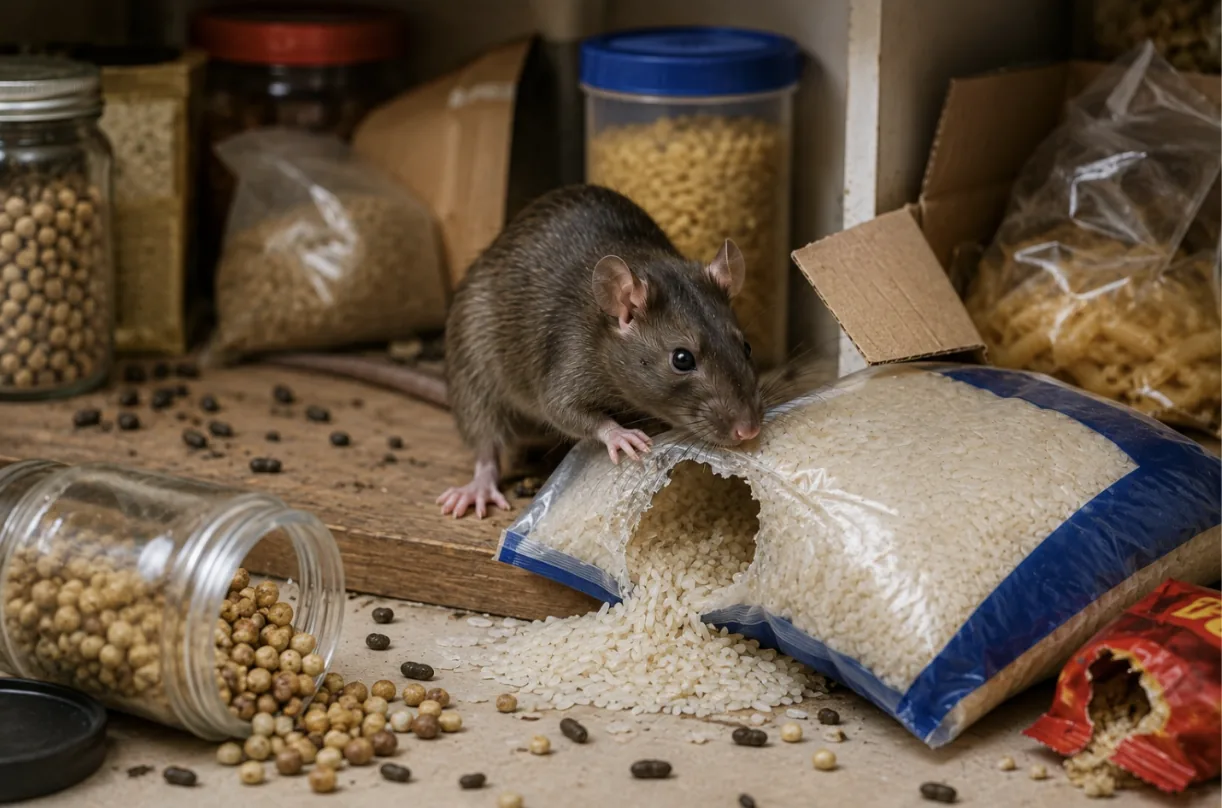
You open your pantry in the morning and notice a small hole in a rice bag. A packet of biscuits has been gnawed at the corner. Tiny dark droppings appear behind the shelves.
These may look like small problems, but they can indicate something much more serious: rodent activity around your food.
Rats and mice are not simply unwanted visitors. When rodents enter kitchens, pantries and food-storage areas, they can potentially contaminate food, packaging and surfaces with urine, droppings, saliva, hair and microorganisms carried on their bodies.
The food a rodent actually eats may be only a small part of the problem. The greater concern is everything the rodent may have walked across, gnawed or contaminated while searching for food.
This guide explains how rodent food contamination occurs, the warning signs to watch for, what to do with potentially contaminated food, and how to make your pantry less attractive and accessible to rats and mice.
Why Are Rodents Attracted To Pantries?
A pantry can provide almost everything a rodent needs: food, shelter, darkness and limited disturbance. Common foods that may attract rodents include rice, flour, pulses, cereals, biscuits, nuts, dry fruits, pet food, seeds and packaged snacks.
A pantry filled with paper bags, cardboard boxes and plastic packets can also provide potential nesting material and hiding opportunities. Once rodents discover a reliable food source, they may return repeatedly.
How Do Rodents Contaminate Food?
Food contamination doesn't occur only when a rat takes a bite from something. Rodents may contaminate food through several routes:
- Droppings: rodents can leave fecal material along travel routes and near food-storage areas.
- Urine: urine contamination may be difficult to see.
- Saliva: food and packaging can be exposed when rodents gnaw them.
- Hair and body contact: rodents can move through dirty environments before entering food-storage areas.
- Damaged packaging: once packaging has been gnawed open, the contents may be exposed to contamination.
This is why rodent activity in a pantry should be treated as a food-safety problem, not simply a pest inconvenience.
What Diseases Are Associated With Rodents?
Rodents can be associated with a number of disease-causing organisms. Depending on rodent species, geographic area and type of exposure, potential concerns can include illnesses such as leptospirosis, salmonellosis, rat-bite fever and certain hantavirus infections.
This does not mean every rat or mouse carries every disease, and it does not mean that finding one dropping automatically means someone will become ill. However, rodent-contaminated food and surfaces should be handled cautiously.
Found gnawed food packaging or droppings in your pantry? Get a free inspection to find where they're getting in.
Book Free Inspection Call NowHow Do You Know If Rodents Have Entered Your Pantry?
Rodents often remain hidden, particularly when people are active. Instead of seeing the animal, you may first notice evidence — droppings, gnawed food packets, small holes in packaging, shredded paper, damaged cardboard, food scattered on shelves, gnaw marks, unusual odours, and scratching sounds at night.
Repeated evidence suggests that the pantry may be part of an established rodent travel route. See our full guide on signs of rodent infestation for detail on each of these.
Rodent Droppings In The Pantry
Droppings are one of the clearest warning signs. They may appear behind containers, along shelf edges, in cabinet corners, behind appliances, near food packages, or under storage racks.
Do not simply sweep the droppings away and continue using everything around them without evaluating possible contamination. First identify the affected area and inspect nearby food carefully — see our guide on how to safely clean up rodent droppings and urine before you start.
What Should You Do With A Food Packet Chewed By A Rat?
If a rodent has gnawed through food packaging and the food has been exposed, the safest approach is generally to discard the affected food. Do not simply cut away the damaged section of the package and assume the remaining contents are safe — the rodent may have contaminated more than the visibly damaged area.
When in doubt about food safety, follow appropriate local public-health or food-safety guidance.
What About Food In Sealed Containers?
A properly sealed, undamaged, rodent-resistant container provides much better protection than thin packaging. Inspect the container carefully for gnaw marks, cracks, broken seals, or contamination on the exterior.
If the container itself is intact, clean and disinfect the exterior appropriately before handling or opening it in a clean area. If its integrity has been compromised, discard the food.
Why Plastic Bags Are Not Enough
Many pantry foods are sold in thin plastic packaging. That packaging may be convenient for people but is not necessarily rodent-resistant — rats and mice can gnaw many materials.
For frequently stored dry goods, consider transferring appropriate foods into durable, tightly closing containers: rice, flour, pulses, cereal and pet food all benefit from a secure container rather than the original packet. The objective is to reduce easy food access.
Don't Forget Pet Food
Pet food is one of the most commonly overlooked rodent attractants. Large bags may remain open for weeks, and bowls may also be left on the floor overnight.
To reduce rodent attraction: store pet food securely, clean spills, remove leftovers where appropriate, and avoid leaving unnecessary food accessible overnight. A rodent does not distinguish between human food and pet food — food is food.
Keep Pantry Shelves Clean
Small spills accumulate — a little flour behind a container, a few grains of rice underneath a shelf, crumbs inside a cabinet corner. These amounts may seem insignificant to us but can support small rodents.
Regularly clean shelves, corners, floors, under racks and behind containers, paying particular attention to areas that are rarely disturbed.
Rotate Stored Food
Old food sitting untouched for months creates opportunities for hidden damage. Use a simple rotation system: older products to the front, newer products to the back. This makes it easier to notice damaged packaging, expired products, spills and rodent evidence. Commercial food businesses often use similar stock-rotation principles.
Not sure if food should be discarded or is still safe? Our technicians can help you assess the contamination.
Book Free Inspection WhatsApp UsReduce Cardboard Storage
Cardboard can create clutter and potential harbourage. Rodents may also shred paper and cardboard for nesting. Where practical, remove unnecessary cartons, avoid long-term cardboard accumulation, keep storage organized, and inspect boxes regularly. A clean, visible pantry makes rodent evidence easier to detect.
Keep Food Off The Floor
Avoid storing food bags directly on the floor — this is particularly important for rice sacks, flour bags, pet-food bags and bulk ingredients. Elevated, organized storage makes inspection and cleaning easier. For commercial food storage, appropriate shelving and clearance around storage areas can improve monitoring.
Check Behind The Pantry
Sometimes the pantry itself is not the source of the infestation — the rodent may be entering through a structural opening behind it. Inspect for plumbing gaps, electrical penetrations, wall openings, damaged vents, door gaps and utility shafts. A professional rodent inspection can help identify these access routes.
How Small An Opening Can Rodents Use?
Rodents can exploit surprisingly small gaps. Mice in particular can enter through openings that many homeowners would overlook — this means rodent proofing requires careful inspection of pipes, doors, utility lines, vents, walls and cabinets. Finding the entry route is one of the most important parts of long-term control. See our full guide on how small a hole a rodent can squeeze through for exact gap sizes to check.
Don't Seal An Active Rodent Inside
If you discover an entry hole, your first reaction may be to seal it immediately. But timing matters — if rodents are already inside walls, ceilings or rooms, indiscriminately sealing every opening can potentially trap them inside.
Professional rodent management generally coordinates inspection, existing rodent control, exclusion and monitoring together — see our detailed guide on rodent exclusion for the correct sequence.
Garbage Management Matters
Your pantry may be spotless while the garbage area provides rodents with unlimited food. Keep waste covered, regularly removed, and away from food storage, and clean around the bin. For apartments, common garbage areas can influence rodent pressure throughout the building — see our detailed guide on rodent control for apartment garbage areas.
Water Also Attracts Rodents
Food is not the only resource rodents need. Check for leaking pipes, water around sinks, pet water areas, poor drainage and standing water. Removing unnecessary water sources makes the environment less supportive — see our guide on sanitation and rodent control for more.
Cleaning Rodent Droppings Safely
Do not handle rodent droppings with bare hands. Avoid aggressively sweeping or vacuuming dry droppings in a way that can disturb contaminated particles, and follow appropriate public-health guidance for disinfecting rodent-contaminated areas.
General precautions may include keeping children and pets away, using appropriate protective equipment, wetting/disinfecting contaminated material before removal as recommended, and washing hands thoroughly afterwards. Large amounts of contamination may require professional assessment.
Cleaning Pantry Surfaces After Rodent Activity
Once affected food has been removed, pantry surfaces should be appropriately cleaned and disinfected. Pay attention to shelves, corners, handles, floors, container exteriors and nearby surfaces. Always follow the instructions on the cleaning or disinfecting product being used, and never randomly mix household chemicals.
Why Catching One Rat Isn't Enough
Imagine you catch the rat that entered your pantry. Problem solved? Not necessarily. If the opening it used remains accessible, another rodent can enter.
Successful rodent management requires asking: how did it enter, what attracted it, where was it hiding, are there additional rodents, and how can future entry be prevented? This is the difference between rodent removal and rodent management.
Professional Rodent Control For Kitchens And Pantries
A professional rodent-control inspection may assess droppings, gnaw marks, food damage, entry points, movement routes, harbourage, garbage, water sources and structural conditions. Based on the findings, appropriate control methods can be selected, including trapping, monitoring, secured bait stations where appropriate, sanitation recommendations and structural rodent proofing.
Rodent Control In Apartment Kitchens
Apartment rodent problems can be more complicated than those in isolated houses. Rodents may travel through shared utility shafts, plumbing, false ceilings, service ducts, basements and garbage areas. If multiple apartments experience rodent activity, a coordinated building-level program may be required.
Rodent Food Contamination In Restaurants
Food businesses require particularly strict rodent prevention. A single rodent can potentially affect food safety, customer confidence, reputation and operations. Commercial kitchens should monitor dry stores, food-preparation areas, garbage rooms, delivery entrances, drains and equipment areas. Rodent control should be preventive rather than waiting for a customer or employee to see a rat.
Rodent Prevention For Food Warehouses
Warehouses may contain large quantities of attractive food products. Rodents can damage far more product than they actually consume because contaminated or compromised stock may need to be discarded. Important preventive measures include organized storage, stock rotation, spill cleanup, structural exclusion, waste management and regular monitoring.
Pantry Rodent Prevention Checklist
Use this quick checklist.
Food Storage
- ☐ Transfer suitable dry foods into secure containers
- ☐ Keep packages properly closed
- ☐ Inspect food regularly
- ☐ Discard rodent-damaged food
- ☐ Store pet food securely
Cleaning
- ☐ Remove crumbs
- ☐ Clean spills immediately
- ☐ Clean behind storage containers
- ☐ Keep floors clean
- ☐ Inspect corners
Storage
- ☐ Reduce unnecessary cardboard
- ☐ Keep food off the floor
- ☐ Rotate older stock forward
- ☐ Keep shelves organized
Rodent Proofing
- ☐ Inspect pipe gaps
- ☐ Check door gaps
- ☐ Inspect utility openings
- ☐ Check wall penetrations
- ☐ Arrange proper exclusion
Monitoring
- ☐ Look for fresh droppings
- ☐ Check for gnaw marks
- ☐ Listen for nighttime activity
- ☐ Inspect damaged packaging
- ☐ Report recurring activity
Professional Rodent Control In Bangalore
Rodents can become a problem in Bangalore apartments, independent houses, restaurants, hotels, commercial kitchens, warehouses and food-storage facilities. Standard Pest Control provides professional rodent control services in Bangalore for residential and commercial properties.
Our approach focuses on inspection, identification, rodent control, sanitation, exclusion and monitoring. The objective is not simply to remove the rat seen near your pantry — it is to identify where it entered, what food was accessible, what areas may have been contaminated, and how another rodent can be prevented from entering.
Frequently Asked Questions
Can rats contaminate food?
Yes. Rodents can contaminate food and food-contact areas through droppings, urine, saliva, hair, gnawing and contact with contaminated surfaces.
Should I throw away food that a rat has chewed?
Food in packaging that has been gnawed open or otherwise directly exposed to rodents should generally be discarded rather than consumed.
Can I eat food from an intact sealed container?
If the container is genuinely intact and has not been penetrated, the contents may remain protected. The exterior should still be appropriately cleaned if it has been exposed to rodent contamination. Follow relevant food-safety guidance when uncertain.
What foods attract rats and mice?
Rodents may eat many foods, including grains, cereals, nuts, seeds, snacks, pet food and food waste.
Are plastic food bags rodent-proof?
No. Rats and mice can gnaw through many types of thin plastic packaging.
Can rodent droppings contaminate a pantry?
Yes. Droppings indicate rodent activity and may create contamination concerns. Affected areas should be cleaned using appropriate precautions.
Should I vacuum rat droppings?
Avoid vacuuming or dry-sweeping rodent droppings before appropriate disinfection, as this may disturb contaminated particles. Follow applicable public-health cleaning guidance.
Why do rodents keep coming back to my kitchen?
Common causes include accessible food, garbage, water, clutter, open entry points and activity in neighbouring areas.
Does a clean kitchen prevent rats?
Good sanitation greatly reduces attraction, but even a clean kitchen can experience rodent activity if structural entry points allow access.
When should I call professional rodent control?
Professional assistance is advisable when rodents are repeatedly seen or heard, fresh droppings continue appearing, food packages are being damaged, activity occurs inside ceilings or walls, or entry points cannot be identified.
Final Takeaway: Protect The Pantry, Not Just The Food
A rodent inside a pantry may eat only a small amount of food. But it can potentially contaminate much more than it consumes. That's why the real question isn't "how much food did the rat eat?" — it's "what food, packaging and surfaces did the rat contact?"
Effective pantry protection follows a simple strategy: store, clean, inspect, control, exclude, monitor. Keep food protected, remove waste, clean spills, reduce clutter, identify rodent entry points, and monitor for fresh activity.
When rodents repeatedly enter food-storage areas, address the source rather than relying only on temporary DIY solutions — because a rodent-free pantry isn't just about protecting your groceries. It's about protecting food safety, hygiene and your home. For persistent rodent activity, Standard Pest Control provides pest-management services for homes and businesses across Bangalore.
Related reading: How to Safely Clean Up Rodent Droppings and Urine | Signs of Rodent Infestation You Should Never Ignore | Sanitation and Rodent Control: Eliminating Food and Water Sources | Rodent Exclusion: Sealing Entry Points to Keep Pests Out | Apartment Rodent Control: Garbage Areas | Are Rodents Using Your Kitchen as a Midnight Playground? | Are Rodents Dangerous? Diseases, Allergies, and Contamination