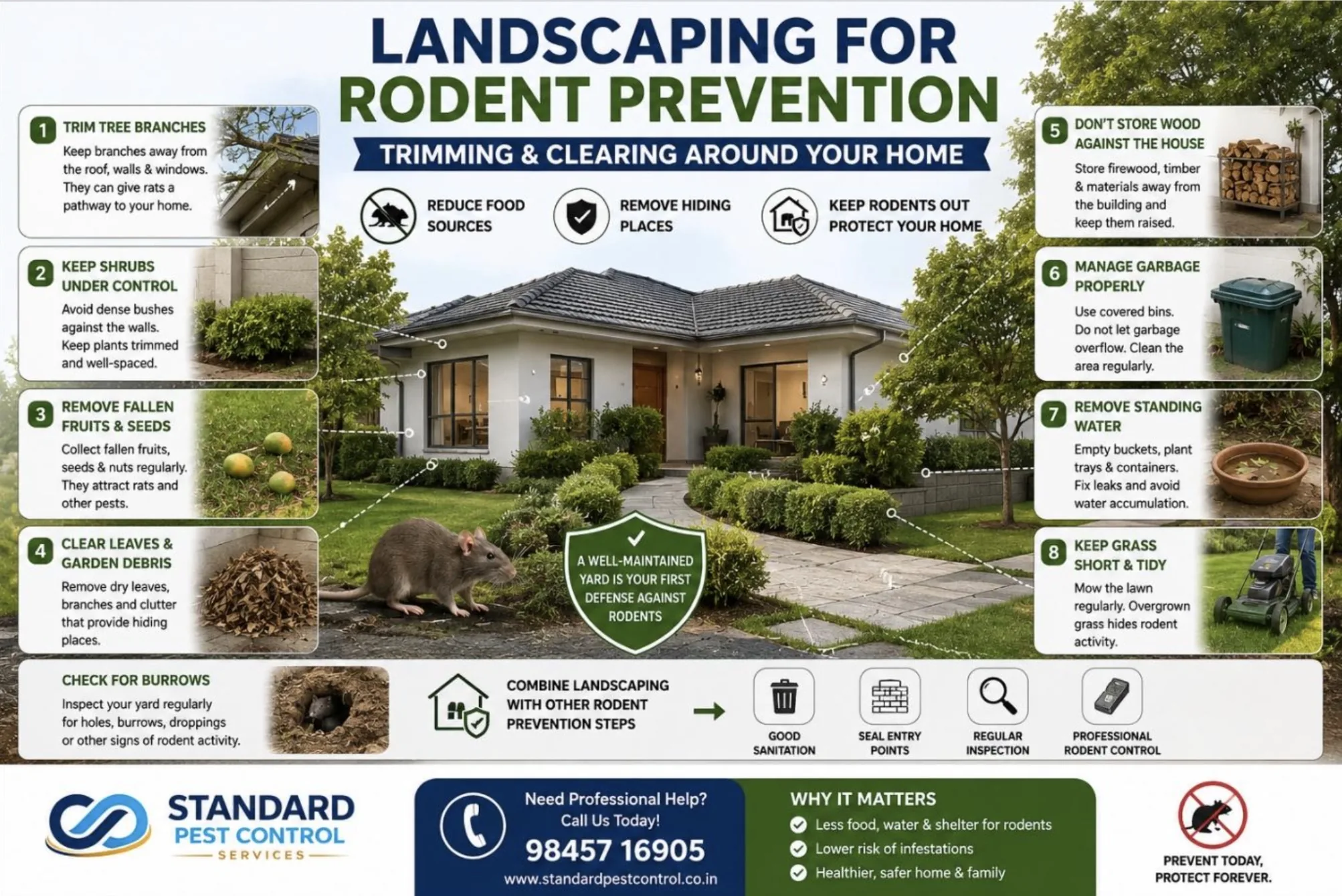
A beautiful garden can improve the appearance of your home, provide shade and create a pleasant outdoor environment. But overgrown vegetation, fallen fruits, dense shrubs and clutter around the building can also provide food, shelter and travel routes for rats and mice.
This doesn't mean you need to remove your garden.
The goal is to maintain landscaping in a way that reduces potential rodent harbourage and makes it more difficult for rodents to reach your home.
For Bangalore homeowners, particularly those living in independent houses, villas and ground-floor apartments, good landscaping can be an important part of an overall rodent prevention programme.
Why Does Landscaping Matter For Rodent Prevention?
Rodents look for three basic resources around a property: food, water and shelter. Landscaping can unintentionally provide all three.
Dense vegetation can offer hiding places. Fallen fruit, seeds and food waste can provide food. Irrigation leaks and standing water can provide moisture. Trees and climbing vegetation may even provide pathways towards roofs, balconies and upper floors.
Good landscaping therefore complements professional rodent control in Bangalore by making the exterior of your property less attractive and accessible to rodents.
1. Trim Tree Branches Away From The House
One of the most important landscaping steps is preventing tree branches from creating easy pathways towards the building. Some rodents, particularly roof rats, are capable climbers. They may use tree branches, fences, cables, pipes, creepers and structural ledges to move around properties.
Branches touching or closely overhanging roofs, balconies and windows should be appropriately trimmed where practical. Pay particular attention to branches near roof tiles, eaves, balconies, windows, AC outdoor units and terrace areas.
After trimming, inspect these areas for possible structural openings that rodents could exploit.
2. Keep Shrubs And Bushes Under Control
Thick shrubs immediately against a building can create protected spaces where rodents can move without being easily noticed. Regularly prune overgrown plants and avoid allowing vegetation to completely cover the lower exterior walls.
Creating visible, accessible areas around the building also makes it easier to spot burrows, droppings, gnawing, tracks, structural gaps and rodent movement.
The objective isn't to eliminate landscaping — it's to avoid creating dense, undisturbed harbourage immediately beside the building.
Noticed activity near your garden or boundary wall? Get a free inspection to check the property perimeter.
Book Free Inspection Call Now3. Remove Fallen Fruits Regularly
Fruit trees can become a significant food source for rodents when ripe or damaged fruit falls and remains on the ground. If your garden contains fruit-bearing trees, collect fallen fruit regularly — mangoes, guavas, bananas, sapota, papayas and other garden fruits.
Do not allow damaged or overripe fruit to accumulate underneath trees. Removing food sources is an important part of Integrated Pest Management (IPM).
4. Clear Dry Leaves And Garden Debris
Piles of dry leaves, branches and garden waste can provide protected hiding areas. Regularly remove fallen leaves, dead branches, grass cuttings, plant waste, unused pots, coconut shells and garden debris.
Pay special attention to material accumulating behind sheds, boundary walls and other rarely disturbed areas. Clean landscaping makes rodent activity easier to detect.
5. Don't Store Firewood Directly Against The House
Wood piles can provide excellent shelter for rodents. If firewood, timber or other materials must be stored outdoors, avoid placing them directly against the building wherever possible.
Keep storage areas organised and inspect them periodically for droppings, burrows, nesting material, gnaw marks and rodent sightings.
The same principle applies to unused construction materials. Bricks, tiles, pipes, plywood and other materials left undisturbed for long periods can create harbourage opportunities.
6. Manage Compost Carefully
Home composting can be environmentally beneficial, but poorly managed compost may attract rodents. Avoid placing inappropriate food waste into open compost areas. Use a suitable composting system and keep the surrounding area clean.
Regularly check for signs such as burrowing, gnawing, droppings, disturbed compost and rodent pathways. If rodent activity is repeatedly detected around a composting area, the setup may need modification.
Seeing burrows or gnawed fruit in your garden? Ask about our exterior rodent inspection.
Book Free Inspection WhatsApp Us7. Control Outdoor Garbage
Landscaping and garbage management are closely connected when it comes to rodent prevention. Outdoor garbage bins should ideally have secure lids and should not overflow. Clean spilled food waste promptly.
Garbage areas should also be positioned and maintained so that waste does not accumulate among plants or along boundary walls. For apartment complexes, community garbage areas can become a major source of rodent pressure if waste management is poor.
8. Remove Standing Water
Rodents need water as well as food and shelter. Inspect landscaped areas for unnecessary standing water around plant trays, buckets, garden containers, leaking taps, irrigation systems, drainage areas and roof-water outlets.
Repair leaking outdoor taps and irrigation pipes. Good drainage is also useful for reducing conditions favourable to mosquitoes and other pests.
9. Keep Grass And Ground Cover Maintained
Overgrown grass can make inspection difficult and provide rodents with additional cover. Maintain lawns and ground vegetation regularly, particularly around building foundations, storage areas, boundary walls, utility spaces, garbage zones and outdoor kitchens.
The aim is to maintain enough visibility that signs of rodent activity can be detected early.
10. Check For Burrows Around The Garden
Some rats may create burrows in suitable ground conditions. During routine garden maintenance, inspect areas around foundations, boundary walls, garden sheds, garbage areas, stored materials and dense vegetation.
Look for holes accompanied by disturbed soil or repeated signs of activity. Avoid assuming every hole is necessarily a rat burrow; professional inspection can help confirm the cause when activity is unclear.
11. Keep Creepers Away From Potential Entry Points
Climbing plants can add character to a building, but dense creepers may also conceal structural gaps and provide travel routes for pests. Pay particular attention to creepers growing around windows, roof edges, balconies, ventilation openings, AC lines and utility penetrations.
Regular trimming helps keep these structural areas visible for inspection — see our guide on rodent exclusion for more on common entry points.
12. Inspect Boundary Walls And Fences
Rodents don't recognise property boundaries. They may move between neighbouring properties using compound walls, fences, vegetation and drainage routes.
Inspect boundary areas for heavy vegetation, stored materials, garbage, structural gaps, burrows and food waste. Keeping these areas clean can reduce harbourage immediately around your property.
Landscaping And Rodent Exclusion Work Together
Good garden maintenance reduces rodent shelter and food, but landscaping alone cannot prevent rodents from entering a building. You should also inspect potential rodent entry points around the roof, eaves, windows, doors, pipes, vents, drains, utility openings and wall gaps.
This combination is known as rodent exclusion. Think of the strategy as: clear, trim, clean, seal, monitor.
Landscaping Tips For Bangalore Villas And Independent Houses
Villas and independent houses often have gardens, compound walls and multiple exterior utility connections. These properties should be inspected from the boundary wall all the way to the roof.
Pay particular attention to trees touching roofs, dense shrubs beside exterior walls, outdoor garbage, fruit trees, drainage systems, garden sheds, unused construction materials and outdoor pet-feeding areas.
Periodic exterior inspections can help identify rodent conditions before animals enter the building.
Rodent Prevention For Bangalore Apartments
Landscaping can also affect apartment communities. Large residential complexes may have landscaped gardens, basement parking, garbage rooms, clubhouses, food courts, drainage systems and utility shafts.
Rodents attracted to outdoor areas can eventually move into basements and buildings. Apartment associations should coordinate landscaping, waste management, sanitation and professional rodent monitoring rather than treating these activities separately.
Landscaping Around Restaurants And Commercial Properties
Restaurants, hotels and commercial kitchens require additional attention because landscaping may be located close to areas containing food waste. Vegetation around back doors, garbage areas, delivery zones, kitchen entrances and drainage areas should be maintained carefully.
Rodent management around commercial food facilities should combine landscaping, sanitation, exclusion and monitoring.
Signs Rodents May Be Living Around Your Garden
Watch for burrows or holes, rodent droppings, gnawed fruits, damaged plants, gnaw marks, nesting material, tracks, regular movement near walls, rats seen after dark, and activity around garbage.
Finding one sign does not always confirm an infestation, but repeated evidence deserves investigation.
Can Landscaping Alone Stop Rats?
No. Landscaping is an important prevention measure, but established rodent infestations usually require a broader approach. Effective rodent management should address:
- Sanitation — Remove accessible food and water.
- Landscaping — Reduce vegetation and outdoor harbourage.
- Exclusion — Seal appropriate structural entry points.
- Control — Manage rodents already present.
- Monitoring — Continue checking for new activity.
Together, these form a more comprehensive Integrated Pest Management (IPM) strategy.
Professional Rodent Control In Bangalore
If rats or mice continue appearing despite good landscaping and sanitation, there may be hidden entry points or established harbourage. A professional rodent control Bangalore programme may include:
- Inspection: Identify rodent species and signs of activity.
- Exterior assessment: Check gardens, garbage areas, drains and vegetation.
- Entry-point inspection: Identify potential access around roofs, doors, pipes and utility lines.
- Control measures: Select appropriate methods based on the site and infestation.
- Exclusion recommendations: Identify structural openings that should be sealed or protected.
- Monitoring: Continue checking activity and adjust the programme where required.
Frequently Asked Questions
Do overgrown gardens attract rats?
Dense vegetation can provide rodents with shelter and protected travel routes, particularly when food and water are also available nearby.
Can tree branches help rats reach the roof?
Yes. Some rodent species are capable climbers and may use branches and other structures to reach elevated areas.
Should I remove all plants to prevent rats?
No. A well-maintained garden can coexist with effective rodent prevention. Focus on reducing excessive vegetation, debris, accessible food and hidden harbourage.
Do fruit trees attract rats?
Fallen or accessible fruit can provide rodents with food. Collect fallen fruits regularly and keep the ground underneath trees clean.
Can rats live in garden waste?
Piles of leaves, branches and other undisturbed materials can provide shelter and nesting opportunities.
Does cutting grass prevent rodents?
Maintaining grass reduces cover and makes rodent activity easier to identify, but grass cutting alone will not eliminate an infestation.
Can roof rats climb trees?
Yes. Roof rats are agile climbers and can exploit trees, pipes, cables and other elevated structures.
How can I stop rats coming from my garden into my house?
Combine landscaping maintenance with food and waste management, removal of water sources, rodent exclusion and regular monitoring.
Why do rats keep returning even after cleaning the garden?
They may still have access to food, water, shelter or an unresolved entry route into the property.
When should I call professional rodent control?
Professional assistance is recommended when rodent sightings, droppings, burrows, gnawing or indoor activity continues despite preventive measures.
A Tidy Garden Is Part Of A Rodent-Resistant Home
Rodent prevention doesn't start at your front door. It starts at the outer edge of your property.
Regularly trimming vegetation, removing fallen fruits, clearing garden debris, controlling garbage and eliminating unnecessary water sources can make your surroundings less attractive to rats and mice.
Remember this simple approach: trim the trees, clear the clutter, remove food, remove water, seal entry points, monitor activity.
When combined with professional rodent control in Bangalore, good landscaping can play an important role in protecting homes from recurring rat and mouse problems.
Standard Pest Control — Bangalore. Professional rodent control, rat control, rodent exclusion, inspection and monitoring for homes, apartments, villas, restaurants, offices, warehouses and commercial properties across Bangalore.
Protect outside first — before rodents find their way inside.
Related reading: How Small of a Hole Can a Rodent Squeeze Through? | Rodent Exclusion: Sealing Entry Points to Keep Pests Out | Sanitation and Rodent Control: Eliminating Food and Water Sources | 10 DIY Rodent Prevention Tips for a Rodent-Free Home | Signs of Rodent Infestation You Should Never Ignore | Rodents in Summer: Outdoor Activity and Breeding