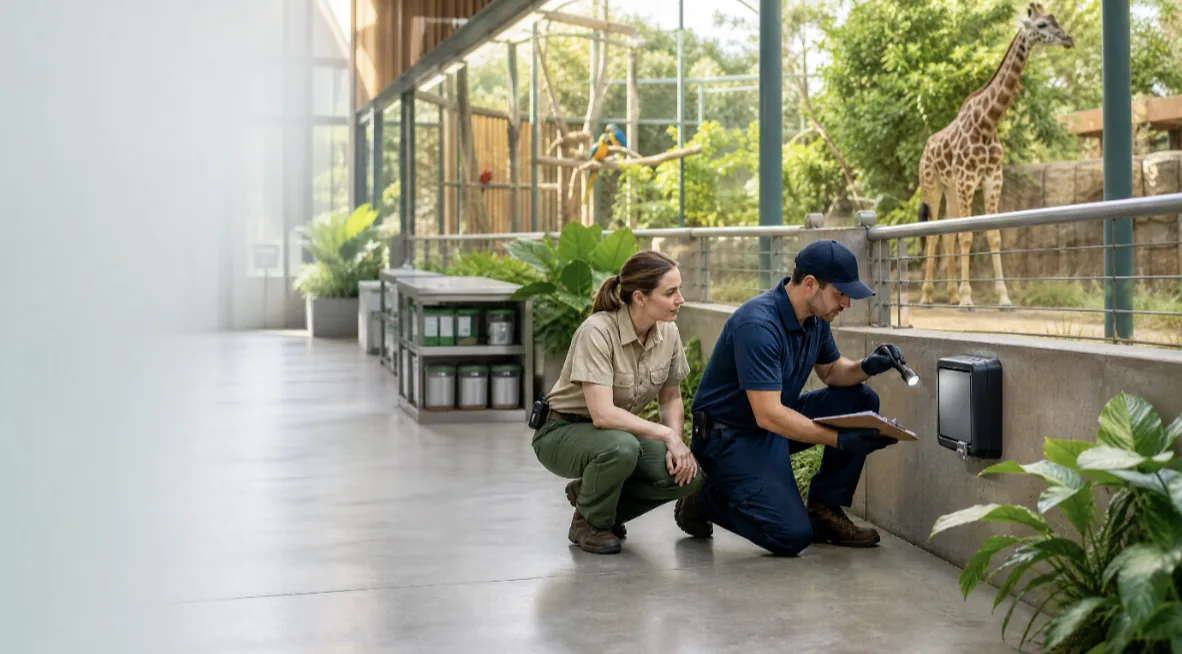
Pest control in a zoo, animal shelter, kennel, veterinary facility or other animal-care environment is very different from treating an ordinary home or office.
These facilities may contain animals, feed, water, bedding, waste, visitors, staff and sensitive habitats in the same environment. At the same time, pests such as rodents, cockroaches, flies, ants, mosquitoes and stored-product insects can contaminate food, damage structures and create hygiene or biosecurity concerns.
For this reason, pest management in animal facilities requires a carefully planned Integrated Pest Management (IPM) programme rather than routine pesticide application. The objective is simple: control pests while protecting animals, staff, visitors, feed and the surrounding environment. For professional commercial pest-management services in Bangalore, visit Standard Pest Control.
Not sure what's causing the problem? Get a professional inspection before you decide on treatment.
Book Free Inspection Call NowWhy Pest Control in Animal Facilities Requires Specialized Care
A zoo may have birds, reptiles, mammals, insects, aquatic animals and other species, each with different sensitivities. Similarly, veterinary hospitals and animal shelters may house animals of different:
- Ages
- Species
- Sizes
- Health conditions
A treatment that is suitable in one area may not be appropriate in another. Pest-control decisions therefore need to consider the target pest, animal species, enclosure type, feed, water, application area and environmental conditions together. This is why communication between the facility management, animal-care team, veterinarian and pest-management provider is essential.
Ready to get this sorted? Ask us about a structured, documented treatment plan.
Book Free Inspection WhatsApp UsCommon Pests in Zoos and Animal Facilities
Rodents
Rats and mice are particularly attracted to animal facilities because food is often continuously available. They may feed on:
- Animal feed
- Seeds
- Grains
- Food waste
- Stored supplies
- Spilled feed
Rodents can also damage:
- Electrical wiring
- Insulation
- Storage containers
- Packaging
- Building materials
Rodent management should therefore be one of the highest priorities. See Rodent Pest Control Bangalore.
Cockroaches
Cockroaches may establish themselves around:
- Animal kitchens
- Feed-preparation rooms
- Drains
- Storage areas
- Staff kitchens
- Waste areas
- Warm equipment
Food, warmth, water and shelter make these areas particularly attractive. See Cockroach Pest Control Bangalore.
Flies
Flies can become a significant problem wherever there is:
- Animal waste
- Wet bedding
- Organic matter
- Food waste
- Drainage problems
- Decomposing material
Fly management therefore depends heavily on sanitation and breeding-source removal.
Mosquitoes
Zoos and animal facilities may contain numerous potential mosquito breeding locations. These can include:
- Water troughs
- Decorative ponds
- Containers
- Blocked drains
- Flower-pot trays
- Rainwater accumulation
- Poorly maintained drainage
Regular inspection of water sources is essential. See Mosquito Pest Control Bangalore.
Ants
Ants may enter animal enclosures and feed-storage locations searching for food and water. Because animals may investigate unfamiliar materials, any ant-control programme must carefully consider bait or pesticide placement. See our complete guide to ant control for treatment options.
Stored-Product Pests
Facilities storing grain, seed, dry feed or similar materials may encounter beetles, moths or other stored-product insects. Control begins with:
- Stock rotation
- Inspection
- Cleaning
- Proper storage
- Removal of infested materials
Integrated Pest Management for Zoos
IPM is particularly well suited to sensitive animal environments. Instead of asking "Which pesticide should we spray?", IPM first asks "Why is this pest here?" A strong programme generally follows: Inspection → Identification → Prevention → Monitoring → Targeted Control → Documentation → Review.
Step 1: Conduct a Detailed Site Survey
Before beginning a pest-management programme, inspect the entire facility. The survey should include:
- Animal enclosures
- Feed kitchens
- Feed stores
- Waste areas
- Veterinary rooms
- Staff kitchens
- Restaurants
- Drainage systems
- Gardens
- Utility rooms
- Basements
- False ceilings
- Electrical rooms
- External boundaries
The objective is to identify pest hotspots and potential risk zones.
Step 2: Create Pest-Risk Zones
Not every area should be treated in the same way.
High-Sensitivity Areas
- Animal enclosures
- Veterinary treatment areas
- Feed-preparation rooms
- Aquariums
- Bird areas
- Reptile areas
These require particularly careful treatment planning.
Food and Feed Areas
- Animal kitchens
- Dry-feed stores
- Restaurants
- Cafeterias
Sanitation, monitoring and food protection are major priorities.
External Areas
- Gardens
- Waste zones
- Drainage
- Boundary areas
These may require mosquito, fly and rodent monitoring. Creating zones helps technicians choose appropriate methods for each location, following the same IPM principles used across commercial properties more broadly.
Detailed Pest Management by Area
Rodent Management Around Animal Enclosures
Rodent control requires careful planning because traps or baits should never be accessible to zoo animals or other non-target species. Start with prevention.
Remove Food Sources
Clean spilled animal feed promptly, store bulk feed in suitable containers, and use good stock-management practices.
Seal Entry Points
Inspect:
- Walls
- Doors
- Pipe openings
- Drainage
- Utility penetrations
- Roofs
- Storage rooms
Physical proofing can significantly reduce recurring rodent problems.
Use Secure Monitoring
Rodent monitoring equipment should be appropriately located, secure, regularly inspected and documented. Where baiting is necessary, professional assessment and secure placement are critical to reduce the possibility of non-target exposure.
Secondary Poisoning Requires Attention
One of the major concerns with rodenticide use around animal facilities is secondary exposure — predatory animals may potentially consume affected rodents. For this reason, rodenticide should not automatically be the first choice in every zoo environment.
A pest-management professional should consider:
- Animal species present
- Predatory behaviour
- Infestation level
- Trap alternatives
- Exclusion opportunities
- Bait placement
- Monitoring
A prevention-led rodent programme is particularly valuable in these environments.
Fly Management Begins With Sanitation
If flies are breeding in animal waste, repeatedly spraying adult flies will not solve the underlying problem. Focus on the breeding source. Improve:
- Manure removal
- Bedding management
- Drainage
- Waste collection
- Food-waste disposal
- Bin cleaning
The principle is simple: remove the breeding source before relying on chemical treatment.
Mosquito Management Around Animal Facilities
Mosquito control should begin with a regular water audit. Inspect the entire facility for stagnant water, paying particular attention after rainfall. Potential breeding areas should be drained, cleaned, covered or maintained where practical.
Water required for animals obviously cannot simply be removed, so management practices need to balance mosquito prevention with animal-care requirements. Professional mosquito treatments should be planned carefully around animal enclosures and sensitive habitats.
Cockroach Management in Feed Kitchens
Feed-preparation kitchens can provide ideal cockroach conditions: food, water, heat and harbourage. Good cockroach control requires:
- Cleaning under equipment
- Drain maintenance
- Waste management
- Crack and crevice inspection
- Monitoring
- Targeted treatment
Avoid unnecessary broad pesticide application around animal food. Treatment should focus on identified cockroach harbourages while protecting feed and preparation surfaces.
Pest Control Around Aquariums
Aquatic environments require special precautions. Fish and other aquatic organisms may be sensitive to certain pest-control products. Before any treatment near aquariums:
- Inform the pest-control technician
- Identify all aquatic systems
- Follow veterinary/facility guidance
- Protect water from contamination
- Avoid unnecessary spraying
Never allow pesticide drift, residues or contaminated equipment to enter animal water systems.
Birds Require Special Consideration
Birds can be particularly sensitive to airborne contaminants. Pest-control programmes around aviaries should therefore emphasize sanitation, exclusion, monitoring, physical controls and highly targeted interventions when necessary. Treatment should be coordinated with the facility's animal-care professionals.
Reptile and Amphibian Areas
Reptiles and amphibians can require specialized environmental conditions. Humidity, water, temperature and substrate may also create conditions favourable to pests. Pest management should therefore be coordinated with veterinary and animal-care personnel before treatment. Never assume that a product appropriate elsewhere in the facility is appropriate around these species.
Protect Animal Feed
Animal feed can become both a pest attraction and a contamination risk. Use First In, First Out (FIFO) stock rotation, and check feed bags for holes, rodent damage, insects, moisture and contamination on delivery.
Remove spilled feed promptly, use containers resistant to pest access where suitable, and keep feed off the floor. Proper shelving and storage can make inspection and cleaning easier.
Waste Management Is Critical
Waste areas can attract rats, mice, flies, cockroaches and ants. Waste should be:
- Removed regularly
- Stored in suitable covered containers
- Kept away from feed-storage areas
- Cleaned around collection points
Garbage rooms should be included in routine pest inspections.
Landscaping Can Influence Pest Activity
Dense vegetation immediately against buildings can create hiding areas and make inspection difficult. Where appropriate:
- Trim excessive vegetation
- Remove unnecessary debris
- Maintain drainage
- Manage fallen fruit
- Reduce clutter
- Inspect boundary areas
Landscaping should support animal welfare and biodiversity while avoiding unnecessary pest harbourage.
Protect Pollinators and Beneficial Wildlife
Zoo pest management should also consider the broader ecosystem. Outdoor pesticide applications can potentially affect bees, butterflies, beneficial insects, birds and other wildlife. Use targeted treatment rather than indiscriminate spraying whenever possible.
Humane Pest Management
Zoos and animal-care facilities have an especially strong reason to consider humane approaches. For wildlife and rodent problems, prioritize prevention, exclusion, habitat modification, sanitation, monitoring and appropriate trapping or control. The aim is to prevent pest populations from becoming established rather than repeatedly killing animals after an infestation develops.
Staff Training Makes Pest Control Stronger
Pest-control technicians cannot be present every minute. Animal keepers, housekeeping staff, gardeners, kitchen employees and maintenance teams therefore play an important role. Train staff to report:
- Rodent droppings
- Gnaw marks
- Cockroach sightings
- Fly breeding
- Standing water
- Damaged doors
- Structural gaps
- Feed spills
- Unusual pest activity
Early reporting can prevent a small problem from becoming a major infestation, the same reason staff pest-awareness training matters across every commercial site.
Maintain a Pest-Sighting Log
Create a simple system for staff to record the date, time, location, pest, number seen and action taken. This information can reveal patterns — for example, repeated rat sightings near the same feed-storage door may indicate a structural entry point, while repeated flies near one enclosure may indicate a sanitation or drainage issue. Data makes pest control more proactive.
Pest-Control Documentation
Animal facilities should maintain records of pest-management activity, including site inspection reports, pest-sighting records, monitoring-device maps, service reports, corrective actions, product details where applicable, follow-up recommendations and trend reports. Commercial pest management should be a documented programme, not simply periodic spraying.
Create a Site Pest-Control Map
A facility map can identify rodent monitoring points, fly-monitoring locations, pest hotspots, waste areas, feed stores, high-risk zones and sensitive animal areas. Numbering monitoring stations makes inspections easier to document and compare over time.
Emergency Pest Situations
Some situations require immediate attention, including heavy rodent activity in feed stores, pest contamination of animal feed, large fly outbreaks, rodent damage to electrical systems, pest activity in veterinary areas, and mosquito breeding around critical animal areas. An emergency response should still follow animal-safety precautions — fast treatment should not mean careless treatment.
Routine Pest Management Is Better Than Emergency Treatment
The best pest programme is proactive rather than reactive. Regular monitoring can identify problems before they become severe. A scheduled programme may include daily staff sanitation and pest observations, weekly high-risk area inspections, monthly detailed pest-management reviews, and quarterly trend analysis and structural assessment. The exact frequency should be based on facility size, pest pressure and risk.
Frequently Asked Questions
Why is pest control different in zoos?
Zoos contain many animal species with different sensitivities, along with feed, water and public areas. Pest-management methods must therefore be selected carefully for each zone.
What are the most common pests in animal facilities?
Rodents, flies, cockroaches, ants, mosquitoes and stored-product insects are among the common problems.
Can pesticides be used around zoo animals?
Treatment decisions should be made according to the target pest, product label, animal species, enclosure and facility protocols. Animal-care or veterinary personnel should be involved where appropriate.
How can zoos prevent rats?
Improve feed storage, clean spills, manage waste, seal entry points, monitor high-risk locations and maintain the building structure.
Why is rodenticide a concern in zoos?
There may be risks of direct or secondary exposure to non-target animals. This is why exclusion, sanitation, monitoring and carefully selected control methods are particularly important.
How can flies be controlled around animal enclosures?
The first step is identifying and removing breeding sources such as manure, wet bedding, food waste and organic material.
How can mosquitoes be controlled without affecting animals?
Start with breeding-source reduction and drainage management. Any pesticide treatment should be planned around animal species, water systems and sensitive areas.
How often should a zoo receive pest-control service?
There is no universal schedule. High-risk facilities generally benefit from continuous monitoring with service frequency based on pest pressure and facility conditions.
Is pest-control documentation important?
Yes. Records help track pest trends, identify recurring hotspots and document corrective actions.
What is the best pest-management approach for animal facilities?
A customized Integrated Pest Management programme combining sanitation, exclusion, monitoring, staff training, targeted control and documentation is usually the strongest approach.
Final Thoughts
Pest control in zoos and animal facilities is not simply about removing insects and rodents. It is about protecting an entire environment.
Animals must be protected, feed must remain uncontaminated, staff and visitors need hygienic surroundings, non-target wildlife should be considered, and pests still need to be effectively controlled — that requires a specialized approach.
The most effective strategy is: Prevent, Inspect, Monitor, Identify, Correct, Treat Carefully, Document, and Review.
With a strong Integrated Pest Management programme, zoos, veterinary facilities, shelters and other animal-care environments can maintain effective pest control while prioritizing animal welfare and environmental responsibility. For professional pest-management services in Bangalore, visit Standard Pest Control.
Related reading: Employee Training for Pest Awareness in the Workplace: Building a Pest-Smart Team | Pest Control for Warehouses and Storage Facilities: Protecting Goods from Damage | IPM for Commercial Properties: A Strategic Approach to Business Protection | Documentation in Commercial Pest Control: Why Records Matter | Choosing a Commercial Pest Control Provider: What to Look For