Finding a rat or mouse inside your home can be frightening, but the concern goes far beyond the unpleasant sight of a rodent running across the floor. Rodents can create genuine health, hygiene, food-safety and property risks.
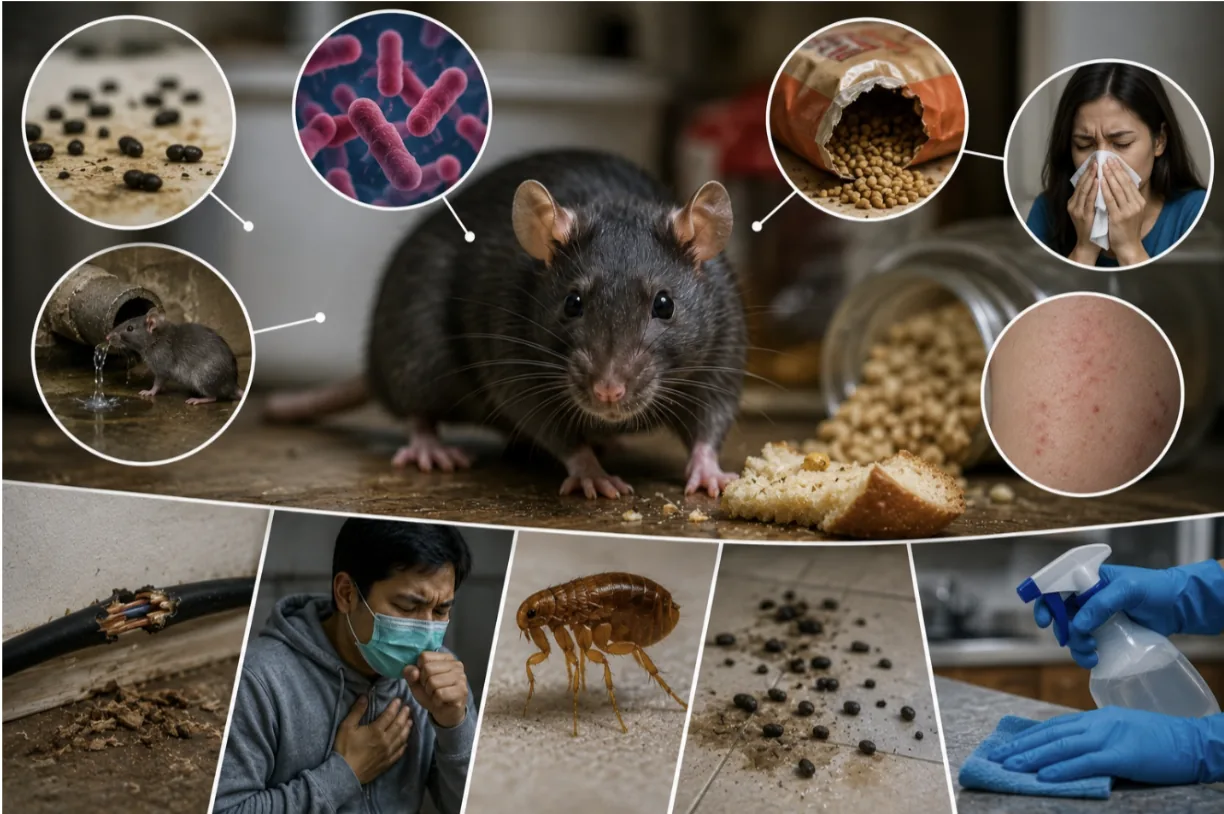
Rats and mice may contaminate food and surfaces with urine, droppings and saliva. They can carry disease-causing organisms, introduce parasites such as fleas, aggravate indoor hygiene problems, and damage food packaging while searching for something to eat.
This makes rodent infestations particularly concerning in:
- Homes
- Apartments
- Restaurants
- Hotels
- Hospitals
- Schools
- Food-storage facilities
- Warehouses
- Commercial kitchens
So, are rodents dangerous? Yes. Rodents can pose health and contamination risks, particularly when infestations are allowed to remain uncontrolled. Understanding how those risks occur is the first step toward protecting your family, employees, customers and property.
Why Are Rats and Mice Considered Health Pests?
Rodents are highly adaptable animals. They can live close to humans because our buildings provide exactly what they need: food, water, shelter and warmth.
During their daily activity, rodents may move through:
- Garbage areas
- Drains
- Sewage-associated environments
- Food-storage rooms
- Kitchens
- Basements
- False ceilings
- Utility spaces
They may then travel across surfaces where food is prepared or stored. The health concern is therefore not simply "there is a rat in my house." The bigger question is: where has that rodent travelled, and what has it contaminated?
How Can Rodents Spread Disease?
Rodent-associated infections can reach humans through several pathways. These can include:
- Direct Contact — Handling rodents or contaminated materials can create exposure.
- Urine and Droppings — Some pathogens associated with rodents may be present in urine or fecal material.
- Contaminated Food — Rodents may walk across, gnaw or contaminate food and food packaging.
- Contaminated Surfaces — Kitchen counters, shelves and storage areas can become contaminated.
- Bites — Rodent bites can occur, although avoiding contact with rodents greatly reduces this risk.
- Parasites — Rodents can carry ectoparasites such as fleas and mites that may themselves be associated with health concerns.
Different diseases have different transmission pathways, so finding a rodent does not mean that disease transmission has occurred. But an infestation should still be treated seriously.
Rodent Droppings Are More Than a Cleaning Problem
Droppings are one of the most common signs of rodent activity. They may be found:
- Behind refrigerators
- Inside cabinets
- In pantries
- Along walls
- In storage rooms
- Above false ceilings
- Near garbage
- Around food-storage areas
Droppings can indicate where rodents are travelling. They can also create a hygiene concern.
Avoid casually sweeping or vacuuming dry rodent droppings, particularly when contamination is extensive, because disturbing contaminated material can release particles into the air. Use appropriate protective and cleaning procedures based on public-health guidance — see our full guide on how to safely clean up rodent droppings and urine.
Hantaviruses and Rodents
Certain rodents can carry hantaviruses. Human exposure can occur through contact with contaminated rodent urine, droppings or saliva, including situations where contaminated particles become airborne.
Risk varies significantly by:
- Geographic region
- Rodent species
- Virus type
- Exposure circumstances
This is why rodent-contaminated areas should be cleaned appropriately rather than aggressively dry-swept. The presence of ordinary household rodents does not automatically mean hantavirus is present. Nevertheless, safe cleanup procedures are important.
Leptospirosis
Leptospirosis is a bacterial disease caused by Leptospira bacteria. Rodents are among the animals that can carry and shed these bacteria in urine.
People can become exposed when contaminated water or soil contacts:
- Broken skin
- Eyes
- Nose
- Mouth
Risk may increase in environments where rodent activity and contaminated water occur together. Controlling rodents and maintaining sanitation are therefore important preventive measures.
Salmonella and Food Contamination
Rodents can contribute to food contamination with organisms such as Salmonella. This is particularly concerning in:
- Kitchens
- Restaurants
- Food warehouses
- Grocery storage
- Commercial food facilities
A rodent does not need to eat the entire food product to create a problem. It may contaminate:
- Packaging
- Shelving
- Preparation areas
- Stored ingredients
Food that has been directly contaminated or damaged by rodents should not be consumed — see our guide on rodents and food contamination for how to protect your pantry.
Rat-Bite Fever
Rat-bite fever is a bacterial illness associated with certain bacteria carried by rodents. Transmission can occur through:
- Rodent bites
- Scratches
- Contact with contaminated material
Rodents should therefore never be handled casually. If someone is bitten or scratched by a wild or pest rodent, the wound should be cleaned appropriately and medical advice should be sought.
Fleas and Rodents
Rodents can carry fleas. Historically, fleas associated with rodents played an important role in the transmission of plague.
Modern plague cases are uncommon in many regions, but the historical relationship between rodents, fleas and disease demonstrates why rodent infestations have long been considered public-health concerns. Rodent management should consider both the animal and associated parasites when relevant.
Found droppings, gnaw marks, or a rat you can't explain? Get a professional inspection to find out what it's contaminated and where it's coming from.
Book Free Inspection Call NowDo Rodents Cause Allergies?
Rodents can also affect indoor environments through allergens. Potential allergenic materials can come from:
- Urine
- Dander
- Hair
- Saliva
Rodent allergens can become part of household dust. For sensitive individuals, exposure may contribute to allergic symptoms. The risk can be particularly relevant where rodent infestations are established and contamination has accumulated.
Rodents and Asthma
Research has linked exposure to mouse allergens with asthma problems in some sensitized individuals, particularly in environments with significant mouse infestation.
This doesn't mean every mouse sighting will cause asthma. But it reinforces an important point: rodent control is also an indoor-environmental health issue.
Controlling the animals while leaving contaminated nesting material and accumulated debris behind may not fully address the problem.
Food Contamination Is One of the Biggest Rodent Risks
Imagine a rat enters a pantry at night. It walks across shelves, gnaws a food package, moves across another container, and leaves droppings nearby. By morning, the rodent is gone. But contamination may remain.
This is why rodent control in food environments must focus on more than simply catching the animal. The program should also address: Food Storage, Cleaning, Waste Management, Exclusion and Monitoring.
Signs Food May Have Been Exposed to Rodents
Watch for:
- Gnawed packaging
- Holes in food bags
- Droppings near food
- Urine staining
- Shredded packaging
- Food scattered around storage areas
Do not simply remove the damaged corner and continue using contaminated food. Food that has been directly exposed to rodent contamination should be discarded appropriately.
Rodents in Kitchens
Kitchens provide excellent rodent resources. They offer food, water, warmth and hiding places.
Inspect:
- Behind refrigerators
- Under sinks
- Inside lower cabinets
- Pantries
- Garbage areas
- Pipe openings
- Utility gaps
Even a clean kitchen can develop a rodent problem if structural entry points remain open.
Rodents in Restaurants
Rodent activity in a restaurant can create serious consequences. Potential problems include:
- Food contamination
- Damaged packaging
- Customer complaints
- Reputation damage
- Hygiene concerns
- Regulatory issues
A restaurant should never wait until a customer sees a rat. Professional rodent management should be preventive. A commercial program may include: Inspection → Monitoring → Trapping/Baiting → Sanitation → Proofing → Documentation.
Rodents in Hospitals
Healthcare facilities require particularly careful rodent prevention. Potential rodent activity should be addressed around:
- Kitchens
- Food storage
- Waste areas
- Utility spaces
- Basements
- Landscaping
- Service corridors
Sensitive healthcare environments require carefully planned pest-management procedures.
Rodents in Schools
Schools can provide rodents with food through:
- Canteens
- Lunch areas
- Waste bins
- Stored snacks
Rodent prevention should include secure food storage, waste management, structural proofing, monitoring and regular inspection. Control methods should always take children's safety into account.
Rodents in Warehouses
Warehouses can provide excellent rodent harbourage because of large storage areas, pallets, cardboard, limited disturbance, food products and loading entrances.
Rodent activity may remain hidden for a long time. Routine monitoring is therefore important even when no live rodents have been seen.
Can Rodents Contaminate Water?
Rodent urine, feces or carcasses can potentially contaminate water sources if rodents gain access. Water-storage areas should therefore be protected against pest entry.
Inspect:
- Tank covers
- Utility spaces
- Pipe openings
- Drainage
- Roof areas
If drinking-water contamination is suspected, follow appropriate public-health guidance.
Rodent Urine Can Be Difficult to Notice
Unlike obvious droppings, urine contamination may not always be visible. Rodents repeatedly travelling through the same areas can contaminate surfaces without homeowners realizing it.
This is why cleaning should focus on known rodent activity areas—not just visible droppings.
Worried about the health risk from an ongoing rodent problem? Ask us about a documented inspection, cleanup and exclusion plan.
Book Free Inspection WhatsApp UsRodent Nests Can Contain Contamination
Rodent nesting areas may contain:
- Urine
- Droppings
- Hair
- Food debris
- Shredded material
- Parasites
After rodents have been controlled, contaminated nesting material may need to be safely removed. Large or heavily contaminated areas may require professional cleanup.
What About Dead Rodents?
Dead rodents should not be handled with bare hands. They may carry:
- Bacteria
- Parasites
- Contaminated bodily material
Use appropriate protective and disposal procedures. If a rodent dies inside a wall or ceiling void, decomposition may also produce odour and attract other pests.
Can Rats Bite Humans?
Yes, rats can bite. However, rodents usually prefer avoiding people when escape is possible. Bites are more likely when an animal:
- Feels trapped
- Is handled
- Is threatened
- Cannot escape
Never attempt to catch a live wild rat with your bare hands. Professional trapping or control methods are safer.
Rodents Can Also Damage Property
Health risks aren't the only reason to control rodents. Rats and mice have continuously growing incisors and must gnaw regularly. They may damage:
- Electrical cables
- Plastic pipes
- Packaging
- Furniture
- Insulation
- Stored materials
- Wooden structures
Electrical cable damage is particularly concerning because damaged wiring can create electrical faults and potentially increase fire risk — see our guide on rodents and electrical fires for the full picture. If you find damaged wiring, arrange inspection by a qualified electrician.
Why Rodents Gnaw Electrical Wires
Rodents do not eat electrical cables for nutrition. They gnaw because their teeth continuously grow and gnawing is a normal behaviour. Cables happen to be accessible materials in:
- False ceilings
- Utility areas
- Walls
- Equipment rooms
This makes rodent exclusion particularly important in buildings containing extensive electrical infrastructure.
How to Reduce Rodent Health Risks
Rodent prevention should focus on eliminating the conditions that support infestations.
- Store Food Securely — Use suitable rodent-resistant containers where practical.
- Manage Garbage — Keep bins covered and remove waste regularly.
- Clean Food Residue — Pay attention to areas beneath appliances.
- Store Pet Food Properly — Avoid leaving large quantities accessible overnight.
- Reduce Clutter — Remove unnecessary cardboard and nesting material.
- Repair Water Leaks — Reduce unnecessary water availability.
- Seal Entry Points — Use suitable rodent-resistant materials.
- Monitor Activity — Watch for fresh droppings and gnawing.
Don't Simply Use Poison and Forget the Problem
A common DIY strategy is: See Rat → Put Poison → Rat Disappears → Problem Solved. But what if the entry hole remains? Another rodent may enter.
Long-term rodent control requires: Control Existing Rodents, Remove Food Sources, Seal Entry Points and Monitor — see our guides on sealing entry points and eliminating food and water sources for the details behind each step.
This is why professional rodent management focuses on the whole environment.
Safe Cleaning After a Rodent Infestation
If you find rodent contamination:
- Keep children and pets away
- Avoid direct contact
- Use appropriate protective equipment
- Follow public-health recommendations for disinfecting contaminated material
- Wash hands thoroughly afterwards
Extensive contamination in ceilings, storage rooms or other enclosed environments may require professional assessment.
Why Rodent Proofing Matters
Rodent control without exclusion can become an endless cycle: Rodent Enters → Treatment → Rodent Removed → New Rodent Enters. Proofing breaks that cycle.
Inspect:
- Door gaps
- Pipe penetrations
- Utility openings
- Vents
- Structural holes
- Roofline openings
Professional exclusion should use materials appropriate for the structure and the rodent involved.
Rodent Problems in Bangalore
Bangalore's dense urban environment provides numerous opportunities for rodents. Potential contributing factors include:
- Apartment complexes
- Restaurants
- Food businesses
- Construction
- Drainage systems
- Garbage areas
- Commercial markets
- Dense building infrastructure
Rodent problems may occur in both residential and commercial properties. In apartment buildings, rodents may also travel through shared utility spaces and service infrastructure — and knowing whether you're dealing with a rat or a mouse can change where you should be looking.
Professional Rodent Control in Bangalore
Standard Pest Control provides professional rodent control services in Bangalore for residential and commercial properties. Services are available for:
- Apartments
- Independent houses
- Villas
- Restaurants
- Hotels
- Hospitals
- Schools
- Offices
- Warehouses
- Factories
- Commercial kitchens
Our approach focuses on: Inspection → Identification → Rodent Control → Sanitation → Exclusion → Monitoring.
The objective isn't simply to remove a visible rat. It is to understand where it is coming from, what is attracting it, what it has contaminated, and how another rodent can be prevented from entering — see what to expect during a professional rodent extermination service and our rodent treatment preparation checklist to know what the full process looks like.
Frequently Asked Questions
Are rats dangerous to humans?
Rats can create health risks through contamination of food and surfaces, urine and droppings, bites, parasites and exposure to certain disease-causing organisms.
What diseases can rodents carry?
Rodents can be associated with illnesses including leptospirosis, salmonellosis, rat-bite fever and certain hantavirus infections, among others. Specific risks vary by rodent species, geography and type of exposure.
Can rodent droppings make you sick?
Rodent droppings can contain or become contaminated with harmful microorganisms. They should be cleaned using appropriate precautions rather than handled directly or aggressively dry-swept.
Can rats contaminate food without eating it?
Yes. Rodents can contaminate food and packaging through contact with urine, droppings, saliva, fur or contaminated feet.
Can mice trigger allergies?
Yes. Mouse urine, dander, hair and saliva can contain allergens, and exposure can be important for some sensitized individuals.
Can rodents worsen asthma?
Rodent allergens, particularly mouse allergens, have been associated with asthma symptoms in some sensitized people.
Can rats damage electrical wiring?
Yes. Rats and mice may gnaw electrical cables. Damaged wiring should be inspected by an appropriately qualified professional.
Is it safe to vacuum rodent droppings?
Avoid vacuuming dry rodent droppings before appropriate disinfection because this may disturb contaminated particles. Follow public-health guidance for safe cleanup.
Does one rat mean there is an infestation?
Not necessarily. However, a sighting combined with droppings, gnaw marks, noises, nesting material or repeated activity warrants further inspection.
When should I call professional rodent control?
Consider professional assistance when rodents are repeatedly seen or heard, droppings continue appearing, food is being damaged, entry points are difficult to locate, rodents are present in ceiling or wall spaces, or DIY measures have not resolved the problem.
Rodents Are More Than a Nuisance
Rats and mice aren't simply unwanted visitors. An established rodent infestation can affect health, hygiene, food safety, allergies and property.
The greatest risk often comes from what rodents leave behind: urine, droppings, contaminated food, damaged packaging, parasites and gnawed materials.
Effective rodent management therefore requires more than removing the animal you see. The complete approach is: Inspect → Control → Clean → Exclude → Monitor.
If you discover rodent activity, address it early. Because when it comes to rats and mice, the most important question isn't simply "How do I catch the rat?" It is: "How do I remove the infestation, clean the contamination and prevent the next rodent from getting inside?"
For professional assistance, explore Rodent Control Bangalore or Standard Pest Control for residential and commercial pest-management services in Bangalore.
Related reading: Rats Vs. Mice: Key Identification Differences | Rodents and Food Contamination: Protecting Your Pantry | Rodents and Electrical Fires: The Danger of Chewed Wires | How to Safely Clean Up Rodent Droppings and Urine | Rodent Exclusion: Sealing Entry Points to Keep Pests Out | What to Expect During a Professional Rodent Extermination Service