When most people think about cockroaches, they think about contaminated food, dirty kitchens, unpleasant smells, or cockroaches running across the floor at night.
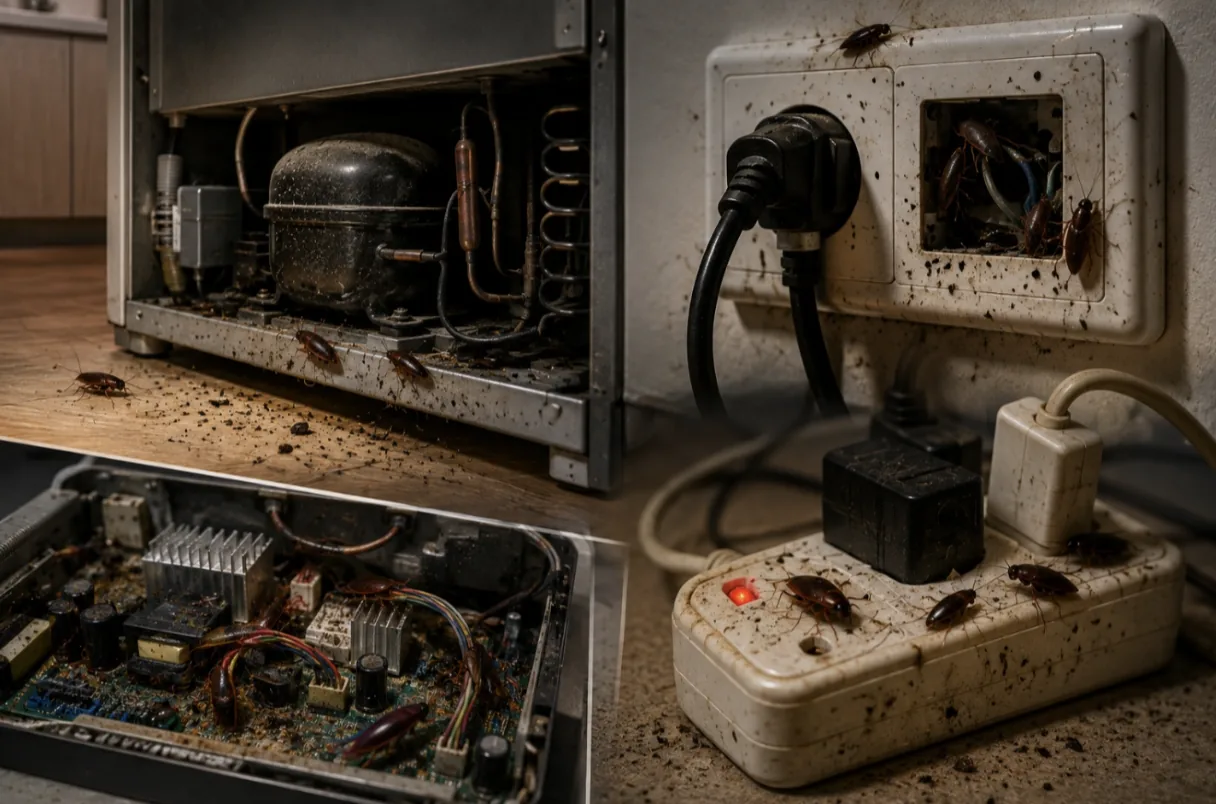
But there is another problem that is easier to overlook: cockroaches can hide inside and around electrical appliances and electronic equipment.
Warmth, darkness, narrow gaps, food residue, and moisture can make appliances attractive harbourage areas. In a significant infestation, cockroach activity and accumulated debris may contribute to contamination and, in some circumstances, electrical malfunction.
That means recurring cockroach activity around appliances should not simply be ignored. Let's look at why cockroaches enter electrical equipment, what warning signs to watch for, and how professional cockroach control can help.
Why Are Cockroaches Attracted to Electrical Appliances?
Cockroaches aren't necessarily attracted to electricity itself. They are attracted to the environment surrounding electrical and electronic equipment. Many appliances provide exactly what cockroaches prefer:
Kitchen appliances may also have food residue or moisture nearby. This combination can create ideal harbourage conditions.
Which Appliances Can Attract Cockroaches?
Cockroach activity may occur around equipment such as refrigerators, microwave ovens, ovens, dishwashers, washing machines, coffee machines, toasters, mixers, water dispensers, and other kitchen equipment. Cockroaches can also hide around electronic equipment when suitable shelter and environmental conditions are present.
The refrigerator is particularly important because the compressor area can provide warmth and protection.
Why the Refrigerator Is a Cockroach Hotspot
If cockroaches repeatedly disappear behind your refrigerator, don't ignore it. The area can provide several attractive conditions:
- Warmth — motors and compressors generate heat
- Darkness — the back and underside of the refrigerator remain relatively undisturbed
- Food — crumbs and grease may accumulate underneath the appliance
- Moisture — condensation or drainage can sometimes provide water
- Shelter — narrow gaps create protected hiding places
Together, these factors can make the refrigerator area an important cockroach harbourage — a pattern that becomes especially noticeable during warm weather when cockroach activity generally increases.
Can Cockroaches Get Inside Electrical Appliances?
Yes. Cockroaches — particularly smaller species and nymphs — can enter very narrow gaps. Depending on the equipment, they may gain access through ventilation openings, cable openings, gaps around panels, cracks in housings, or openings around components.
This does not mean every cockroach seen near an appliance is living inside it. However, repeated activity entering and leaving equipment is a warning sign that deserves investigation.
Can Cockroaches Damage Electrical Equipment?
Cockroaches are not comparable to rodents when it comes to chewing electrical wiring. Rodents have continuously growing incisors and are well known for gnawing cables. Cockroaches do not typically destroy electrical wiring in the same way.
The concern with cockroaches is more often related to their presence and accumulated contamination. Cockroach bodies, droppings, shed skins, egg cases, and other debris can accumulate around components. In severe infestations, this contamination may potentially contribute to equipment problems.
Cockroach Debris Inside Electronics
An established cockroach harbourage can leave behind droppings, shed skins, egg cases, dead cockroaches, body fragments, and other biological debris. When these materials accumulate inside or around electrical equipment, they can contaminate components.
The risk depends on the appliance, infestation level, environment, and where the debris accumulates. This is another reason heavy cockroach activity around electrical equipment should be taken seriously.
Cockroaches repeatedly showing up around your appliances? Get a free inspection and treatment plan.
Book Free Inspection Call NowCan Cockroaches Cause Short Circuits?
There are situations in which insects or insect debris can interfere with electrical or electronic components. A cockroach physically bridging electrical contacts or contamination accumulating around sensitive components may potentially contribute to malfunction or short-circuit conditions.
However, it would be misleading to suggest that every cockroach inside an appliance will cause a short circuit. The practical message is: cockroach activity inside electrical equipment creates an unnecessary risk and should be addressed before the infestation becomes severe.
Can Cockroaches Cause Electrical Fires?
Claims that cockroaches routinely cause house fires should be treated cautiously. Electrical fires can have many causes, including damaged wiring, overloaded circuits, faulty equipment, loose connections, poor installation, and component failure.
Cockroach contamination may contribute to electrical problems in certain circumstances, but it should not automatically be blamed for an electrical fire.
If an appliance is sparking, overheating, producing a burning smell, or repeatedly tripping a circuit, stop using it where safe to do so and have it inspected by a qualified electrical professional.
Pest-control technicians treat pests. Electricians diagnose electrical faults.
Warning Signs of Cockroach Activity Around Appliances
Watch for:
- Cockroaches running behind appliances — repeated sightings can indicate a nearby harbourage
- Droppings — dark specks around appliance edges, cabinets, or electrical areas may indicate activity
- Egg cases — egg cases near appliances suggest breeding activity
- Nymphs — small cockroaches often indicate reproduction nearby
- Unusual cockroach odour — heavy infestations may sometimes produce a persistent unpleasant or musty odour
- Cockroaches emerging when an appliance is moved — a strong indication that the surrounding area should be inspected
Electrical Problems That Need Professional Attention
If an appliance develops intermittent operation, repeated power loss, circuit breaker trips, sparks, a burning smell, unusual heat, or visible electrical damage, don't assume the cause is cockroaches. These are electrical safety issues.
Switch off or disconnect the appliance if it is safe to do so and seek qualified electrical assistance. If cockroaches are also present, pest management should be addressed separately.
Never Spray Insecticide Into Electrical Equipment
This is extremely important. If you see a cockroach disappear inside an electrical appliance, your first reaction may be to spray insecticide into the opening.
Don't do this unless the product is specifically labelled and intended for that application. Spraying liquids or aerosols into electrical equipment can create electrical hazards, equipment damage, unnecessary pesticide contamination, and potential ignition concerns with some aerosol products.
Do not spray into sockets, switches, circuit boards, appliance motors, or electrical panels. Professional treatment should target cockroach harbourages using appropriate methods.
Don't Open Electrical Equipment Yourself
Avoid dismantling electrical appliances simply to find cockroaches. Electrical equipment may contain live components, capacitors, sharp parts, and heat-producing components. Some equipment can retain electrical charge even after being unplugged.
Use qualified repair technicians for internal appliance inspection where necessary.
Why Bug Bombs Are Not the Answer
A total-release fogger may sound like an easy way to treat cockroaches hiding around appliances. But foggers release pesticide broadly into open room spaces. They may not penetrate deeply into the protected locations where cockroaches are hiding.
They can also create unnecessary pesticide residue on exposed surfaces and may present additional hazards if used incorrectly around ignition sources. Targeted pest management is generally preferable to indiscriminate indoor fogging.
Gel Baits Can Be Useful Around Appliance Harbourages
For suitable indoor cockroach infestations, professional gel bait may be placed strategically near cockroach activity. Potential treatment locations may include protected areas near appliance harbourages, behind refrigerators, around cabinet hinges, under sinks, and around cracks and crevices.
The bait should be applied according to its label and not directly onto electrical components or surfaces where it is unsuitable. The goal is to allow cockroaches to encounter the bait while moving between their harbourages and feeding areas.
Not sure how to treat cockroaches near your appliances safely? Let our technicians handle it.
Book Free Inspection WhatsApp UsSanitation Is Essential
Cockroaches around electrical appliances are often supported by environmental conditions. Clean accessible areas around and underneath refrigerators, ovens, microwaves, dishwashers, and other kitchen appliances. Remove:
Reducing food availability can make the environment less attractive and improve the effectiveness of bait-based pest management.
Moisture Can Make the Problem Worse
Electrical appliances and moisture are already a poor combination. Add cockroaches and the situation becomes even more undesirable. Check for refrigerator drainage problems, leaking pipes, water underneath sinks, dishwasher leaks, washing-machine leaks, and condensation. Repair moisture problems promptly.
Cockroaches and Electrical Sockets
Cockroaches may sometimes move through wall voids or openings around electrical installations. If you repeatedly see cockroaches emerging from around a socket or switch plate, this may indicate activity inside the wall void.
Do not insert pesticide nozzles into electrical sockets, pour insecticide into outlets, remove electrical covers unless qualified, or attempt electrical repairs yourself.
Inform your pest-control technician about the location. The surrounding harbourage and movement routes can be assessed safely.
Apartment Buildings Can Be More Complicated
Cockroaches can move between apartments through utility shafts, plumbing openings, wall voids, service conduits, and structural gaps. If cockroaches repeatedly appear around outlets, kitchens, or utility areas even after treatment, the source may be elsewhere in the building. Coordinated building-level pest management may be necessary.
Commercial Kitchens Face Greater Risks
Restaurants, hotels, bakeries, cafés, and commercial kitchens often contain large amounts of electrical food-service equipment — refrigeration units, coffee machines, cooking equipment, food-processing machines, and dishwashers. Warm equipment combined with food residue can provide excellent cockroach harbourage conditions.
Routine inspection and monitoring are therefore important. Waiting until cockroaches emerge from equipment in front of customers is far too late.
Cockroaches Around Office Electronics
Cockroach problems are not limited to kitchens. Offices may also provide harbourage opportunities around electronic equipment, particularly where food and drinks are consumed near desks.
Good prevention includes avoiding food accumulation around workstations, removing waste regularly, cleaning spills, monitoring cockroach activity, and treating established infestations promptly.
Integrated Pest Management Is the Better Approach
Integrated Pest Management (IPM) provides a systematic way to address cockroaches around electrical equipment. A typical approach includes:
- Inspection — identify appliances and areas showing activity
- Monitoring — determine where cockroaches are concentrated
- Sanitation — remove food residue and grease
- Moisture control — repair leaks and drainage problems
- Targeted treatment — use appropriate professional treatment around harbourages
- Exclusion — seal suitable structural entry points
- Follow-up — confirm that activity is decreasing
This addresses the conditions supporting the infestation rather than simply spraying visible cockroaches.
How to Protect Appliances From Cockroach Infestations
- Clean under appliances — food residue can remain hidden for months
- Keep countertops clean — remove grease and crumbs
- Repair water leaks — reduce moisture around appliances
- Store food properly — use sealed containers
- Remove garbage regularly — don't allow food waste to accumulate
- Reduce cardboard clutter — cockroaches can hide in packaging stored around kitchens
- Seal suitable gaps — reduce access around plumbing and structural openings
- Monitor activity — don't ignore repeated cockroach sightings near the same appliance
When Should You Call Professional Cockroach Control?
Arrange professional inspection if cockroaches repeatedly emerge from appliances, nymphs are present, egg cases appear near electrical equipment, droppings accumulate behind appliances, cockroaches are visible during daytime, activity is spreading through several rooms, DIY treatment repeatedly fails, or a restaurant or commercial kitchen has cockroach activity around equipment.
Early intervention can prevent a small harbourage from developing into a widespread infestation.
Professional Cockroach Control in Bangalore
Standard Pest Control provides professional cockroach pest control in Bangalore for residential and commercial properties. Services are available for apartments, independent houses, villas, restaurants, hotels, hospitals, offices, schools, shops, commercial kitchens, and other commercial premises.
Our approach focuses on:
For cockroaches around electrical appliances, treatment should focus on the pest harbourage while avoiding unsafe pesticide application into electrical components. The objective is to control the infestation safely and reduce the conditions that allow cockroaches to return.
Frequently Asked Questions
Can cockroaches damage electrical appliances?
Heavy cockroach activity and accumulated droppings, shed skins, bodies, and other debris can contaminate electrical or electronic equipment and may contribute to malfunction in some circumstances.
Do cockroaches eat electrical wires?
Cockroaches are not major wire-gnawing pests like rodents. Electrical concerns are generally related more to infestation, contamination, and insects entering sensitive components.
Can cockroaches cause a short circuit?
Insects or accumulated contamination can potentially interfere with electrical contacts or components in some circumstances, but not every cockroach inside an appliance will cause a short circuit.
Why do cockroaches hide behind refrigerators?
Refrigerator areas can provide warmth, darkness, shelter, moisture, and nearby food residue, making them attractive harbourage locations.
Can I spray insecticide inside my microwave or refrigerator motor?
Do not spray pesticide directly into electrical components unless the product is specifically labelled for that use. Inappropriate application can create safety hazards or damage equipment.
What should I do if cockroaches are coming from an electrical socket?
Do not pour or spray pesticide into the outlet. Inform a professional pest-control technician. If there is also an electrical fault, contact a qualified electrician.
Can cockroaches cause electrical fires?
Cockroach contamination may contribute to equipment problems in some situations, but electrical fires have many potential causes. Sparking, burning smells, overheating, or repeated circuit trips should be investigated by a qualified electrical professional.
How can I prevent cockroaches from entering appliances?
Maintain sanitation, remove food residue around appliances, repair leaks, reduce clutter, seal appropriate structural gaps, monitor activity, and professionally control established infestations.
Final Takeaway: Don't Ignore Cockroaches Around Electronics
Cockroaches aren't simply kitchen pests. Electrical and electronic equipment can provide the warm, dark, protected environments they prefer. Although cockroaches do not normally chew electrical cables like rodents, heavy infestations can contaminate equipment and potentially contribute to malfunction.
If you repeatedly see cockroaches disappearing into appliances:
And if the equipment is sparking, overheating, producing a burning smell, or repeatedly tripping circuits, treat it as an electrical safety problem and contact a qualified electrical professional.
The best prevention combines:
Finding and treating the infestation early can help protect both your property and the appliances you depend on every day.
Related reading: Can Cockroaches Bite Humans? Understanding Their Behavior | Summer Cockroach Activity: Why They Thrive in Warm Weather | Cockroaches in Winter: Do They Hibernate or Seek Shelter Indoors? | Cockroach Control Bangalore: Prevention Tips & Services