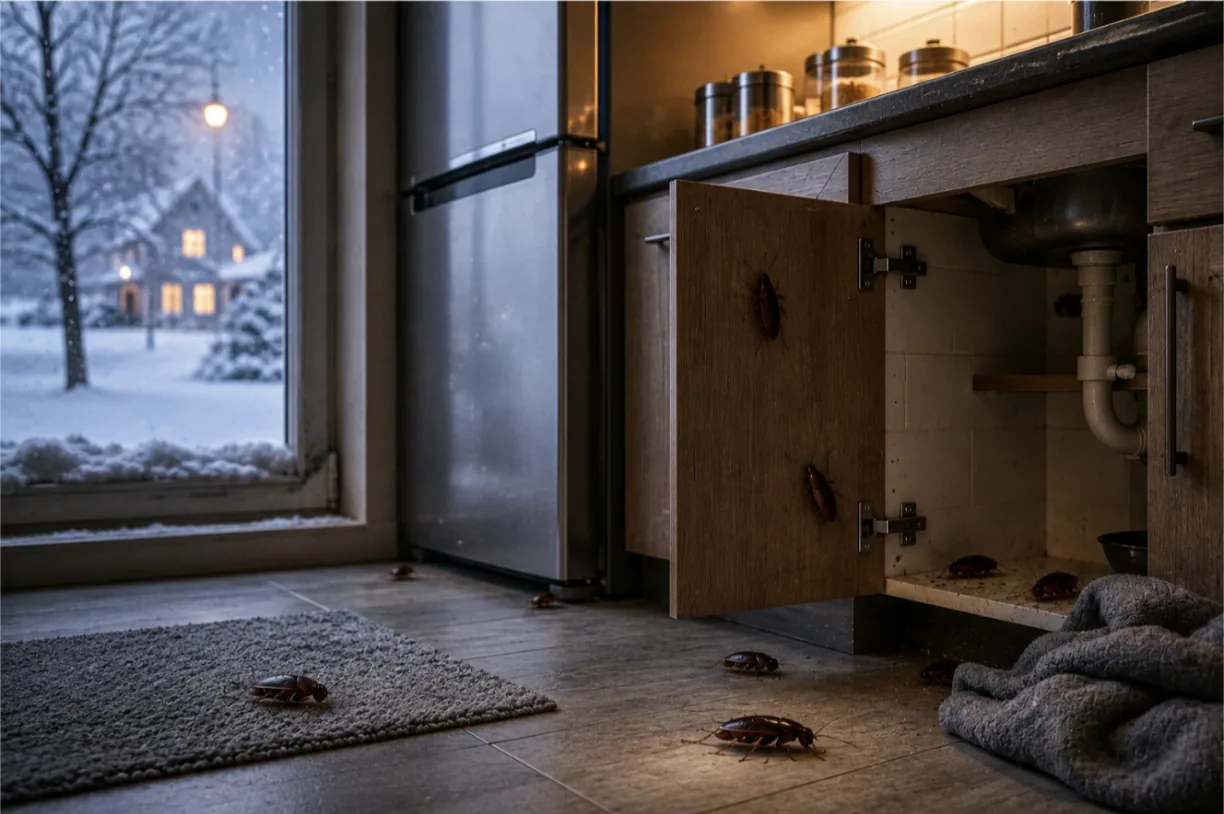
When temperatures drop, mosquitoes, flies, and many other insects become less noticeable. This often leads homeowners to assume that cockroaches disappear during winter too.
But where do they actually go? Do cockroaches hibernate in winter, die from the cold, or simply move indoors?
The answer depends on the cockroach species and environmental conditions. Cockroaches are cold-blooded insects, so lower temperatures generally slow their metabolism, movement, feeding, and development. However, many pest cockroach species can survive winter very successfully when they have access to warm indoor environments, food, water, and protected hiding places.
In homes, apartments, restaurants, hotels, and other heated buildings, cockroaches may remain active throughout winter. That means cooler weather does not necessarily mean your cockroach problem has disappeared.
Do Cockroaches Hibernate During Winter?
Not in the same way that mammals such as bears are commonly described as hibernating. Cockroaches are ectothermic, meaning their body temperature is influenced by the surrounding environment. When temperatures become unfavourably low, their activity can slow considerably.
Depending on the species and conditions, cockroaches may:
- Become less active
- Feed less frequently
- Develop more slowly
- Seek protected harbourages
- Remain hidden for longer periods
- Move toward warmer environments
Some species and life stages can survive cold periods using different overwintering strategies. However, household pest species living inside heated buildings may avoid severe outdoor cold altogether.
Why Do Cockroaches Come Indoors During Cooler Weather?
Buildings can provide conditions that are much more stable than outdoor environments. A home can offer:
Potential cockroach harbourages include kitchen cabinets, behind refrigerators, under sinks, appliances, bathrooms, plumbing voids, utility areas, wall cracks, and drainage-associated spaces. These areas can remain warm enough for cockroaches even when outdoor temperatures fall.
Do Cockroaches Die When It Gets Cold?
Cockroaches generally perform poorly at sufficiently low temperatures. But the effect depends on species, temperature, duration of exposure, life stage, shelter, and humidity.
A short period of cool weather does not necessarily kill an infestation. Cockroaches hidden inside a building may never experience the same temperature as the outdoor environment. For example, a cockroach behind a refrigerator can experience a very different microclimate from one exposed outside.
Why You Can Still See Cockroaches in Winter
If cockroaches are already established inside your home, seasonal cooling may have relatively little effect. Modern buildings can provide stable temperatures throughout the year. Indoor cockroaches can continue accessing food, water, warm appliances, protected cracks, cabinets, and plumbing areas — as a result, some infestations can continue year-round. This is particularly important for species adapted to indoor environments.
German Cockroaches Can Remain an Indoor Problem
German cockroaches are among the most important indoor pest cockroaches. They commonly live in warm areas close to food and moisture. Typical harbourages include cabinet hinges, refrigerator areas, appliances, under sinks, and cracks and crevices.
They do not need to depend on outdoor weather once established inside a suitable building. A heated kitchen can provide favourable conditions even during the coolest part of the year. This is why waiting for winter to eliminate a German cockroach infestation is not a reliable control strategy.
What About Larger Cockroach Species?
Different cockroach species have different environmental preferences. Some larger species are more strongly associated with outdoor areas, drains, sewage-associated environments, basements, utility spaces, and damp locations.
Seasonal conditions can influence their activity and movement. During unfavourable outdoor conditions, suitable buildings and protected structural spaces may provide shelter. Correct species identification is therefore important before developing a treatment plan.
Not sure which cockroach species you're dealing with? Get a free inspection and species-specific treatment plan.
Book Free Inspection Call NowWhere Do Cockroaches Hide During Winter?
Cockroaches seek protected environments. Inside homes, inspect areas such as behind refrigerators, where the compressor area can provide warmth; kitchen cabinets, where hinges and narrow gaps provide shelter; under the sink, where plumbing can provide moisture and structural openings; appliances, where warm equipment can create favourable microclimates; bathrooms, where moisture and plumbing can support activity; utility areas with pipes, drains, and storage; and wall voids, which may provide protected movement routes.
Cockroaches can remain hidden in these areas for long periods.
Your Refrigerator Can Become a Winter Refuge
The area behind the refrigerator is important throughout the year. It can provide:
During cooler weather, the warmth produced by appliance components may make the area particularly attractive. Regularly clean accessible spaces around and underneath refrigerators. If you repeatedly see cockroaches disappearing behind the appliance, consider professional inspection.
Cockroaches May Hide Near Other Warm Appliances
Other potential harbourages include areas around ovens, dishwashers, microwaves, coffee machines, water dispensers, and washing machines. Cockroaches are not necessarily attracted to electricity itself — they are attracted to the warm, dark, protected conditions equipment can provide.
Does Seeing Fewer Cockroaches Mean the Infestation Is Gone?
Not necessarily. This is one of the biggest winter pest-control mistakes. Cooler conditions or behavioural changes may reduce visible activity, but:
Cockroaches spend much of their lives hidden anyway. An infestation may continue inside cabinets, appliances, wall voids, or plumbing areas even when you rarely see adults.
Look for Other Signs of Cockroach Activity
Don't rely entirely on sightings. Check for:
- Droppings
- Egg cases
- Nymphs
- Shed skins
- Dead cockroaches
- Persistent odour
- Activity on monitoring traps
These signs can reveal an infestation even when adults are rarely seen.
Baby Cockroaches in Winter Are an Important Warning Sign
If you see small cockroaches during winter, don't assume they came in from outside that day. Nymphs can indicate an indoor breeding population. Inspect nearby cabinets, appliances, the sink, the refrigerator, and cracks. Finding nymphs suggests that conditions inside the property may be suitable for cockroach development despite cooler outdoor weather.
Cockroach Eggs Can Help Populations Persist
Female cockroaches produce egg cases called oothecae. The number of eggs, development time, and how the ootheca is handled vary by species. Protected egg cases and indoor harbourages can help cockroach populations persist through seasonal changes — another reason simply waiting for cold weather is unlikely to eliminate an established indoor infestation.
Winter Kitchens Still Provide Plenty of Food
Cockroaches don't need much food. Even during winter they may find crumbs, grease, uncovered food, garbage, pet food, and food residue underneath appliances. Good sanitation should therefore continue throughout the year — do not reduce prevention efforts simply because temperatures have dropped.
Indoor Water Sources Matter Too
Cockroaches require moisture. During winter they may still obtain water from leaking taps, plumbing leaks, kitchen sinks, bathroom areas, refrigerator drainage, condensation, and pet-water areas. Repair leaks promptly — reducing water availability can make indoor environments less favourable.
Can Cockroaches Enter Through Drains in Winter?
Cockroach activity around drains can occur throughout the year, depending on the species and building. If cockroaches repeatedly appear near drains, inspect drain covers, plumbing, gaps around pipes, moisture, and nearby harbourages.
Do not automatically assume every cockroach in a bathroom or kitchen came directly through the drain. A professional inspection can help identify the actual movement route.
Seeing droppings, nymphs or egg cases this winter? Ask about our species-specific gel bait and monitoring plans.
Book Free Inspection WhatsApp UsApartment Buildings Can Protect Cockroaches From Winter Weather
Apartments provide particularly stable environments. Cockroaches may move through plumbing shafts, utility ducts, electrical conduits, wall voids, structural gaps, and common service areas.
A cockroach population living inside a large apartment building may have very limited exposure to outdoor winter conditions. This is why apartment infestations can remain active throughout the year.
Restaurants Can Have Cockroach Problems All Winter
Commercial kitchens create warm environments regardless of outdoor temperature. Restaurants provide:
Potential harbourages include refrigeration equipment, cooking appliances, storage areas, cabinets, drains, and waste areas. Restaurants should therefore maintain pest-management programs throughout the year rather than treating cockroaches only during warmer months.
Should You Stop Pest Control During Winter?
Generally, no — especially if your property has a history of cockroach infestation. Winter can actually be a useful time to concentrate on prevention. Inspect kitchens, appliances, plumbing, cracks, utility openings, drains, and garbage areas.
Addressing hidden activity before warmer conditions return can help reduce the chance of a larger seasonal population increase.
Winter Cockroach Prevention Checklist
Kitchen
- Clean crumbs and grease
- Store food securely
- Empty garbage regularly
- Clean underneath appliances
- Check cabinet hinges
Water
- Repair leaking taps
- Check under-sink plumbing
- Reduce unnecessary standing water
- Inspect refrigerator drainage
Shelter & Entry Points
- Reduce cardboard clutter
- Inspect cracks and crevices
- Check behind appliances
- Inspect plumbing openings
- Check door gaps
- Seal suitable structural gaps
- Maintain drain covers
Monitoring
- Watch for droppings
- Check for nymphs
- Look for egg cases
- Use appropriate monitoring devices
Don't Wait for Summer to Treat an Infestation
A common approach is: "There aren't many cockroaches now, so I'll wait." That can allow a hidden population to remain established. When warmer conditions return, activity and development may increase again.
A better strategy is:
Year-round management can help prevent seasonal infestations from repeatedly returning.
How Professional Winter Cockroach Treatment Works
Professional treatment should begin with inspection. A technician may inspect cabinets, refrigerators, appliances, under-sink areas, bathrooms, plumbing, drains, and utility spaces to identify active harbourages.
Depending on the infestation and property, treatment may include professional gel bait, targeted applications, crack-and-crevice treatment, monitoring, sanitation recommendations, and exclusion measures. Indoor cockroach treatment can remain effective during winter because the infestation itself is often living inside a controlled indoor environment.
Integrated Pest Management Works Year-Round
Integrated Pest Management (IPM) does not depend on waiting for a particular season. It combines:
The objective is to change the environment that allows cockroaches to survive. This makes IPM useful throughout the year.
Winter vs Summer Cockroach Activity
Summer: Warmer conditions may support increased movement, feeding, development, and reproduction.
Winter: Outdoor activity may decrease for some species, while cockroaches seek or remain within protected environments.
Heated buildings: Indoor pest species may continue to survive and reproduce throughout both seasons.
The important lesson is: seasonal weather does not automatically eliminate indoor cockroach infestations.
When Should You Call Professional Pest Control?
Consider professional inspection if you notice cockroaches throughout winter, nymphs, egg cases, droppings, activity around warm appliances, cockroaches in multiple rooms, daytime sightings, or a recurring infestation despite DIY treatment.
Visible winter activity can indicate that the building provides conditions suitable for a persistent population.
Professional Cockroach Control in Bangalore
Standard Pest Control provides professional cockroach pest control in Bangalore throughout the year. Services are available for apartments, independent houses, villas, restaurants, hotels, hospitals, offices, schools, shops, commercial kitchens, and other commercial properties.
Our approach focuses on:
Depending on site conditions, treatment may include professional gel bait, targeted applications, sanitation recommendations, exclusion measures, and monitoring. The objective is not simply to treat cockroaches when they become highly visible — it is to identify and manage the hidden population throughout the year.
Frequently Asked Questions
Do cockroaches hibernate in winter?
Cockroaches do not generally hibernate in the same way mammals do. Lower temperatures can reduce their activity and development, while different species use protected harbourages and other strategies to survive unfavourable conditions.
Do cockroaches die during winter?
Sufficiently low temperatures can be harmful to cockroaches, but indoor populations may remain protected from outdoor cold inside heated buildings.
Why do I have cockroaches during winter?
Your home may provide warmth, food, water, and shelter throughout the year. Indoor cockroach species can remain active even when outdoor temperatures are cooler.
Where do cockroaches hide when it is cold?
Common indoor harbourages include kitchen cabinets, behind refrigerators, appliances, under sinks, bathrooms, plumbing voids, cracks, and utility spaces.
Are cockroaches less active in winter?
Some cockroaches become less active under cooler conditions. However, indoor populations living in warm buildings may remain active.
Can cockroaches reproduce indoors during winter?
Yes. If indoor temperature, food, moisture, and harbourage conditions are suitable, some pest cockroach species can continue reproducing indoors.
Should I get cockroach pest control during winter?
Yes, if an infestation is present. Waiting for warmer weather can allow hidden populations to remain established.
Why do I see cockroaches behind my refrigerator in winter?
The refrigerator area can provide warmth, darkness, shelter, moisture, and nearby food residue, making it a suitable harbourage throughout the year.
Final Takeaway: Winter Doesn't Necessarily Mean Cockroaches Are Gone
So, do cockroaches hibernate during winter? Not exactly. Cool temperatures can slow cockroach activity, but buildings provide something outdoor winter environments may not:
That means cockroaches can remain hidden and active indoors even when you see fewer of them. Remember:
Continue good sanitation, repair moisture problems, seal appropriate entry points, inspect warm appliances, and monitor for signs such as droppings, egg cases, and nymphs. Controlling a hidden population during cooler periods can also help prevent it from becoming a much larger problem when favourable warm conditions return.
Related reading: Summer Cockroach Activity: Why They Thrive in Warm Weather | Cockroach Control Bangalore: Prevention Tips & Services | Best Cockroach Control Service in Bangalore | Cockroach Control Bangalore: Targeted German Roach Solutions | Cockroach Control Bangalore: Stop German Roach Infestations