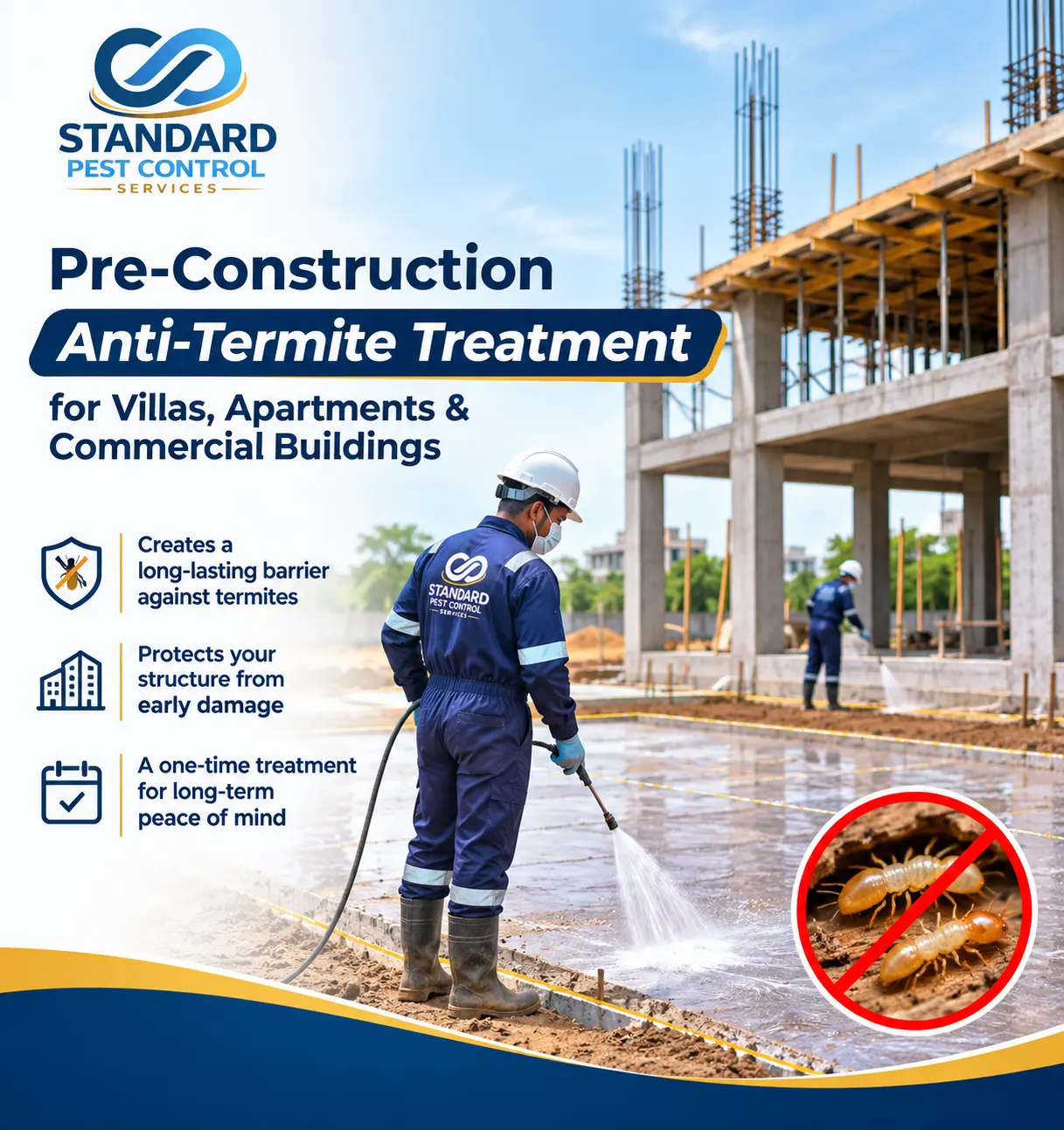
If you are planning a new villa, flat, or office, pre construction anti termite treatment is one line item you really do not want to trim from the budget. Termites in India can turn brand new concrete and wood into a repair project in under five years, especially where moisture and poor soil treatment are involved.
The good news: when termite proofing is done correctly before the first brick is laid, the building stays protected for years with almost no effort from you. The bad news is that many sites only receive a token spray, a few photos for documentation, and a silent risk that shows up long after the builder is gone.
Why Pre-Construction Treatment Matters So Much
Termites don’t chew through concrete, they move around it. They come up through expansion gaps, plumbing penetrations, and untreated soil pockets beside columns and walls. That is why soil treatment at the right stage of work is far more reliable than chasing termites later with drilling and injections.
On a typical villa project, the cost of proper treatment is less than redoing a single damaged wardrobe. Yet skipping it can mean termites reaching door frames and furniture, forcing you into repeated villa termite treatment visits that disturb your family and routines. See termite treatment cost vs furniture damage for how the numbers compare.
Building a villa, apartment or office? Book pre-construction termite treatment before the foundation trenches are covered.
Book Free Inspection Call NowHow Professional Pre Construction Anti Termite Treatment Works
A serious contractor follows a clear sequence, matches the chemical and dosage to Indian standards (IS 6313), and records each stage. This is not just about spraying; it is about building a continuous treated barrier that termites cannot cross.
Most teams work in stages tied to the construction schedule, to reduce missed spots and give you a defensible warranty if issues appear later. The three soil stages below are where most of the protection is built — our step-by-step pre-construction treatment process covers the full sequence.
Stage 1: Bottom Of Foundation Trenches
Once excavation is complete and before PCC is poured, the exposed soil at the base of the foundation is treated. This is the moment when foundation treatment is most effective because the chemical can soak into undisturbed soil and form a stable barrier under the load-bearing elements.
Skipping or rushing this stage is one of the main reasons termites later appear at column bases or along plinth beams, as the structure gives them shielded paths through micro-cracks.
Stage 2: Backfilled Soil Around Foundations
After footings and walls are cast and backfilled, that loose soil becomes an easy highway for termites. Thorough construction pest control requires slow, even application across these backfill zones so there are no untreated pockets between the old and new soil.
On busy sites, this is where coordination breaks: labour starts masonry while the soil is still being filled, and treatment gets squeezed into corners. Insist that this step is scheduled clearly in the work program — see when to do pre-construction termite treatment.
Stage 3: Floor Area Before Slab
The entire floor area is treated before laying the ground floor slab or floor tiles over compacted soil. If the team misses a section under a room or passage, termites can emerge there later, forcing messy drilling through finished surfaces for termite prevention work.
Good applicators use marked grids, calculated flow rates, and visual overlap patterns so coverage is uniform, not left to guesswork by a tired operator at the end of the day.
Tailored Treatment For Villas, Apartments And Commercial Sites
Individual homes, gated community towers, and office buildings face similar pests but very different risk patterns, access issues, and documentation needs, so the treatment plan has to match the structure type from day one.
A villa plot usually allows full perimeter access, tree planning, and easy future inspections, which makes villa termite treatment quite straightforward as long as the landscaper does not later dig away treated soil or bring in infested mulch close to plinth level.
Apartment And High-Rise Projects
In multi-storey buildings, your flat may be on the tenth floor, but the attack starts in basements and podium levels. That means apartment termite treatment at the construction stage must focus on lift pits, expansion joints, and utility shafts that run the full height of the structure.
Builders should demand clear maps of treated zones, product details, and warranty terms tied to the entire structure, not just the common areas, so the owners’ association knows exactly what is covered years later.
Commercial Buildings And Offices
Offices and retail units have complex service layouts, lots of cabling, and frequent fit-out changes that open new entry points. For durable commercial termite treatment, contractors usually ask for early access to MEP drawings to plan extra protection near electrical ducts, data risers, and wet areas like pantries.
In leased commercial spaces, treatment records matter for compliance and liability, so ask for digital reports with date-stamped site photos, product MSDS sheets, and a clear re-treatment schedule if the building changes hands.
What Good Anti Termite Services Should Include
A genuine specialist does not just turn up with a spray pump and leave in an hour. They start with a site assessment, study the soil type, water table, and building layout, then specify a product and dosage that fits local conditions and the project timeline.
At a minimum, your contract with anti termite services should mention the chemical name and concentration, the application rate per square metre, safety protocols for workers, and a written warranty with clear boundaries on what is and is not covered.
Key Checks For Builders And Owners
From the builder’s perspective, the largest risk is hidden non-compliance: a subcontractor claims the area is done, but no one verified consumption or coverage. A simple builder termite treatment checklist can prevent this, just by recording the mixed volume used, the treated area, weather conditions, and the supervisor’s sign-off per stage.
Owners should also ask who is responsible for protecting treated soil from disturbance, as random digging for last-minute plumbing changes can break the barrier and leave gaps no warranty will cover.
Need treated-zone records for handover? We document every stage with photos, product details and a written warranty.
Book Free Inspection WhatsApp UsCommon Mistakes That Lead To Termite Problems Later
Most serious infestations in new buildings trace back to a handful of avoidable errors: rushed jobs just before slab casting, poor mixing, or skipping awkward corners behind service lines. These are not technical failures; they are planning and supervision issues. Our list of common mistakes builders make during anti-termite treatment goes into each one.
One frequent gap happens where plan changes create new plinth projections or flowerbeds after treatment is complete, yet no one calls the pest team back to extend the soil treatment to those fresh contact points.
Materials And Design Choices That Help
Chemical treatment is only part of the defence. Simple design habits also reduce risk: keeping soil and garden beds at least a few centimetres below plinth level, using physical barriers near vulnerable zones, and planning service entries to be inspectable instead of buried deep inside walls.
Good termite proofing also means separating wood elements from direct soil contact and avoiding scrap wood or packaging buried in backfill, because these act as termite magnets right under your finished floors. See building a termite-proof future for more design ideas.
Maintenance And Long-Term Prevention
A pre-construction barrier is designed to last, but it is not magic. Major renovations, plumbing repairs, and new landscaping can all disturb treated zones and open pathways, so a quick inspection whenever you break ground is a smart habit — read about termite inspection before renovation.
For large projects, scheduling a professional review every three to five years helps catch early signs, update records, and plan spot treatments before small issues turn into full construction pest control jobs again.
Frequently Asked Questions
Why is pre-construction anti-termite treatment important?
Termites don’t chew through concrete; they move around it through expansion gaps, plumbing penetrations and untreated soil pockets. Treating the soil at the right stage of construction builds a continuous barrier, which is far more reliable than drilling and injecting later.
What are the main stages of pre-construction termite treatment?
The key soil stages are the bottom of the foundation trenches before PCC is poured, the backfilled soil around foundations, and the full floor area before the ground floor slab or tiles are laid. Each stage should be scheduled and recorded.
How is termite treatment different for villas, apartments and commercial buildings?
Villas allow full perimeter access and easy inspections. Apartments need focus on basements, podium levels, lift pits, expansion joints and utility shafts. Commercial buildings need extra protection near electrical ducts, data risers and wet areas, planned from MEP drawings.
What should an anti-termite treatment contract include?
The chemical name and concentration, the application rate per square metre, safety protocols for workers, and a written warranty with clear boundaries on what is and is not covered.
What mistakes cause termite problems in new buildings?
Rushed jobs just before slab casting, poor mixing, skipped corners behind service lines, and plan changes such as new plinth projections or flowerbeds added after treatment without extending the soil treatment to them.
Does a pre-construction termite barrier need maintenance?
Yes. Renovations, plumbing repairs and new landscaping can disturb treated soil, so inspect whenever you break ground. For large projects, a professional review every three to five years helps catch early signs.
Conclusion
Planning, supervision, and clear documentation matter just as much as the chemical used in any pre construction anti termite treatment project. When the barrier is designed with the building, not sprayed as an afterthought, you protect your investment and avoid noisy, messy repairs a few years down the line.
If you are finalising drawings for a new home or commercial site in Bangalore, this is the right stage to speak with a qualified provider like Standard Pest Control and lock termite protection into the construction schedule from day one.
Related reading: Step-by-Step Process of Pre-Construction Anti-Termite Treatment Explained | Why Builders Should Never Skip Soil Treatment Before Construction | 10 Common Mistakes Builders Make During Anti-Termite Treatment | Pre-Construction Anti-Termite Treatment Cost in Bangalore (2026 Guide) | IS 6313 Guidelines for Pre-Construction Anti-Termite Treatment Explained | The Unseen Shield: Pre Construction Anti Termite Treatment