If you are planning a new building in India, IS 6313 termite treatment is not a box to tick after work starts. It decides whether your structure quietly stays protected for decades or spends its life battling colonies under the slab.
The problem is simple: most sites throw chemicals around a day before pouring concrete, call it “anti-termite”, and move on. The IS 6313 guidelines exist to stop exactly that, by setting clear, tested steps for soil treatment, mixing rates, and timing on real construction projects.
What IS 6313 Actually Covers
IS 6313 is the Bureau of Indian Standards code that sets termite treatment standards for buildings under construction. It doesn’t just say “treat the soil”; it spells out where, when, and how each stage needs to be treated so that termites can’t find an easy path into the structure.
The code is split into parts for pre-construction treatment, post-construction treatment, and special situations. For most builders and architects, the pre-construction part is where money is saved or wasted, because this is when barriers are cheapest and most effective. For a broader introduction, see what pre-construction anti-termite treatment is and why it’s essential.
Key IS 6313 Guidelines For Pre-Construction Work
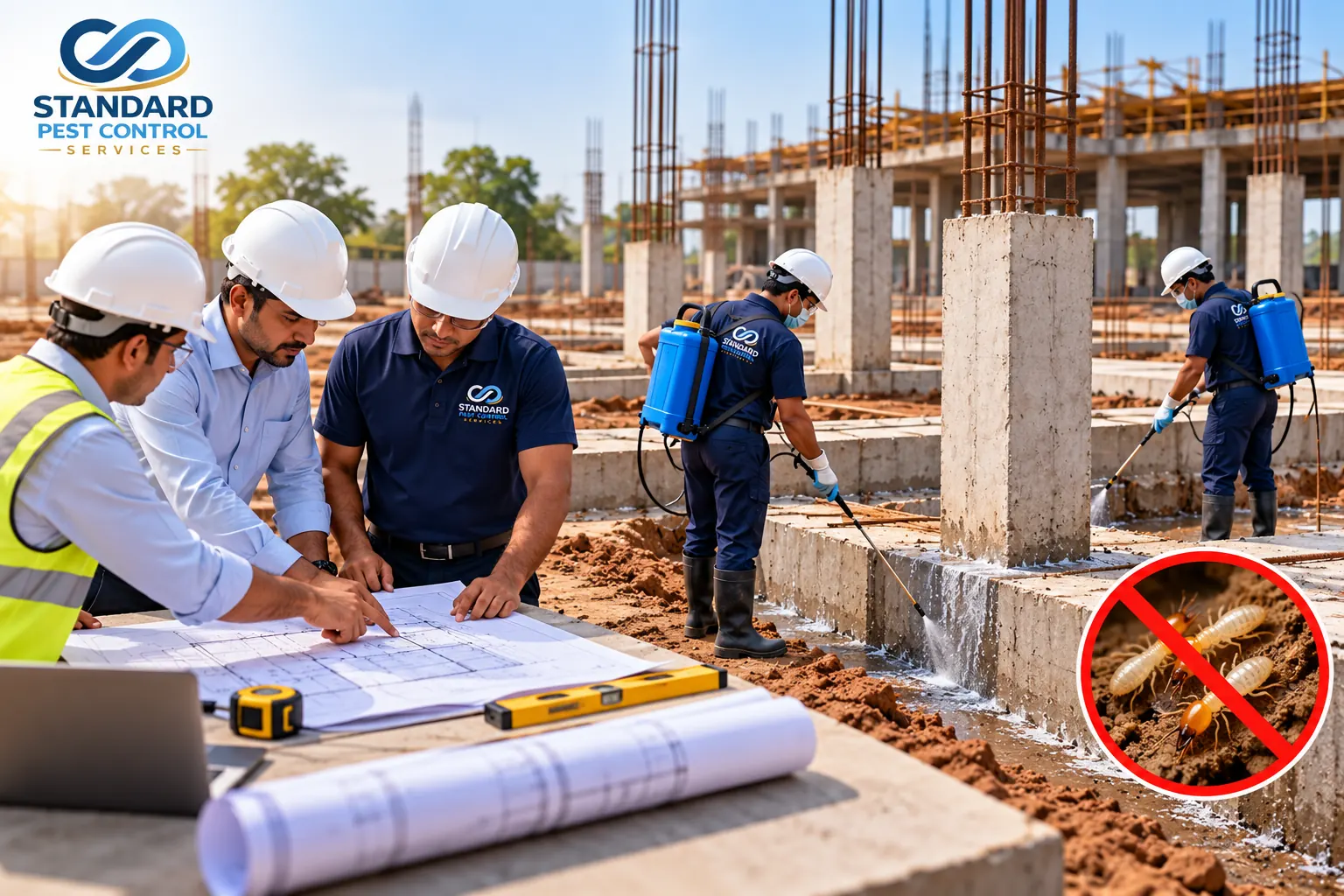
On site, the IS 6313 guidelines turn into a sequence of ground treatment steps that follow your normal construction flow. The idea is to create a continuous treated zone under and around the foundation before any termite can bridge it.
Typical steps include treating the bottom and sides of foundation trenches, the top surface of the plinth filling, the soil under floors, and a band along external walls. Each of these has specified coverage rates and must be done at the right time, not days later once the area is already covered.
Soil Treatment Standards You Cannot Ignore
The largest part of IS 6313 is about soil treatment standards, and this is where many contractors cut corners. The code specifies how much termiticide solution must go into each square metre or running metre, based on concentration and soil type.
For example, the sides and bottom of foundation trenches should receive a uniform spray before placing concrete, while backfilled soil around foundations is treated in layers. If the soil is very loose or sandy, the volume may need to be increased to achieve proper penetration instead of just wetting the top surface.
Foundation trenches being dug this week? Book IS 6313 pre-construction treatment before the PCC goes in.
Book Free Inspection Call NowStep-By-Step Pre-Construction Termite Proofing
Good termite proofing starts from the first excavation, not from the day the slab is ready. If the pest team turns up after the foundation is cast, you have already lost the simplest and cheapest barrier under the walls.
Here is the typical pre construction treatment sequence that aligns with IS 6313 on a new build (we walk through each stage in more detail in our step-by-step pre-construction termite treatment process):
- Treat the excavated sides and bottom of foundation trenches before laying any PCC.
- Spray the soil below column pits and basement foundations to the recommended application rate.
- After plinth filling and compaction, treat the top surface before laying the floor slab.
- Form a treated soil band along external walls once backfilling is complete.
- Pay special attention to expansion joints, pipe entries, and lift pits where termites often enter.
IS 6313 Termite Treatment For Slabs And Floors
On most building construction projects, slab and floor treatment is where the barrier either becomes continuous or gets broken. The soil under the floor must be level, compacted, and then uniformly treated just before concrete placement.
Any disturbance or re-excavation after treatment calls for retreatment. Many failures come from plumbers cutting into treated soil for late pipes, then covering without spraying again, leaving small but serious gaps in protection.
Perimeter And Plinth Protection Details
IS 6313 termite treatment along the perimeter focuses on external wall lines and plinth protection, which is often ignored once the main structure looks finished. The standard calls for treating soil along the outside of the foundation wall, usually in a trench that runs around the building.
This perimeter band is crucial in areas with heavy termite pressure and gardens right up against the wall. If you skip it, termites can travel from the lawn or planting beds straight to the wall, bypassing the under-slab barrier you paid for.
How BIS Termite Guidelines Protect Different Building Elements
The BIS termite guidelines are designed to match the way Indian buildings are actually built: brick or block walls on RCC footings, plinth filling with murum or sand, and large open sites with mixed vegetation. The code treats each of these elements as a possible entry route.
So the standard covers foundations, basements, expansion joints, utility lines, and even wooden frames that touch masonry. By following the code, you’re not just spraying chemicals randomly; you are sealing off structural paths termites use to reach wood or paper-based finishes inside.
Need treatment records for each stage? We document coverage, dilution and treated zones for your site file.
Book Free Inspection WhatsApp UsCommon Mistakes Contractors Make With Termite Regulations
Termite regulations in IS 6313 are not complicated, but site practices often drift away from them over time. One common problem is treating only the top of the plinth and ignoring trench sides and column pits because “there’s no time”.
Another regular mistake is using a stronger concentration but much less volume than required. That looks effective on paper but doesn’t carry the chemical deep enough, so termites move through untreated pockets and appear a few years later inside the building.
Choosing Materials And Following Termite Treatment Standards
Chemical choice matters, but strict application as per termite treatment standards matters more. IS 6313 permits specific types of termiticides and gives target concentrations based on their toxicity and persistence. Our guide to methods and chemicals in pre-construction anti-termite treatment covers the common options.
On real projects, the more common gap is poor mixing and no measurement of solution volume on site. A crew guessing from experience rather than using marked drums and calibrated sprayers will rarely hit the coverage rates the standard assumes.
Coordinating Pest Control With Site Teams
No pest control specialist can implement anti termite standards alone if the site team isn’t on board. Protection depends on the civil contractor calling the treatment team at the right time and keeping treated areas undisturbed until concrete goes in.
A simple schedule helps: mark tentative dates for trench excavation, plinth filling, and slab casting, and share them with the termite contractor early. That way the crew isn’t rushed into treating wet or waterlogged soil just to keep up with the program.
Why Pre-Construction Treatment Beats Post-Construction Work
Once a building is completed, construction termite control becomes far more disruptive and expensive. Drilling through finished floors, injecting chemicals against the foundation, and treating inside occupied rooms never matches the reach you had before the slab went down — which is why post-construction termite control in Bangalore costs more for less coverage.
By following IS 6313 during construction, you shift most of the cost to a short window when the site is open, access is easy, and treatment can be continuous instead of stitched in later with guesswork.
Putting Standards Into Everyday Site Practice
Soil treatment standards have value only if they turn into predictable routines on site. Treating “where it looks necessary” always leads to missed areas and later complaints from owners and tenants.
A better approach is to build termite proofing into the method statements and drawings. Mark treated zones on foundation plans, specify mixes and coverage in BOQs, and keep simple treatment records for each stage so everyone knows what was done and when.
Frequently Asked Questions
What is IS 6313?
IS 6313 is the Bureau of Indian Standards code that sets termite treatment standards for buildings. It spells out where, when, and how each stage needs to be treated so that termites can’t find an easy path into the structure.
Which parts of a building does IS 6313 pre-construction treatment cover?
Typical steps include treating the bottom and sides of foundation trenches, the soil below column pits and basement foundations, the top surface of the plinth filling, the soil under floors, and a band along external walls, with special attention to expansion joints, pipe entries and lift pits.
Does IS 6313 specify how much termiticide to use?
Yes. The code specifies how much termiticide solution must go into each square metre or running metre, based on concentration and soil type. In very loose or sandy soil, the volume may need to be increased to achieve proper penetration.
Is a stronger concentration at a lower volume acceptable?
No. Using a stronger concentration but much less volume than required looks effective on paper, but it doesn’t carry the chemical deep enough, so termites move through untreated pockets and can appear a few years later inside the building.
What happens if treated soil is dug up after spraying?
Any disturbance or re-excavation after treatment calls for retreatment. Plumbers cutting into treated soil for late pipes and covering it without spraying again is a common cause of gaps in protection.
Why is perimeter treatment important?
Without a treated soil band along the outside of the foundation wall, termites can travel from the lawn or planting beds straight to the wall, bypassing the under-slab barrier.
Conclusion
IS 6313 termite treatment is less about chemicals and more about timing, coverage, and coordination with the build sequence. When those three are handled well, most new structures stay quiet and termite-free without constant retreatment.
For complex sites or projects in high-risk termite belts, bring in a specialist like Standard Pest Control early in the design phase so the IS 6313 termite treatment plan can be tied cleanly into your foundation and plumbing drawings and executed before concrete locks mistakes into place.
Related reading: Step-by-Step Process of Pre-Construction Anti-Termite Treatment Explained | What Is Pre-Construction Anti-Termite Treatment and Why Is It Essential? | Fortifying Your Foundation: Methods and Chemicals in Pre Construction Anti Termite Treatment | The Unseen Shield: Pre Construction Anti Termite Treatment | Building a Termite-Proof Future: Pre Construction Treatment Stages | Pest Control for Construction Sites: Managing Temporary Infestations | Best Time to Carry Out Pre-Construction Anti-Termite Treatment