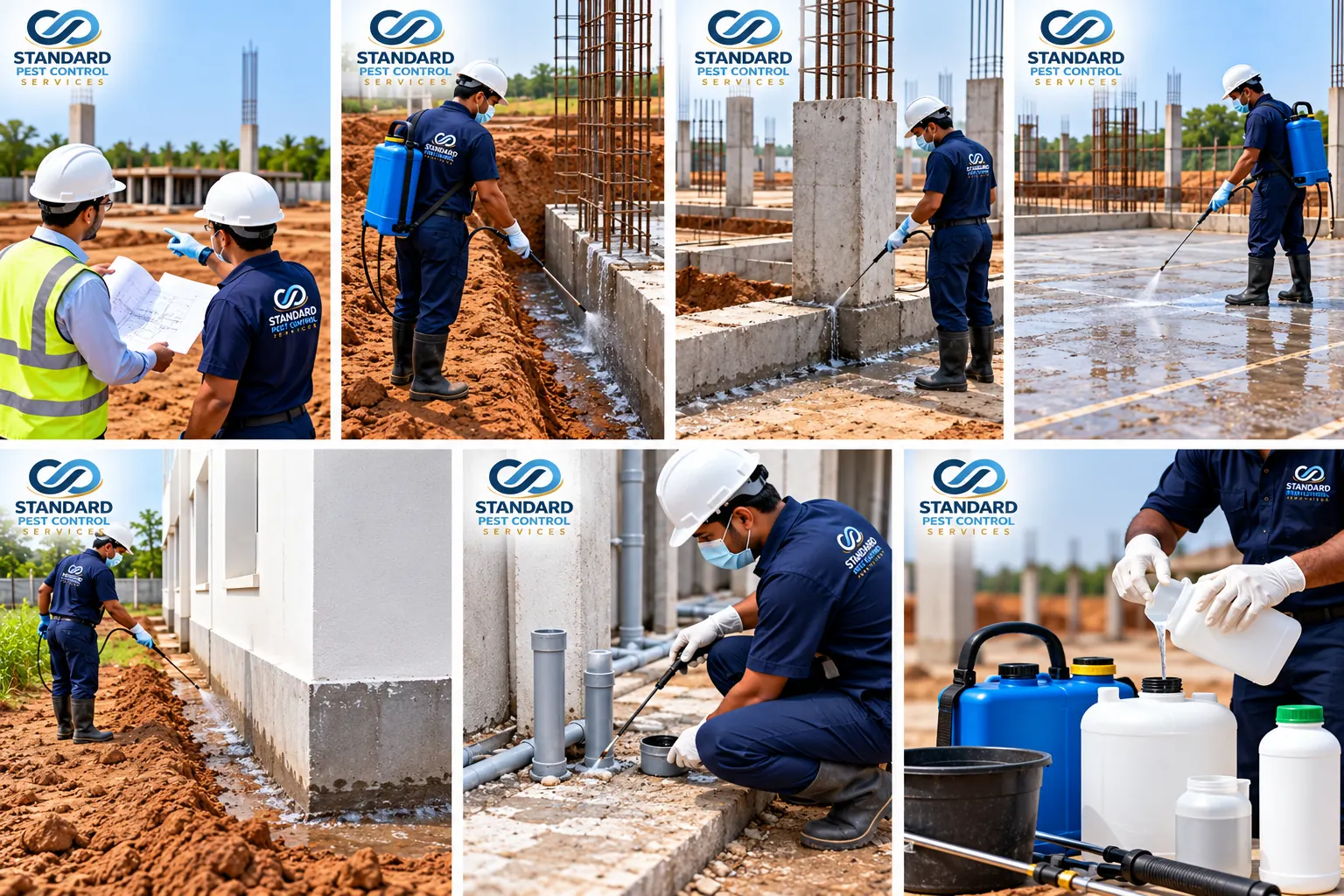
Skip soil treatment before construction to save a few rupees, and you usually pay it back ten times over in repairs, delays, and angry clients a few years later. Termites in India love exactly the warm, moist conditions that exist under a new slab, and they only need one gap in the treated soil to reach the building.
Most builders know this in theory but still push termite control to the last minute, or leave it entirely to the subcontractor. That’s where trouble starts: incomplete coverage, wrong dosage, and no records. Once the structure is up, you can never treat that soil properly again.
Why Soil Treatment Before Construction Is Non‑Negotiable
The single biggest reason buildings fail on termite resistance is poor or missing anti termite soil treatment. Concrete may look solid, but every joint, crack, and pipe penetration is a potential termite highway if the soil below hasn’t been treated correctly.
Soil under and around a foundation is treated only once in the life of the structure. Surface sprays later on help, but they’re patchwork. That first treatment defines how exposed the building will be for the next 20–30 years — which is why post-construction termite control in Bangalore can never fully replace it.
How Termites Attack From Below
Subterranean termites don’t chew through concrete; they move through the smallest voids between it and the soil, which is why foundation treatment has to be continuous. If they find one untreated patch along the plinth or under a column, that’s all they need to start a mud tube into the structure.
In typical Indian sites with mixed fill and construction debris in backfilled areas, you’ll have pockets of loose soil, stones, and trash. Those voids are perfect for termites to hide and build shelter tubes, out of sight until damage is already serious.
Foundation trenches ready? Book soil treatment before the steel goes in, while every surface is still open.
Book Free Inspection Call NowKey Stages Where Builders Must Treat The Soil
If you only spray once before casting the slab, you’ve already cut your termite prevention in half. Correct treatment is done in stages, matching the progress of the structure on site — see the best time to carry out pre-construction anti-termite treatment for how to schedule each one.
Missing even one of these stages creates a weak point that later becomes the entry route. Good builders make these treatments part of the standard checklist, not an optional extra when there’s time.
Stage 1: Before Footings And Columns
Treatment starts as soon as the foundation trenches are ready, before steel is placed. At this point, soil poisoning should be applied to the bottom and sides of trenches and pits for isolated footings with the specified chemical and rate.
Contractors often rush this step on rocky or uneven soil, assuming termites won’t pass through. They can. Every contact point of soil and concrete needs coverage, especially in corner footings and heavily loaded column bases.
Stage 2: Plinth Filling And Sub‑Base
After the footing concrete is done and the walls are up to plinth level, you treat the consolidated plinth filling. This layer is critical for construction pest control because it sits directly under floors and often carries moisture from leaking pipes or poor drainage.
The spray must reach the full thickness of the compacted fill, not just wet the surface. Skipping compaction to save time leads to settlement cracks and also creates hidden paths for termites to move undisturbed.
Stage 3: Around The Building Perimeter
The last major stage is creating a treated band along the outside of the foundation walls all around the building. This perimeter acts as a long‑term termite barrier that termites must cross to reach plinth and wall junctions.
If the site has garden beds, lawn, or paving right up to the wall, this band becomes even more important. Later landscaping often covers poor work at this stage, so insist on photos and measurements while the trench is open.
What A Proper Termite Soil Treatment Includes
A professional pre construction termite treatment is more than just spraying some chemical on the ground. Done right, it’s a documented process integrated with your construction schedule and supervised like any other structural item.
The most reliable jobs have clear BOQ items, method statements, and sign‑offs at each stage. If the treatment isn’t measured and recorded, assume corners were cut when nobody was watching.
Right Chemicals, Right Dosage
Treatment must follow IS standards on approved termiticides, dosage per square metre, and method of application. Many sites quietly dilute chemicals to stretch coverage, which weakens termite proofing long before anyone notices. Our guide to which chemicals are used in pre-construction anti-termite treatment explains the options.
Insist on seeing the product label, batch number, and calculation of area versus quantity used. If the maths doesn’t match, the barrier in the soil is already compromised.
Drilling, Rodding, And Coverage
For complex layouts with service ducts, lift pits, and multiple utility lines, simple surface sprays aren’t enough. Good foundation contractors work with the pest operator so rodding pipes and treatment holes match the structural drawings.
This is where coordination usually fails: MEP teams change pipe routes on site without updating drawings, leaving untreated pockets under toilets and wet areas that termites later exploit.
Need a soil poisoning certificate for handover? We record every stage and issue a certificate with treated-zone plans.
Book Free Inspection WhatsApp UsCommon Mistakes Builders Make With Soil Treatment
The most frequent failure is timing: pest teams are called after PCC or even after the slab, when half the soil is already locked under concrete. By then, even the best anti termite soil treatment turns into a compromise with patchy coverage.
Another common mistake is leaving treatment to the cheapest vendor without checking training, supervision, or safety practices. You wouldn’t pick your structural engineer that way, but many projects treat termite work as a low‑skill job. We cover more of these in 10 common mistakes builders make during anti-termite treatment.
Ignoring Service Penetrations
Any point where a pipe, cable, or conduit passes through the slab is a favourite termite access route. These penetrations need focused termite prevention treatment before concreting, followed by sealing with approved materials.
On site, these spots are often treated casually, or not at all, because they look small and unimportant. Years later, those tiny gaps are exactly where active mud tubes are found during inspections.
How To Plan Soil Treatment Into Your Project
Good builder guidelines treat termite work like any other critical trade: it’s planned, costed, and sequenced, not managed ad‑hoc. The pest control scope should be decided at tender stage, with clear inclusions and exclusions — our pre-construction anti-termite treatment cost guide helps with budgeting.
Put the treatment dates on the construction programme alongside reinforcement, PCC, and slab casting. That way, no one is surprised when work has to pause briefly to allow proper curing and inspection.
Documentation, Warranty, And Handover
Every treated area should have a record: date, location, method, and quantity used. On handover, give the client a file that includes layout plans showing the treated zones and the soil poisoning certificate.
A reputable pest control partner will also offer a reasonable service contract for periodic checks, which reduces disputes later if termites appear and you need to prove what was originally done.
Frequently Asked Questions
Why is soil treatment before construction so important?
Soil under and around a foundation is treated only once in the life of the structure. Surface sprays later on are patchwork, so that first treatment defines how exposed the building will be for the next 20–30 years.
Can termites get through concrete?
Subterranean termites don’t chew through concrete; they move through the smallest voids between it and the soil. One untreated patch along the plinth or under a column is enough for them to start a mud tube into the structure.
At which stages should the soil be treated?
In three main stages: the bottom and sides of foundation trenches and pits before steel is placed, the consolidated plinth filling after walls reach plinth level, and a treated band along the outside of the foundation walls around the building.
How can I check the right dosage was used?
Ask to see the product label, batch number, and the calculation of area versus quantity used. If the maths doesn’t match, the barrier in the soil is already compromised.
Why are pipe and cable penetrations a problem?
Any point where a pipe, cable or conduit passes through the slab is a favourite termite access route. These penetrations need focused treatment before concreting, followed by sealing with approved materials.
What should the client receive at handover?
A file with the date, location, method and quantity used for every treated area, layout plans showing the treated zones, and the soil poisoning certificate.
Conclusion
For any serious builder in India, soil treatment before construction is as fundamental as good concrete or proper cover to reinforcement. Done once, done right, it protects your structure, your reputation, and your client’s investment.
Partnering with a qualified provider like Standard Pest Control makes it far easier to sequence, supervise, and document every step, so you can hand over projects knowing the hidden ground below won’t become a termite problem a few monsoons later.
Related reading: 10 Common Mistakes Builders Make During Anti-Termite Treatment | Best Time to Carry Out Pre-Construction Anti-Termite Treatment | Step-by-Step Process of Pre-Construction Anti-Termite Treatment Explained | IS 6313 Guidelines for Pre-Construction Anti-Termite Treatment Explained | Which Chemicals Are Used in Pre-Construction Anti-Termite Treatment? | Pre-Construction Anti-Termite Treatment Cost in Bangalore (2026 Guide)