Mosquitoes are more than irritating flying insects. Understanding how they develop—from tiny eggs in or near water to flying adults—can help homeowners and businesses make better decisions about mosquito prevention.
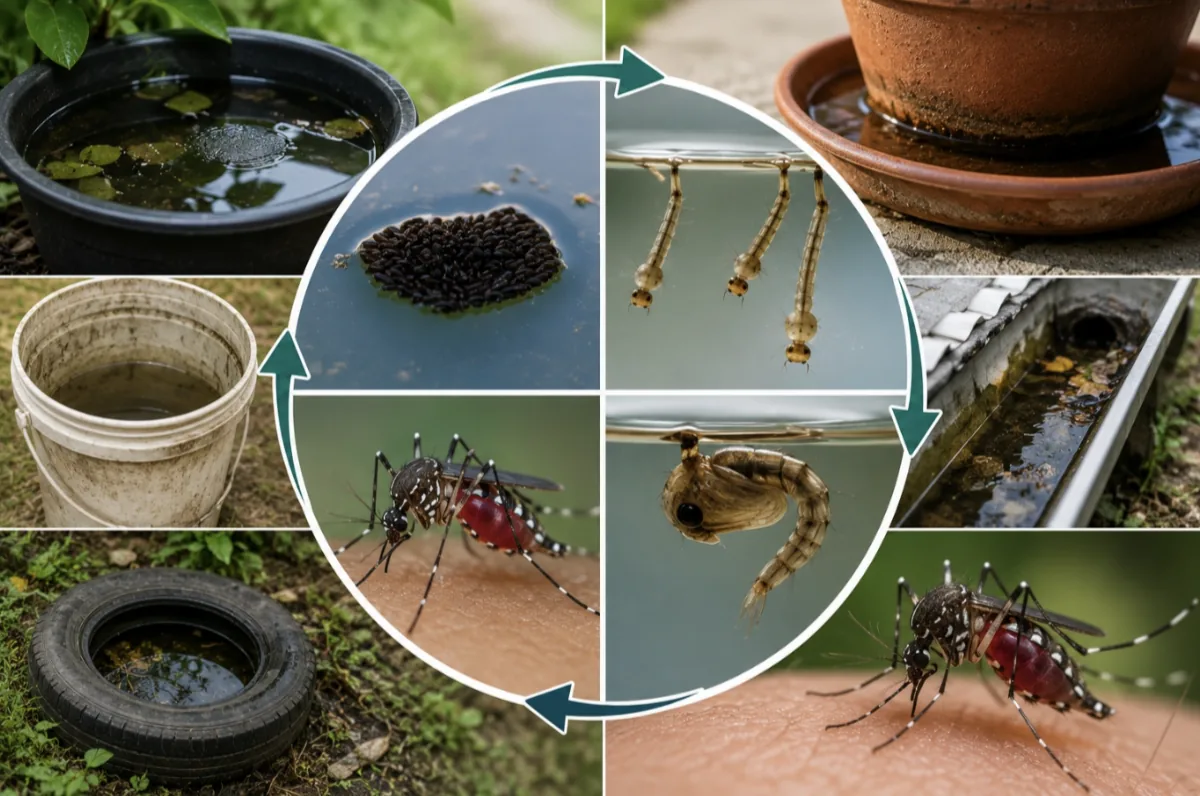
A mosquito's life cycle consists of four distinct stages: egg, larva, pupa and adult. The first three stages are closely associated with water, which is why identifying and managing breeding sources is such an important part of professional Mosquito Control Bangalore.
Rather than focusing only on killing adult mosquitoes, an effective mosquito-management program considers the entire life cycle and the environment supporting it.
Why Understanding the Mosquito Life Cycle Matters
When mosquitoes are flying around a home, garden, office or commercial property, people often reach immediately for sprays or arrange fogging.
Adult mosquito control can help reduce exposed mosquitoes, but it does not automatically eliminate immature mosquitoes developing in water. If breeding sources remain, new adults can continue emerging.
A stronger approach is: Identify breeding sources → Reduce standing water → Monitor activity → Use appropriate control measures → Continue prevention. Learn more about our professional Mosquito Control Bangalore services.
The Four Stages of the Mosquito Life Cycle
Every mosquito passes through four main stages: 1. Egg → 2. Larva → 3. Pupa → 4. Adult.
Environmental factors such as temperature, mosquito species, water availability and food resources influence how quickly development occurs. Let's examine each stage.
Stage 1: Mosquito Eggs
The mosquito life cycle begins when a female mosquito lays eggs.
Different mosquito species have different egg-laying behaviours. Some lay eggs directly on water surfaces, while others—including Aedes mosquitoes—can lay eggs on damp surfaces or container walls near the waterline, where the eggs may later hatch when exposed to water.
Potential breeding locations around Bangalore properties include:
- Buckets
- Flowerpot trays
- Discarded containers
- Tyres
- Bird baths
- Open water-storage containers
- Blocked drains
- Roof gutters
- Construction materials
- Decorative water features
- Tarpaulin folds
- Other objects capable of holding water
This explains why mosquito prevention requires inspecting more than obvious ponds and drains.
Stage 2: Mosquito Larvae
After suitable conditions trigger hatching, mosquito larvae emerge. Larvae live in water and are sometimes called "wrigglers" because of their characteristic movement.
During this stage, larvae feed on microorganisms and organic material present in the water. They undergo several developmental stages before becoming pupae.
For pest management, the larval stage is particularly important because mosquitoes are still concentrated in their aquatic breeding habitat. Removing or appropriately managing breeding sources can interrupt development before mosquitoes become flying adults.
Why Standing Water Is So Important
A large pond is not required for mosquito development. Small water-holding containers around homes and businesses can provide suitable breeding environments for some mosquito species.
After rainfall, check balconies, terraces, gardens, parking areas, construction sites, drains and utility areas for accumulated water.
Professional Pest Control Services Bangalore should consider these environmental conditions when investigating persistent mosquito activity.
Stage 3: Mosquito Pupae
The next stage is the pupa. Mosquito pupae remain aquatic but generally do not feed. They are active and may move rapidly through the water when disturbed.
Inside the pupal casing, the mosquito undergoes its transformation into the adult form. Once development is complete, the adult emerges at the water surface.
This is another reason simply killing adult mosquitoes may not completely solve a breeding problem—new adults may already be developing in nearby water.
Stage 4: Adult Mosquito
The final stage is the familiar flying adult mosquito. After emerging, the mosquito rests while its body and wings become ready for flight.
Male and female adult mosquitoes feed on plant sugars. Female mosquitoes of many species also require a blood meal for egg development — the same anatomy that makes them effective biters.
After obtaining the resources needed for reproduction, the female can locate a suitable place to lay eggs, beginning the cycle again.
How Quickly Can Mosquitoes Develop?
There is no single development time that applies to every mosquito. The speed of development depends on factors such as:
- Species
- Temperature
- Water conditions
- Food availability
- Environmental conditions
Under favourable warm conditions, some mosquitoes can progress from egg to adult relatively quickly. This is why water-holding locations should be inspected regularly, rather than only when large numbers of mosquitoes become noticeable.
Not sure where mosquitoes on your property are actually breeding? Get a professional inspection that looks at the whole life cycle, not just the adults you see.
Book Free Inspection Call NowCommon Mosquito Breeding Sources Around Homes
One of the most effective mosquito-control habits is learning to recognize potential breeding locations. Check these areas frequently:
- Flowerpot Saucers — Water remaining beneath plants can create small breeding locations.
- Buckets and Containers — Turn unused buckets and containers upside down or store them where they cannot collect rainwater.
- Water Storage — Keep suitable water-storage containers properly covered.
- Blocked Drains — Drains containing stagnant water and organic material can support mosquito activity.
- Roof Gutters — Leaves and debris can interfere with drainage and create water pockets.
- Bird Baths — Replace water and clean containers regularly.
- Outdoor Toys — Children's toys left outdoors can collect rainwater.
- Construction Sites — Open containers, building materials and temporary water storage can create numerous breeding opportunities.
- Tyres — Discarded tyres can hold rainwater and may provide protected breeding environments.
Mosquitoes in Bangalore's Rainy Season
Bangalore's rainy periods can create numerous temporary water sources. Rain fills containers, depressions, drains, construction materials and garden items that may remain unnoticed.
Mosquito activity may therefore increase even when a property does not have an obvious pond or large standing-water source. During rainy periods, inspect the property after rainfall. This simple habit can be an important part of Mosquito Control Bangalore.
Why Fogging Alone May Not Break the Mosquito Life Cycle
Fogging is commonly associated with mosquito control. It can be useful for targeting exposed adult mosquitoes under appropriate circumstances, but it should not be confused with complete mosquito management.
Consider a property where adult mosquitoes are treated today, larvae remain developing in a container nearby, those mosquitoes emerge later, and adult activity returns. The customer may believe the treatment "failed," when the actual problem is an untreated breeding source.
Professional mosquito management should therefore consider both adult activity and immature development.
Source Reduction: One of the Most Important Mosquito-Control Measures
Source reduction means removing or modifying conditions that allow mosquitoes to breed. Examples include:
- Emptying unnecessary water containers
- Cleaning blocked drainage
- Covering water storage
- Maintaining water features
- Correcting water accumulation
- Removing discarded containers
- Cleaning roof gutters
- Managing garden water sources
This approach interrupts the mosquito life cycle before adults emerge.
Tired of mosquitoes coming back after every spray? Ask us about a source-reduction program that breaks the cycle at the water, not just in the air.
Book Free Inspection WhatsApp UsMosquito Control for Apartments
Apartment complexes can have numerous mosquito breeding sources that are not inside individual flats. Potential areas include:
- Basement drainage
- Terrace areas
- Gardens
- Common balconies
- Utility spaces
- Plant containers
- Stormwater drains
- Construction zones
- Water-storage areas
Effective mosquito management may therefore require cooperation between residents, facility managers and pest-management professionals — the same coordinated approach behind our guide to community-wide mosquito control programs.
Mosquito Control for Commercial Properties
Hotels, restaurants, hospitals, offices, factories and other commercial facilities may require a structured mosquito-management program. A professional program can involve: Site Inspection → Breeding-Source Identification → Source Reduction → Appropriate Treatment → Monitoring → Documentation.
Businesses with gardens, drains, water-storage areas or extensive outdoor spaces may particularly benefit from scheduled inspections. Explore our Professional Pest Control Services in Bangalore for residential and commercial pest management.
Can Indoor Mosquito Treatment Solve an Outdoor Breeding Problem?
Not necessarily. Mosquitoes found indoors may have entered from outdoor breeding and resting locations. Windows, doors and other openings can allow adult mosquitoes to enter.
Indoor mosquito management should therefore be combined with outdoor inspection when appropriate. Screens, environmental management and reduction of nearby breeding sources can complement professional treatment.
Integrated Mosquito Management
Modern mosquito management works best when multiple methods are combined.
- Inspection — Identify where mosquitoes are active.
- Source Reduction — Remove unnecessary standing water.
- Larval Management — Where water cannot simply be removed, professionals may assess whether an appropriate mosquito-management method is required.
- Adult Mosquito Management — Suitable treatments may be used to reduce adult populations where necessary.
- Exclusion — Screens and other physical measures can help reduce mosquito entry.
- Monitoring — Continue inspecting the property to identify new breeding sources.
This approach targets more than one part of the mosquito life cycle.
Frequently Asked Questions
What are the four stages of a mosquito's life?
Mosquitoes develop through egg, larva, pupa and adult stages.
Do all mosquitoes need water to reproduce?
The immature stages of mosquitoes are aquatic. Egg-laying behaviour differs among species, but water is fundamental to larval and pupal development.
Can mosquitoes breed in small amounts of water?
Yes. Some species can develop in relatively small water-holding containers.
Why do mosquitoes return after spraying?
Nearby breeding sources may continue producing new adults. Mosquitoes may also enter from surrounding properties.
Does fogging kill mosquito eggs?
Fogging is primarily intended for exposed adult mosquitoes rather than eliminating eggs and larvae in breeding water.
Where should I look for mosquito breeding around my home?
Inspect buckets, plant saucers, drains, gutters, bird baths, discarded containers, tyres and other places where water can accumulate.
How can professional mosquito control help?
Professional inspection can identify breeding and resting areas that may be overlooked and combine environmental management with appropriate control measures.
Break the Mosquito Life Cycle, Not Just the Adult Population
The key to effective mosquito management is understanding that the mosquitoes you see flying today are only one stage of the problem. Eggs, larvae and pupae may already be developing nearby.
Regularly removing unnecessary standing water, maintaining drains and water-storage areas, inspecting gardens and using professional treatment where required can help interrupt this cycle.
If persistent mosquito activity is affecting your home, apartment or commercial property, professional Mosquito Control Bangalore should focus on identifying the source—not simply treating the mosquitoes you can see.
For professional mosquito management, visit our Mosquito Pest Control Bangalore service page or explore Standard Pest Control Services Bangalore.
Related reading: The Anatomy of a Mosquito: What Makes Them Such Effective Biters? | Mosquitoes vs. Midges: Telling the Difference | How to Identify a Mosquito Bite vs. Other Insect Bites | Dengue Mosquito Prevention Methods | Community-Wide Mosquito Control Programs: What They Involve and Why They Matter | Understanding Professional Mosquito Treatment Options: Barrier Sprays, Larvicides & More