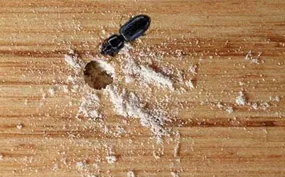
Wood Borers: Exit Holes, Frass and Timber Damage in Bangalore
Reviewed by: Standard Pest Control technical team · Bangalore, Karnataka · Last reviewed: 22 September 2026
Editorial note: This page provides general education and first-step identification. Appearance can vary by life stage and species. Do not make a final identification from a photograph alone when treatment, structural damage, food safety or health concerns are involved.
Pest overview
Wood borers can affect furniture, rafters, flooring, doors, panelling, stored wood and pallets. Much of the damage occurs below the surface.
How to identify wood borers
| Feature | What to look for |
|---|---|
| Appearance | Colour and size vary by species and life stage. |
| Common signs | Look for fresh powder, new round exit holes, weakened wood, tunnels, adult beetles and dust returning after cleaning. |
Common signs and where they hide
Look for fresh powder, new round exit holes, weakened wood, tunnels, adult beetles and dust returning after cleaning.
Furniture, roof and floor timbers, door frames, flooring, panelling, stored wood and pallets.
What attracts them
Moist or untreated timber, poor ventilation, leaks and timber stored against damp walls.
Prevention tips
- Keep timber dry and ventilated.
- Inspect second-hand furniture.
- Repair roof and plumbing leaks.
- Monitor fresh frass.
When professional control is needed
Multiplying holes, fresh frass, live beetles or structural and high-value timber need professional inspection.
Common wood-borer groups
Useful customer categories include powderpost beetles, furniture beetles and longhorn beetles. Identification should consider the adult beetle, hole pattern, frass and affected timber.
Life cycle
Adults lay eggs in or on timber. Larvae tunnel internally while feeding and growing. After pupation, adults emerge through exit holes and may begin the cycle again. Time inside timber varies by species and conditions.
Risks and damage
Wood borers can reduce the strength, appearance and value of furniture and building timber. Damage can remain hidden below paint, polish or veneer. Structural timber should be assessed by a qualified professional when weakening is suspected.
When professional control is needed
Arrange an inspection when holes multiply, frass appears fresh, live beetles are found, or structural and high-value timber may be affected. Painting over holes does not treat larvae inside timber.
Frequently asked questions
Can I identify this pest from a photograph alone?
A photograph can provide a useful first clue, but appearance varies by life stage and species. A site inspection is appropriate when activity repeats, spreads or affects health, food safety or structural materials.
When should I arrange professional pest control?
Arrange an inspection when signs continue after prevention, activity spreads, treatment affects a sensitive property or the source is hidden or difficult to access.
What are the common signs?
Look for fresh powder, new round exit holes, weakened wood, tunnels, adult beetles and dust returning after cleaning. Look for changes over time and arrange an inspection if evidence repeats.
How can I prevent activity?
Start with the prevention steps below, then address moisture, food, waste, entry gaps or harbourage conditions specific to the property.