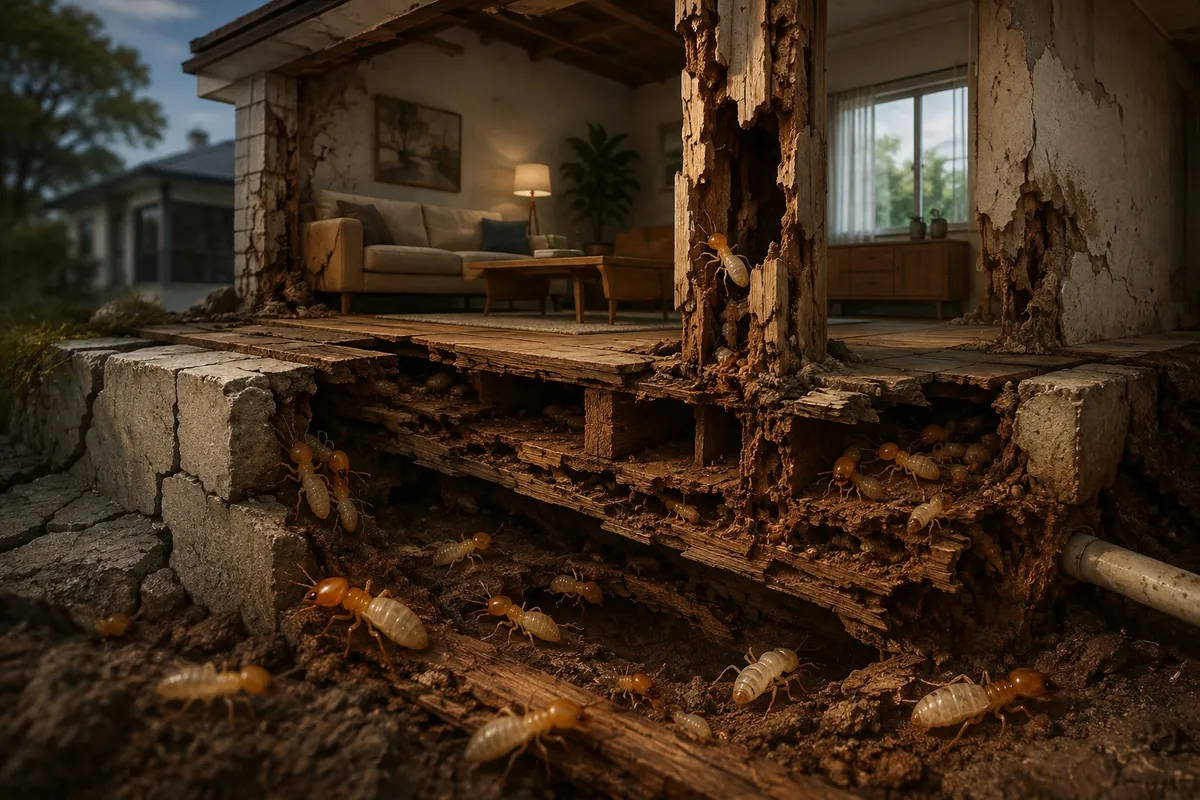
Termites: Signs, Damage and Prevention in Bangalore
Reviewed by: Standard Pest Control technical team · Bangalore, Karnataka · Last reviewed: 22 September 2026
Editorial note: This page provides general education and first-step identification. Appearance can vary by life stage and species. Do not make a final identification from a photograph alone when treatment, structural damage, food safety or health concerns are involved.
Pest overview
Termites feed on cellulose materials such as wood and paper. Activity can remain hidden inside timber, below floors, behind skirting or inside wall and service voids.
How to identify termites
| Feature | What to look for |
|---|---|
| Appearance | Colour and size vary by species and life stage. |
| Common signs | Look for mud tubes, hollow timber, blistered paint, loose laminate, discarded wings, fine frass and doors or windows that become difficult to close. |
Common signs and where they hide
Look for mud tubes, hollow timber, blistered paint, loose laminate, discarded wings, fine frass and doors or windows that become difficult to close.
Door frames, skirting boards, cupboards, flooring, roof timbers, wall voids, plumbing leaks and damp soil contact.
What attracts them
Moisture, leaks, poor drainage, wood-to-soil contact, untreated timber and limited ventilation.
Prevention tips
- Repair plumbing leaks and drainage issues.
- Keep timber away from damp soil and walls.
- Improve ventilation in enclosed timber areas.
- Inspect timber during renovations.
When professional control is needed
Mud tubes, fresh frass, discarded wings, hollow timber or spreading damage require professional inspection.
Common termite groups
For customer education, the most useful distinction is between subterranean termites and drywood termites. Subterranean termites may move through soil, cracks and shelter tubes, while drywood termites can remain inside dry timber. Reliable identification requires an inspection.
Life cycle
A colony contains workers, soldiers and reproductive adults. Eggs develop into immature termites that take on different roles. Winged reproductive termites may emerge during warm, humid conditions and establish new colonies where suitable conditions exist.
Risks and damage
Termites can weaken structural and decorative timber, including door frames, roof members, flooring, furniture and cabinetry. Damage may be concealed below paint, polish, laminate or plaster, so visible damage may be smaller than the affected area.
When professional control is needed
Arrange an inspection when mud tubes, fresh frass, discarded wings, hollow timber or spreading damage is found, especially where structural timber, a large apartment building, commercial property or valuable furniture is involved.
Frequently asked questions
Can I identify this pest from a photograph alone?
A photograph can provide a useful first clue, but appearance varies by life stage and species. A site inspection is appropriate when activity repeats, spreads or affects health, food safety or structural materials.
When should I arrange professional pest control?
Arrange an inspection when signs continue after prevention, activity spreads, treatment affects a sensitive property or the source is hidden or difficult to access.
What are the common signs?
Look for mud tubes, hollow timber, blistered paint, loose laminate, discarded wings, fine frass and doors or windows that become difficult to close. Look for changes over time and arrange an inspection if evidence repeats.
How can I prevent activity?
Start with the prevention steps below, then address moisture, food, waste, entry gaps or harbourage conditions specific to the property.