Mosquitoes: Breeding Sites and Prevention in Bangalore
Reviewed by: Standard Pest Control technical team · Bangalore, Karnataka · Last reviewed: 22 September 2026
Editorial note: This page provides general education and first-step identification. Appearance can vary by life stage and species. Do not make a final identification from a photograph alone when treatment, structural damage, food safety or health concerns are involved.
Pest overview
Mosquito breeding often starts in overlooked water. Indoor spraying may reduce adults temporarily, but source reduction and drainage matter for longer-term control.
How to identify mosquitoes
| Feature | What to look for |
|---|---|
| Appearance | Colour and size vary by species and life stage. |
| Common signs | Look for repeated bites, adults resting in dark areas, larvae in stagnant water and increased activity after rain. |
Common signs and where they hide
Look for repeated bites, adults resting in dark areas, larvae in stagnant water and increased activity after rain.
Behind curtains, under furniture, dark corners, dense vegetation, drains and shaded outdoor areas.
What attracts them
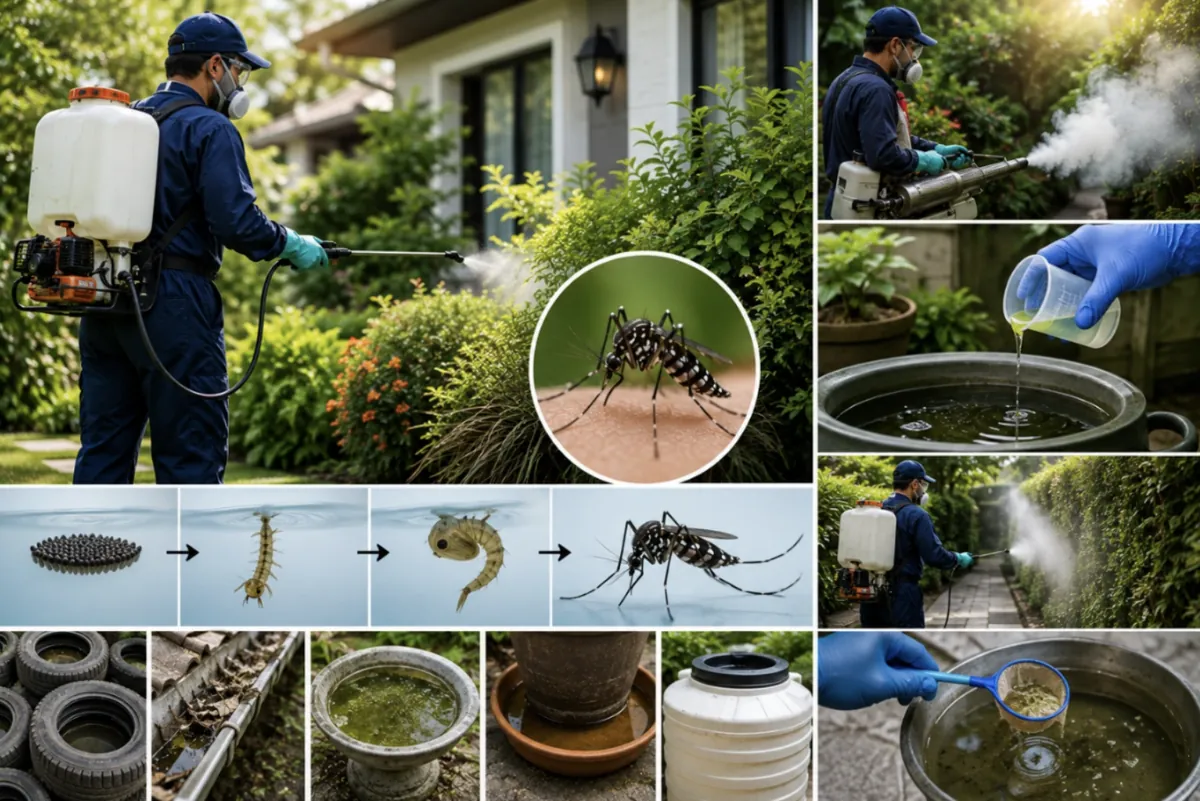
Standing water, blocked drains, dense vegetation, unscreened openings and outdoor containers.
Prevention tips
- Empty plant trays and containers weekly.
- Keep water tanks covered.
- Clear gutters and drains.
- Check for standing water after rain.
When professional control is needed
Persistent or widespread activity, inaccessible breeding sites or repeated bites around a property justify inspection.
Common mosquito groups in Bangalore
Customer-facing content can refer to Aedes, Culex and Anopheles mosquito groups. Species-level identification should be confirmed by a trained professional because appearance and breeding locations can overlap.
Life cycle
Mosquitoes pass through egg, larval, pupal and adult stages. Eggs are laid in or near water, larvae develop in water and adults emerge after the pupal stage. Warm conditions can allow the cycle to complete quickly.
Risks and health advice
Mosquito bites can cause itching and local irritation. Depending on species and local epidemiology, mosquitoes can be involved in disease transmission. This page is not a diagnosis; consult a qualified medical professional for symptoms or concerns.
When professional control is needed
Arrange management when activity remains high after standing water is removed, breeding sites are difficult to access, residents or staff are repeatedly bitten, or a property includes large gardens, basements, terraces, drains or water-storage areas.
Frequently asked questions
Can I identify this pest from a photograph alone?
A photograph can provide a useful first clue, but appearance varies by life stage and species. A site inspection is appropriate when activity repeats, spreads or affects health, food safety or structural materials.
When should I arrange professional pest control?
Arrange an inspection when signs continue after prevention, activity spreads, treatment affects a sensitive property or the source is hidden or difficult to access.
What are the common signs?
Look for repeated bites, adults resting in dark areas, larvae in stagnant water and increased activity after rain. Look for changes over time and arrange an inspection if evidence repeats.
How can I prevent activity?
Start with the prevention steps below, then address moisture, food, waste, entry gaps or harbourage conditions specific to the property.