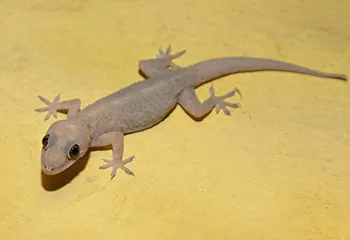
House Lizards: Causes and Humane Prevention in Bangalore
Reviewed by: Standard Pest Control technical team · Bangalore, Karnataka · Last reviewed: 22 September 2026
Editorial note: This page provides general education and first-step identification. Appearance can vary by life stage and species. Do not make a final identification from a photograph alone when treatment, structural damage, food safety or health concerns are involved.
Pest overview
A high number of lizards can indicate an ongoing supply of moths, flies, mosquitoes or other insects. Humane management should focus on the source.
How to identify house lizards
| Feature | What to look for |
|---|---|
| Appearance | Colour and size vary by species and life stage. |
| Common signs | Look for lizards near lights, droppings on walls, repeated window sightings and shed skin. |
Common signs and where they hide
Look for lizards near lights, droppings on walls, repeated window sightings and shed skin.
Behind cupboards, curtains and appliances, roof edges, wall cracks, balconies and plants.
What attracts them
Flying insects, bright lights, open windows, vegetation, warm surfaces and accessible cracks.
Prevention tips
- Reduce insects near lights.
- Install screens.
- Seal gaps around doors and windows.
- Avoid glue traps and direct handling.
When professional control is needed
Repeated entry, significant insect activity or droppings in sensitive areas justify professional advice.
Common house-lizard guidance
For general website content, refer to common house geckos and garden lizards. If a larger, unusual or potentially venomous reptile is found, do not handle it; contact an appropriate wildlife rescue or local authority.
Life cycle
Many house geckos lay small clutches in protected locations. Their presence is often linked to insect availability rather than food supplied by the household.
Risks and humane management
Common house lizards are usually a nuisance rather than a structural threat. Droppings can stain walls and surfaces. High numbers may indicate a wider insect problem. Avoid glue traps and direct handling.
When professional control is needed
Professional help is useful when lizards enter repeatedly, the property has significant insect activity, droppings affect sensitive areas or entry points are difficult to access safely. Management should focus on insect reduction and exclusion.
Frequently asked questions
Can I identify this pest from a photograph alone?
A photograph can provide a useful first clue, but appearance varies by life stage and species. A site inspection is appropriate when activity repeats, spreads or affects health, food safety or structural materials.
When should I arrange professional pest control?
Arrange an inspection when signs continue after prevention, activity spreads, treatment affects a sensitive property or the source is hidden or difficult to access.
What are the common signs?
Look for lizards near lights, droppings on walls, repeated window sightings and shed skin. Look for changes over time and arrange an inspection if evidence repeats.
How can I prevent activity?
Start with the prevention steps below, then address moisture, food, waste, entry gaps or harbourage conditions specific to the property.