Bed Bugs: Identification, Signs and Prevention in Bangalore
Reviewed by: Standard Pest Control technical team · Bangalore, Karnataka · Last reviewed: 22 September 2026
Editorial note: This page provides general education and first-step identification. Appearance can vary by life stage and species. Do not make a final identification from a photograph alone when treatment, structural damage, food safety or health concerns are involved.
Pest overview
Bed bugs can be introduced through luggage, used furniture, clothing and visitors. Cleanliness alone does not prevent them because they are attracted to warmth and access to a host.
How to identify bed bugs
| Feature | What to look for |
|---|---|
| Appearance | Colour and size vary by species and life stage. |
| Common signs | Check mattress piping, labels, bed frames and headboards for live insects, tiny eggs, cast skins, dark spots and rust-coloured smears. |
Common signs and where they hide
Check mattress piping, labels, bed frames and headboards for live insects, tiny eggs, cast skins, dark spots and rust-coloured smears.
Mattress seams, bed frames, headboards, sofa seams, curtains, skirting, cracks, wall fixtures and luggage.
What attracts them
Warmth, body odour, carbon dioxide, sleeping hosts, clutter and second-hand furniture.
Prevention tips
- Inspect second-hand furniture before bringing it indoors.
- Wash and heat-dry travel clothing.
- Inspect luggage after travel.
- Reduce clutter around sleeping areas.
When professional control is needed
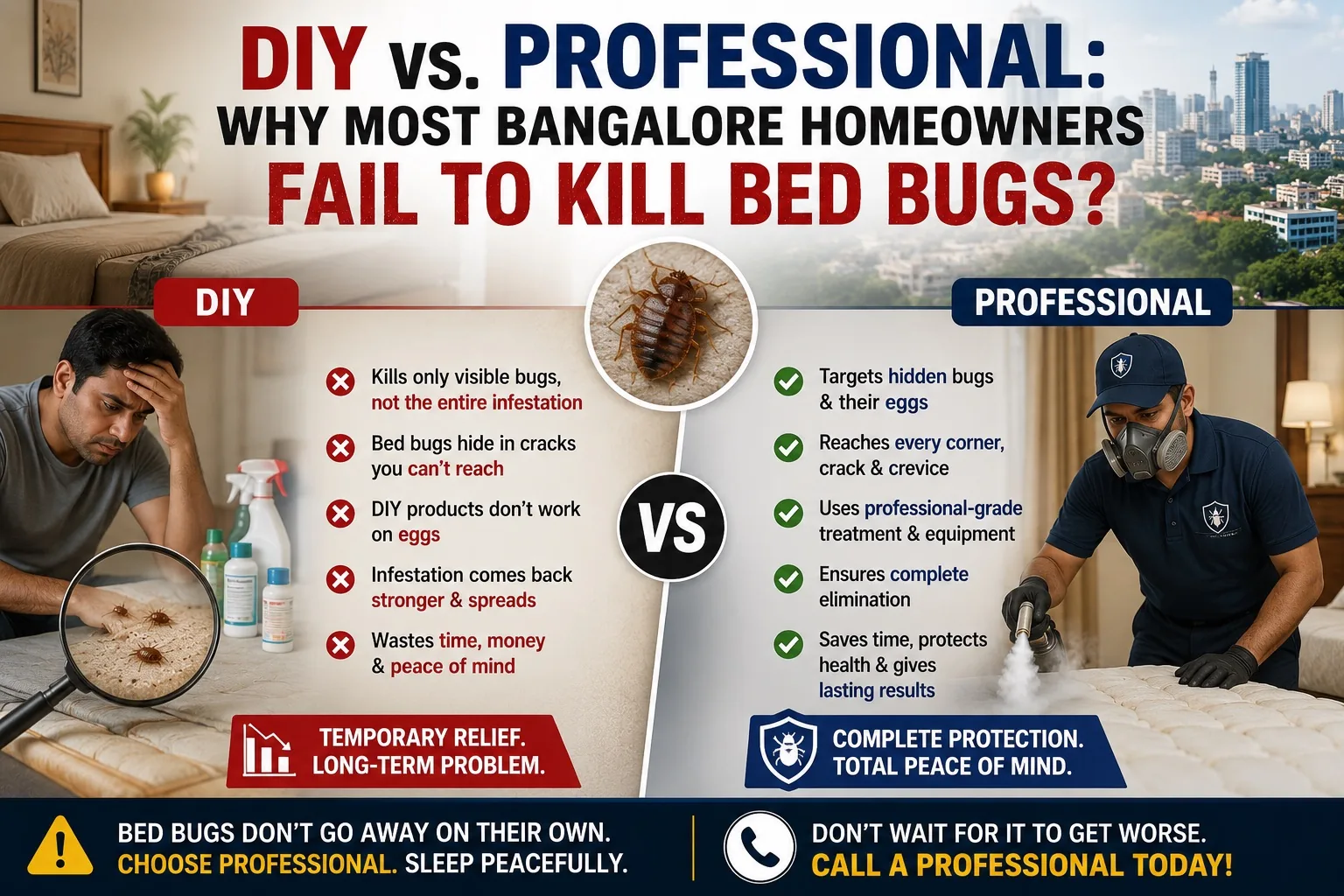
Live insects, eggs, repeated signs, activity in more than one room or a hotel, hostel or multi-unit issue needs professional treatment.
Common species in Bangalore and Karnataka
The two species of practical relevance are Cimex hemipterus, the tropical bed bug, and Cimex lectularius, the common bed bug. Their signs can look similar, so species-level identification should be confirmed during inspection.
Life cycle
Eggs hatch into nymphs. Nymphs pass through several stages before becoming adults, feeding between stages when a host is available. Bed bugs can survive in protected cracks when a room is vacant, so leaving a room unused does not always solve the problem.
Risks and spread
Bed bug bites can cause itching, local skin irritation and disturbed sleep. They are not a sign of poor housekeeping. The main practical concern is spread through luggage, furniture, clothing, adjoining rooms and shared buildings.
When professional control is needed
Arrange professional treatment when live insects, eggs or repeated signs are found; activity is present in more than one room; or the problem affects a hotel, hostel, rental property, hospital or multi-unit building. Preparation and follow-up are often required.
Frequently asked questions
Can I identify this pest from a photograph alone?
A photograph can provide a useful first clue, but appearance varies by life stage and species. A site inspection is appropriate when activity repeats, spreads or affects health, food safety or structural materials.
When should I arrange professional pest control?
Arrange an inspection when signs continue after prevention, activity spreads, treatment affects a sensitive property or the source is hidden or difficult to access.
What are the common signs?
Check mattress piping, labels, bed frames and headboards for live insects, tiny eggs, cast skins, dark spots and rust-coloured smears. Look for changes over time and arrange an inspection if evidence repeats.
How can I prevent activity?
Start with the prevention steps below, then address moisture, food, waste, entry gaps or harbourage conditions specific to the property.