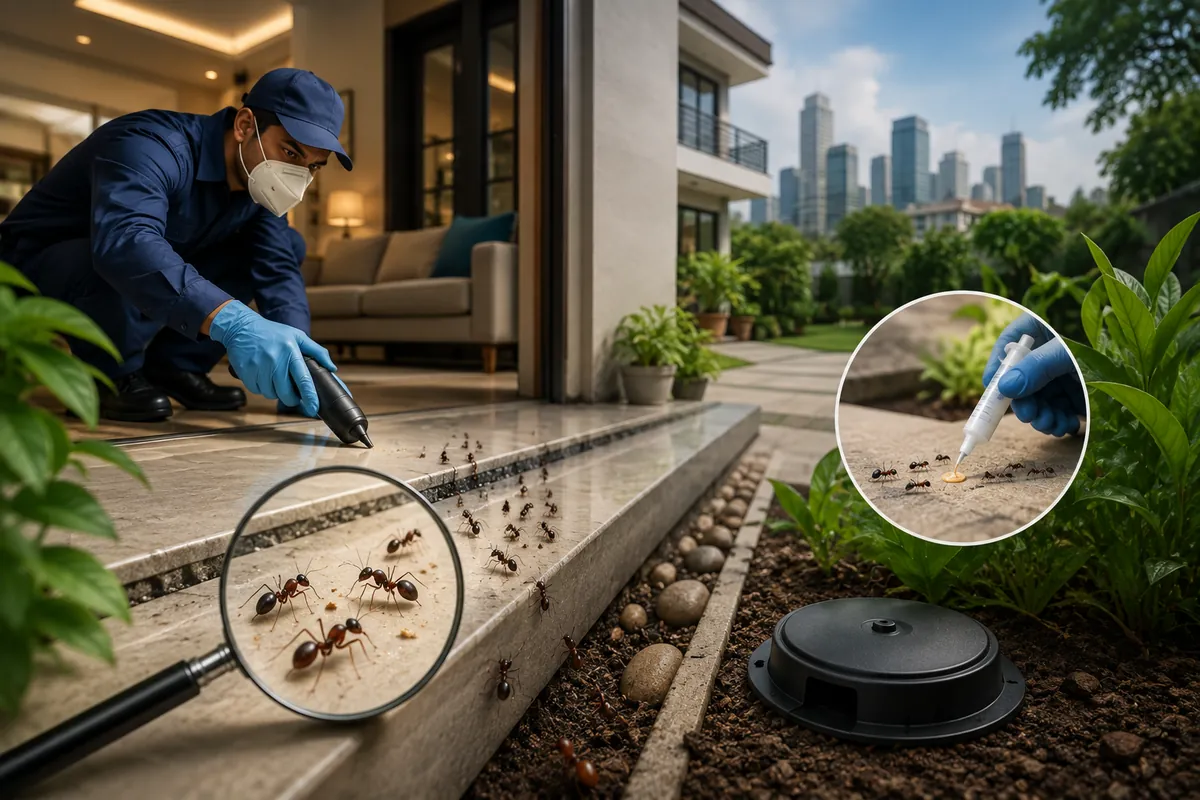
Ants: Identification, Nesting and Prevention in Bangalore
Reviewed by: Standard Pest Control technical team · Bangalore, Karnataka · Last reviewed: 22 September 2026
Editorial note: This page provides general education and first-step identification. Appearance can vary by life stage and species. Do not make a final identification from a photograph alone when treatment, structural damage, food safety or health concerns are involved.
Pest overview
Ants use scent trails between nests and food or water. The nest may be inside a wall, below paving, in a planter, near plumbing or outside.
How to identify ants
| Feature | What to look for |
|---|---|
| Appearance | Colour and size vary by species and life stage. |
| Common signs | Look for repeated trails, ants around sinks or pantry items, winged ants, soil piles and nesting near moisture. |
Common signs and where they hide
Look for repeated trails, ants around sinks or pantry items, winged ants, soil piles and nesting near moisture.
Wall and skirting gaps, under tiles, planters, appliances, plumbing, damp timber, window frames and garden edges.
What attracts them
Sugar, crumbs, grease, pet food, moisture, leaking pipes, vegetation and cracks around doors or windows.
Prevention tips
- Wipe food trails promptly.
- Store pantry goods in sealed containers.
- Repair leaks and dry surfaces.
- Seal gaps around windows and pipes.
When professional control is needed
Returning trails, winged ants, food-area activity or possible carpenter ants need an inspection.
Common ant groups
Common customer-facing categories include black house ants, ghost ants, fire ants and carpenter ants. Carpenter ants are associated with damp or damaged timber and should not be confused with termites.
Life cycle
Workers forage while queens remain protected in the nest. A mature colony may produce winged reproductive ants when conditions change. Removing visible workers does not necessarily remove the nest.
Risks and damage
Most household ants are a nuisance and can contaminate exposed food. Some species may bite or sting. Carpenter ants can excavate damp or damaged timber, although they do not consume wood in the same way as termites.
When professional control is needed
Arrange an inspection when trails return after cleaning, winged ants appear indoors, ants enter wall or floor voids, activity affects food preparation, or carpenter ant activity may be associated with damp timber.
Frequently asked questions
Can I identify this pest from a photograph alone?
A photograph can provide a useful first clue, but appearance varies by life stage and species. A site inspection is appropriate when activity repeats, spreads or affects health, food safety or structural materials.
When should I arrange professional pest control?
Arrange an inspection when signs continue after prevention, activity spreads, treatment affects a sensitive property or the source is hidden or difficult to access.
What are the common signs?
Look for repeated trails, ants around sinks or pantry items, winged ants, soil piles and nesting near moisture. Look for changes over time and arrange an inspection if evidence repeats.
How can I prevent activity?
Start with the prevention steps below, then address moisture, food, waste, entry gaps or harbourage conditions specific to the property.