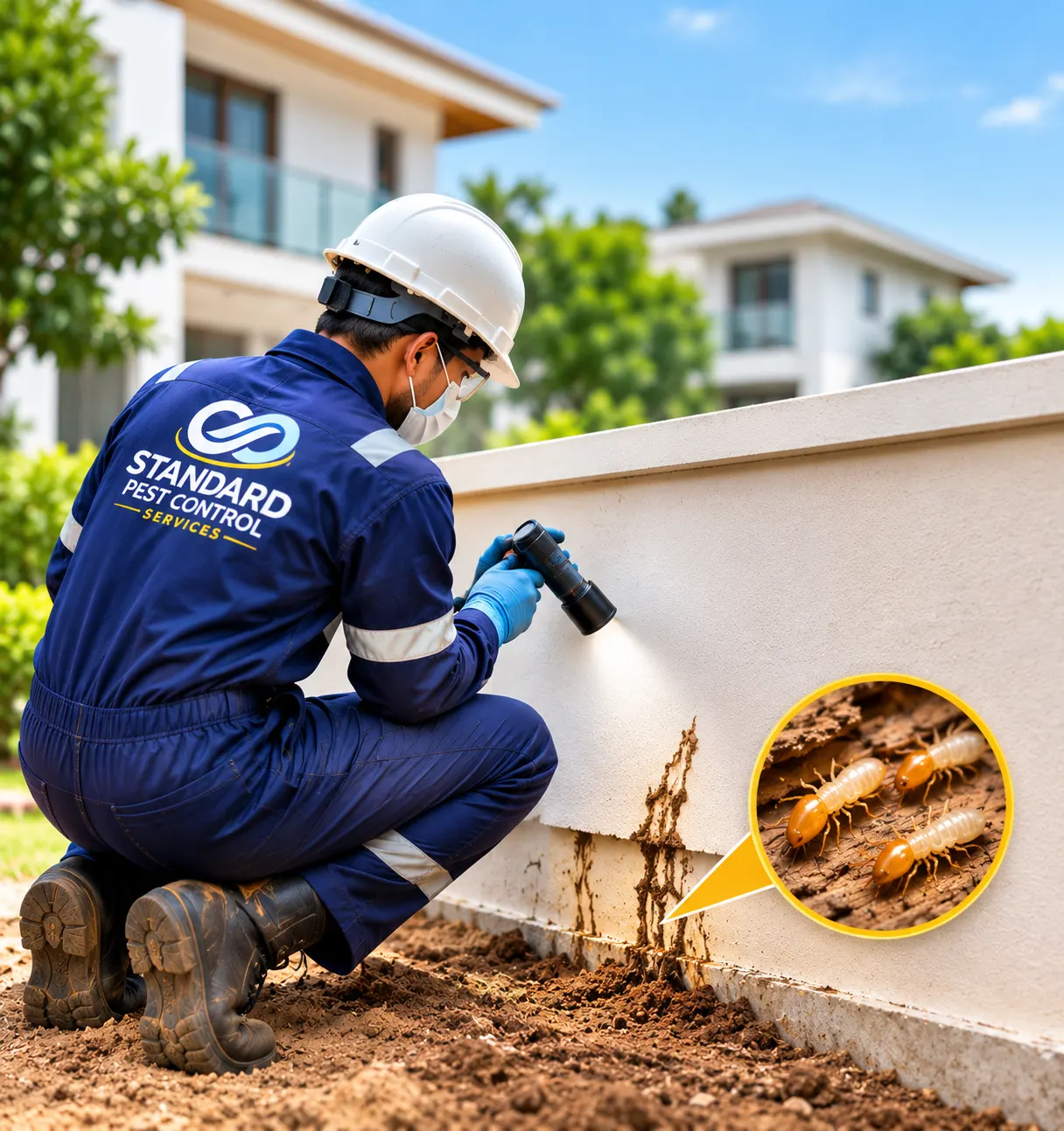
If you are seeing mud tubes on the wall or tiny piles of wood dust, you already know you need a termite treatment company, not another home remedy. The real question is how to choose a team that actually gets rid of the colony instead of just spraying and sending you a bill.
Most homeowners in India call the first number they find on Google or a sticker in the lift. That is usually how money gets wasted, furniture keeps getting damaged, and termites quietly move from one room to another. These ten questions will help you filter out the spray-and-go operators and find real termite experts.
1. Are You Licensed And Certified For Termite Treatment?
Your first filter should be basic: is this a licensed pest control company or just a local sprayer with a pump and chemical? In India, genuine operators are licensed under the Insecticides Act, 1968 and follow Central Insecticides Board guidelines — see why a government-licensed pest control company matters.
Ask for their license number, GST details, and proof of training for the technicians. A professional who hesitates to share documents or keeps changing the subject will not suddenly become careful inside your home.
2. What Type Of Termite Inspection Will You Do?
A quick walk-through that lasts five minutes is not an inspection, it is a sales visit. Before quoting, the team should carry out a detailed termite inspection that covers all rooms, wooden frames, false ceilings, lofts, and external areas that touch the building.
Expect them to probe wooden frames, check skirting gaps, inspect electrical conduits, and look at plumbing lines that enter the wall. In apartments, they should also see the lobby walls and the flat directly below if possible. A good inspection report reduces surprises later — and it helps to know the signs of termite infestation yourself.
3. Which Treatment Method Do You Recommend And Why?
Termites can be controlled using drilling and chemical injection, soil treatment, wood treatment, or baiting systems. A serious termite control company will explain which approach fits your building and why, instead of pushing the most expensive option by default.
For existing flats, drilling at the wall-floor junction and treating door frames is common. For independent houses, pre-construction and post-construction soil treatments may be needed. Ask what chemical they use, the concentration, and how long the barrier will realistically last in Indian conditions.
Want straight answers to all ten questions? Book a detailed termite inspection with Standard Pest Control.
Book Free Inspection Call Now4. Are Your Chemicals Safe For Children, Elderly, And Pets?
One of the biggest worries for families is exposure to strong odours and residues after anti termite services. You should not have to choose between protecting your home and protecting your health.
Ask if the company uses government-approved termiticides, whether they are odourless, and how long you need to stay out of treated rooms. A responsible technician will talk about ventilation, covering utensils, and protecting aquariums instead of brushing away your safety questions. Our guide to safe pest control for babies, pets and senior citizens covers this in more detail.
5. How Experienced Are Your Technicians With Termite Jobs?
Experience matters more in termite work than in routine cockroach treatments because the damage is hidden and the insects avoid light. A general pest control company may be good at spraying kitchens but weak at understanding termite biology and movement.
Ask how many termite jobs they do in a typical month, and how long the current team has been handling such work. You can also ask for photos from past sites, especially of drilling quality and sealing, to see how they leave a home after treatment.
6. What Is Included In Your Termite Treatment Warranty?
The word "warranty" sounds reassuring, but you need to know exactly what it covers before you trust it. Many offers look attractive on paper but vanish when a fresh infestation appears six months later.
Ask how long the warranty lasts, what kind of termite management is promised during that period, and how many free visits are included. Confirm whether they cover only re-treatment of affected spots or also inspection of the full premises each time.
7. Can You Share References Or Reviews For Termite Work?
Termite damage is stressful, and customers usually remember who solved it for them. Reliable termite experts should be able to share recent references you can call, especially in your city or even your neighbourhood.
Spend five minutes checking Google reviews and looking for mentions of termites, not just general pest issues. You are looking for patterns: do people say the problem actually stopped, and did the team come back promptly during the warranty period?
Seeing mud tubes or wood dust? Get a written treatment plan, clear pricing and warranty terms before any work starts.
Book Free Inspection WhatsApp Us8. How Do You Price The Job And What Hidden Costs May Appear?
Some operators quote very low on the phone and then start adding charges once they arrive, for drilling, chemical, or extra rooms. A professional termite control company should give clear pricing logic upfront, usually based on square footage and infestation level.
Ask what is included in the quoted price: drilling, filling holes with white cement, moving basic furniture, and follow-up visits. Clarify GST and payment terms before work starts so you are not negotiating while dust is already on the floor. To put the price in perspective, compare termite treatment cost vs furniture damage.
9. Do You Have Experience With Termite Treatment In Bangalore Homes?
Soil type, construction style, and climate all affect how termites behave and how long a barrier holds — see why termites love Bangalore's red soil. If you are looking for termite treatment Bangalore services, you want a provider who understands local building patterns and monsoon-related moisture problems.
Ask if they have worked in similar apartments, villas, or independent houses in your area. Technicians who know local builders often already understand where the weak points in the structure usually are.
10. How Will You Prepare The House And Clean Up After Treatment?
The work itself is intrusive: drilling along skirting lines, treating door frames, and sometimes shifting wardrobes. This is where the difference between a casual operator and licensed pest control shows up the fastest.
Ask who will move and put back heavy furniture, how they protect flooring during drilling, and how they clear dust from the site. Check whether they fill drill holes neatly with white cement so your floor and tiles do not look patched and messy for years.
Bonus Questions To Separate Pros From Amateurs
How Do You Handle Termite Removal In Shared Walls?
In apartments and row houses, termites often travel through shared walls and common utility ducts. Effective termite removal means treating both your side and, if possible, the neighbouring side that shares the same structure.
Ask the company how they coordinate with neighbours or the housing association when they detect movement through common walls. A good team thinks beyond just your four walls.
Will You Provide A Written Treatment Plan And Invoice?
A professional termite treatment company should give you a written plan describing areas to be treated, chemicals used, and the schedule for follow-up visits. Verbal promises disappear faster than termites in the light.
Insist on a detailed invoice that mentions termite treatment specifically along with warranty terms. This document matters later if you sell the property or need to show proof of professional termite control to future buyers.
How Do You Decide Between Spot Treatment And Full Coverage?
Cheap operators will treat only the visibly damaged area and call it a day. Experienced professionals know that termites usually spread through hidden channels before you ever notice damage on a single door frame.
Ask the technician to explain why they recommend spot treatment or full coverage. In most medium and large homes, full coverage around the perimeter and key wooden points is the safer option even if it costs more initially.
Frequently Asked Questions
How do I check if a termite treatment company is licensed?
Ask for their license number, GST details and proof of technician training. Genuine operators in India are licensed under the Insecticides Act, 1968 and follow Central Insecticides Board guidelines. A company that hesitates to share documents is a red flag.
What should a proper termite inspection cover?
All rooms, wooden frames, false ceilings, lofts and external areas that touch the building, including skirting gaps, electrical conduits and plumbing lines entering walls. In apartments, the lobby walls and the flat below should be checked if possible.
Which termite treatment method is best?
It depends on the building. Existing flats usually need drilling at the wall-floor junction and door-frame treatment, while independent houses may need pre- or post-construction soil treatment. A good company explains why it recommends a method rather than pushing the most expensive one.
What should a termite treatment warranty include?
Its length, what termite management is promised during that period, how many free visits are included, and whether it covers only re-treatment of affected spots or a full-premises inspection each time.
What hidden costs should I ask about?
Confirm whether the quote includes drilling, filling holes with white cement, moving basic furniture and follow-up visits, and clarify GST and payment terms before work starts.
Is spot treatment enough for termites?
Usually not. Termites spread through hidden channels before damage shows on a single door frame, so in most medium and large homes full coverage around the perimeter and key wooden points is the safer option.
Conclusion
Choosing a termite treatment company is less about finding the lowest quote and more about asking the questions that reveal who understands the problem under your floor and behind your walls. When you listen carefully to how a provider answers these ten points, the difference between a spray-and-go outfit and a real professional becomes very clear.
If you are already seeing signs of damage, do not postpone calling a trusted team like Standard Pest Control; use this checklist to compare options, pick the termite treatment company that gives straight answers, and protect your home before the colony grows any bigger.
Related reading: Signs of Termite Infestation in Homes | Is Your Home Silently Rotting from the Inside Out? (The Truth About Bangalore Termites) | Can a ₹15,000 Treatment Save You ₹5 Lakhs in Furniture Repairs? | Common Myths About Termite Control | Why Government-Licensed Pest Control Companies Are the Safest Choice for Your Home | Are Those Mud Pipes on Your Wall a Sign of a Termite Emergency? | Complete Guide to Post-Construction Termite Treatment: Everything Homeowners Need to Know | How Long Does Post-Construction Termite Treatment Last? Expert Guide