If you’ve paid for post construction termite treatment, the first thing you want to know is how long that protection actually lasts before termites can sneak back in. And if you’re planning a treatment soon, you’re probably wondering if you need to budget for it once in a lifetime or every few years.
The honest answer: the lifespan of post construction termite treatment depends on the method, chemicals used, soil and building conditions, and how serious you are about follow-up care. Once you understand those pieces, you can plan termite prevention without overpaying or assuming you’re safe when you’re not.
How Long Does Post Construction Termite Treatment Usually Last?
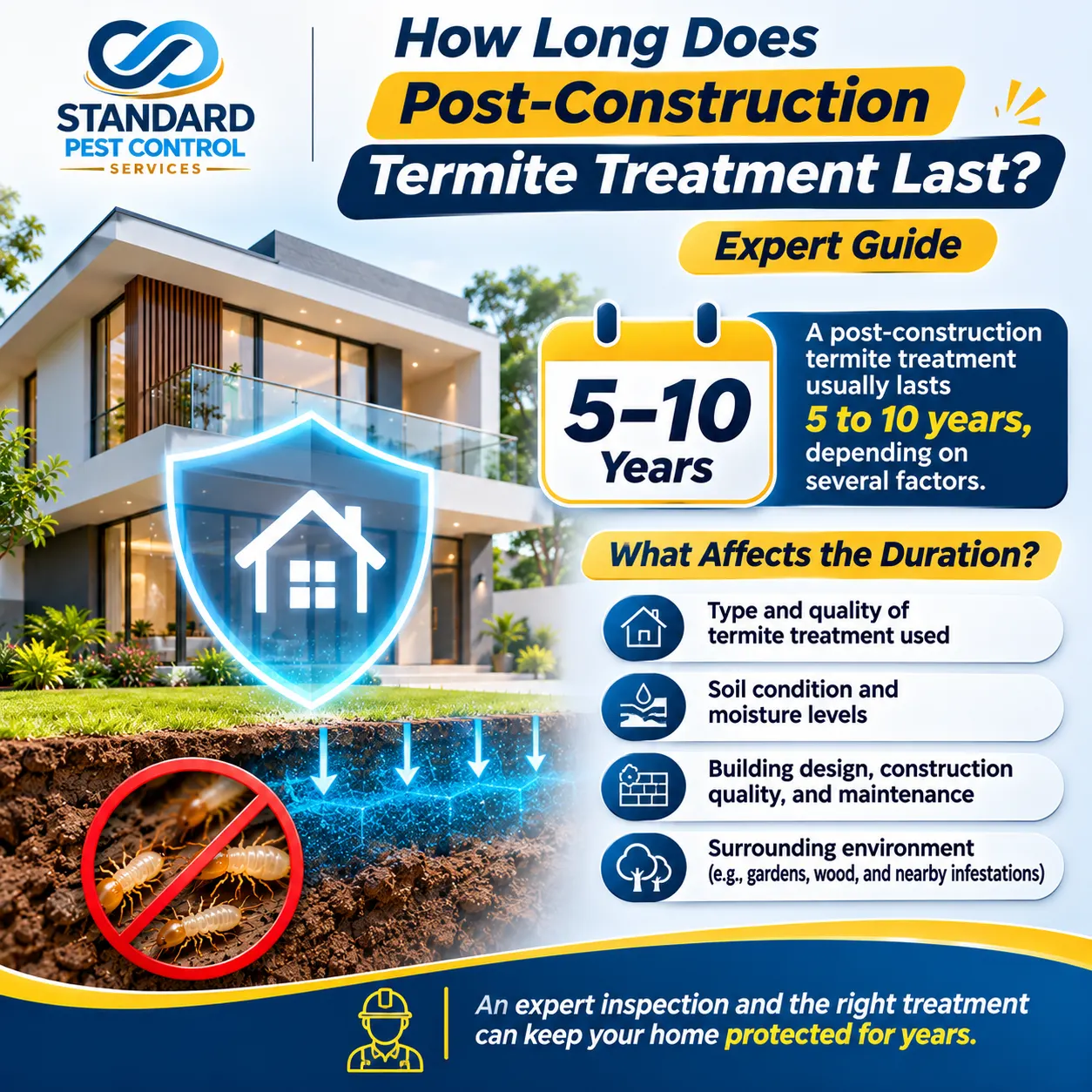
For drilled chemical barrier treatments using modern non-repellent termite chemicals, you can reasonably expect 5–8 years of strong protection in most Indian homes, sometimes up to 10 years in stable, dry soil.
That range shrinks in areas with heavy rainfall, poor drainage, or frequent plumbing leaks because the treated soil gets disturbed or washed out. Ground floor flats with garden beds right against the wall often see the treatment break down faster than upper floors in fully paved compounds.
Not sure your old treatment still works? Book a termite inspection and find out where the barrier is holding and where it isn’t.
Book Free Inspection Call NowWhat Actually Determines Termite Treatment Duration?
Three things decide how long the protection lasts: the chemical, the quality of drilling and application, and how stable the soil stays after the job.
Most professional termite treatment work in India now uses non-repellent termiticides like fipronil or imidacloprid, which termites can’t detect. They walk through the treated zone, carry it back to the colony, and you get control that usually outlives older repellent products. See how these termite chemicals compare.
Soil, Leaks, And Renovations That Break The Barrier
Even the best anti termite treatment fails early if the soil is constantly disturbed. New plumbing lines, broken tiles with water seepage, or extension work that cuts into the floor can open gaps that termites use like a secret doorway — which is why a termite inspection before renovation is worth it.
In practice, the homes that lose protection fastest are the ones with chronic damp patches, poor exterior slope, or tanks and pipes leaking into the foundation area year after year.
Drilling Quality And Coverage Gaps
A common weak point in professional termite treatment is poor spacing or shallow drilling. If holes are too far apart, or only 2–3 inches deep instead of going right down near the footing, you end up with untreated pockets where termites can slip through. Our guide to how drill and inject termite treatment works explains what correct spacing looks like.
This is why two houses in the same lane, treated in the same year, can get very different results depending on how carefully the technicians worked on day one.
Termite Warranty: What It Really Covers (And What It Doesn’t)
Most pest control companies issue a termite warranty in India for 3–5 years on post construction work, with yearly check-ups included. That sounds like a safety net, but the fine print matters more than the big number on the invoice.
Many contracts only promise free re-treatment of affected areas, not a refund or full retreatment of the entire building. Some exclude damage repair altogether, so you still pay for fixing doors, frames, or cabinets even if termites return during the warranty period.
Questions To Ask Before You Sign
- Is the warranty transferable if you sell the flat or house?
- Does it include annual termite inspection or just emergency visits on complaint?
- Are structural changes covered or does any renovation void the promise?
- Is there a cap on re-treatments per year or overall?
Get these answers in writing, not just as a verbal assurance from the sales person who visited your site.
Want warranty terms in writing? Standard Pest Control spells out coverage, check-ups and re-treatment before work starts.
Book Free Inspection WhatsApp UsAnti Termite Treatment Methods After Construction
Most Indian homeowners only see the drilling and injection method, but post construction anti termite treatment actually comes in a few patterns, each with a slightly different lifespan and cost.
The standard drill-fill-seal barrier along skirting and external perimeters is still the workhorse solution for independent houses and ground floor apartments.
Liquid Barriers Vs Baiting Systems
Liquid soil barriers are designed to give multi-year termite protection with one detailed service, assuming the soil is not heavily disturbed later. Baiting systems, where stations are placed in the ground and monitored, work well in complex or sensitive structures but depend completely on regular inspections and refills.
In practical terms, liquid barriers are more common for Indian residential buildings, while baits are often reserved for high-risk commercial sites or properties where drilling isn’t allowed.
How To Make Post Construction Termite Treatment Last Longer
You can quietly cut years off your termite protection by ignoring small building issues, or you can extend the life of your treatment with a few simple habits and checks.
Start with moisture control: repair leaking taps, cracked drain lines, and tank overflows, and make sure water isn’t pooling against external walls where termites like to travel and nest.
Practical Inspection And Maintenance Tips
Schedule a professional termite inspection once a year even during the active warranty period, and keep the service report so you have a record of what was checked and found.
Inside the house, look for small mud tubes on walls, hollow-sounding wooden frames, or fine dust near skirting boards, and call your service provider early rather than waiting for visible damage. Our list of 10 termite warning signs shows what to watch for.
Outside, avoid stacking firewood, cardboard, or lumber directly against the wall because that gives termites a bridge over the treated soil and reduces the effect of any termite control work already done.
Choosing The Right Professional Termite Treatment Provider
The right company can often deliver safe, longer-lasting results even with the same chemicals another provider might waste through poor technique.
Ask how many years they’ve been doing white ant treatment in your city, what brands and concentrations of chemicals they use, and whether their technicians are trained in-house or just outsourced labour. Our 10 questions to ask a termite treatment company go further.
Walk away from quotes that are far below market rate. Those jobs often mean diluted products, rushed drilling, and no follow-up support when termites reappear.
Frequently Asked Questions
How long does post-construction termite treatment last?
Drilled chemical barrier treatments with modern non-repellent termiticides can give 5–8 years of strong protection in most Indian homes, sometimes up to 10 years in stable, dry soil. Heavy rain, poor drainage and plumbing leaks shorten that.
What makes termite treatment wear off early?
Disturbed soil and moisture: new plumbing lines, water seepage under broken tiles, extension work cutting into the floor, chronic damp patches and leaking tanks or pipes. Poorly spaced or shallow drilling also leaves untreated pockets.
What does a termite warranty usually cover?
Most post-construction warranties in India run 3–5 years with yearly check-ups. Many only promise free re-treatment of affected areas, not full re-treatment or a refund, and some exclude repairs to damaged doors, frames or cabinets.
What should I ask before signing a termite warranty?
Whether it is transferable if you sell, whether it includes annual inspections, whether renovations void it, and whether re-treatments are capped. Get the answers in writing.
Is a baiting system better than a liquid barrier?
Liquid barriers give multi-year protection from one detailed service and are more common in Indian homes. Baiting systems suit complex or sensitive structures and sites where drilling isn’t allowed, but they depend on regular inspections and refills.
How can I make termite treatment last longer?
Fix leaking taps, drain lines and tank overflows, keep water from pooling against external walls, don’t stack firewood or cardboard against walls, and book a professional termite inspection every year.
Conclusion
Post construction termite treatment isn’t a once-and-forget job; it’s a long-term shield whose strength depends on soil conditions, application quality, and how you look after the property. With the right method, realistic expectations, and periodic checks, your home in India can stay protected for many years without constant repeat work.
If you’re unsure about the current condition of your treatment or planning a fresh defence, get a detailed inspection scheduled with a trusted local expert such as Standard Pest Control, clarify the warranty terms up front, and use this guide to ask better questions about post construction termite treatment before you sign anything.
Related reading: Drill and Inject Method Explained: How Post-Construction Termite Treatment Works | Complete Guide to Post-Construction Termite Treatment: Everything Homeowners Need to Know | 10 Questions to Ask Before Hiring a Professional Termite Treatment Company | 10 Warning Signs Your Home Needs Immediate Termite Treatment | Why Should You Get a Termite Audit Before Starting Your Home Renovation? | Which Chemicals Are Used in Pre-Construction Anti-Termite Treatment? | Can Termites Return After Treatment? Causes, Prevention & Expert Tips