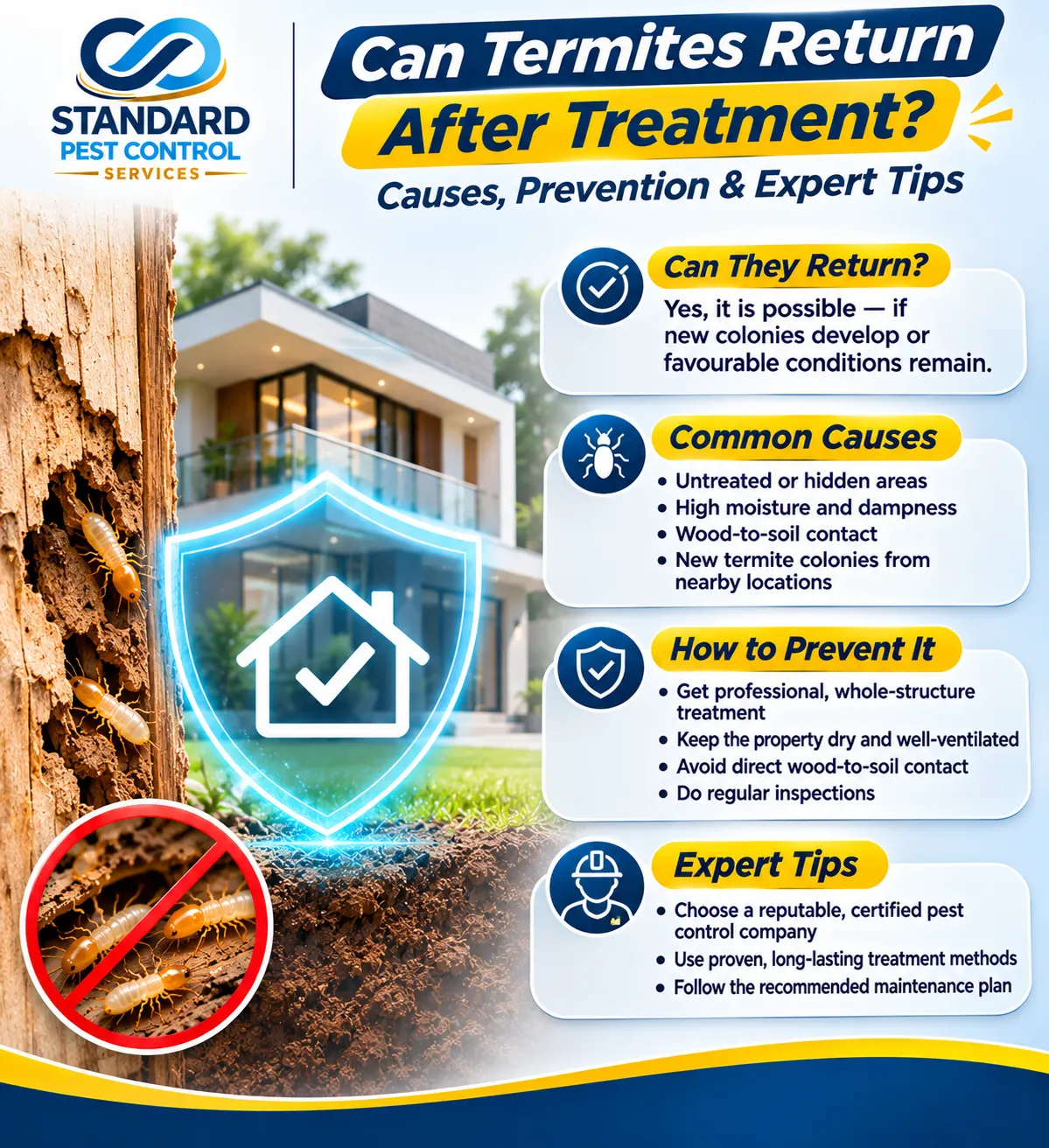
Seeing termites after treatment is frustrating, especially when you’ve just spent good money and expected peace of mind. The truth is, termites can return after any treatment if a few key things go wrong, but the good news is you can usually prevent a second attack once you know what to watch for.
This guide breaks down why termite recurrence happens, how to tell what’s normal after a recent job versus a real problem, and the practical fixes that actually work in Indian homes, from ground-floor flats in Bangalore to independent houses in smaller cities.
Can Termites Return After Treatment?
Termites can return after treatment, but they shouldn’t if the right method was used for your building type, the product was applied correctly, and you follow a few simple habits at home. Most failures come down to missed entry points, weak barriers, or moisture problems that never got solved.
You’ll often see some activity for a short period after a good termite treatment, especially with bait systems or slow-acting chemicals. That doesn’t always mean the treatment has failed, so it helps to understand what “normal” looks like in the weeks after the job.
Signs Of Normal Activity Vs A Fresh Infestation
Right after a termite treatment, it’s common to see more winged insects near windows, fresh mud tubes drying out, or a few disturbed tunnels. These can be signs that the colony is stressed and moving through treated soil, which is part of how many termite control products work.
What you don’t want to see is fresh, wet mud tubes being built after three to four weeks, new hollow sounds in previously solid wood, or brand‑new damage appearing in skirting boards or door frames. These are warning signs that a new termite infestation is starting or that the main colony survived — see the 10 warning signs your home needs immediate termite treatment.
Termites back after a recent treatment? Book an inspection and find out whether it’s normal activity or a gap in the barrier.
Book Free Inspection Call NowMain Reasons Termites Come Back After Treatment
Most repeat attacks trace back to a handful of causes. Once you understand these, it’s much easier to stop termites from finding their way back into your home.
Poor Or Incomplete Anti Termite Treatment
If the original job cut corners, there’s a high chance of seeing termites again. Common issues include drilling too few holes, skipping hard‑to‑reach areas, or using very low chemical doses during anti termite treatment to keep the price low. The result is a patchy barrier with “gaps” that termites easily find. Our guide to how drill and inject termite treatment works shows what full coverage looks like.
This happens a lot in older buildings, where plumbers and electricians have already broken the flooring in several places and those areas never get proper chemical coverage.
Moisture Problems Around The Building
Termites love moisture, and they’ll travel long distances through soil to reach a damp foundation wall or bathroom leak. If your building has poor drainage, standing water, or a long‑term plumbing issue, you can expect termite recurrence even after strong chemical treatment.
Homes with untreated exterior cracks, damaged chajjas, or leaking AC outlets often create just enough dampness for termites to set up fresh tubes and explore for new entry points.
Leftover Food Sources Inside The Home
Cardboard boxes on the floor, stacks of old newspapers, and timber scraps left under furniture are perfect food for termites. If these were not removed before or during termite proofing, they can act as stepping stones, encouraging colonies to explore further into your rooms and walls.
In many apartments, the worst spots are loft storage areas and built‑in wooden wardrobes, where soft packing material sits untouched for years.
Re‑Infestation From Nearby Properties
In dense Indian neighbourhoods, your home rarely exists in isolation. If nearby houses or the building basement are heavily infested and untreated, termites can travel through shared soil or structural gaps and attack again, even after a careful termite inspection and treatment at your flat.
This is especially common in older housing societies where common areas, lift pits, or garden beds are never treated as part of the building pest control contract.
How Long Should A Good Termite Treatment Last?
For drilling and chemical barrier work on concrete floors, a properly done job should protect you for several years, provided there are no major structural changes. Spot treatments on just one wall or one cupboard rarely hold up, so don’t expect serious termite prevention from a quick spray alone. See how long post-construction termite treatment lasts.
Bait systems and pre‑construction treatments work differently and rely on regular checks. In those cases, protection lasts as long as the service visits continue and the stations or barriers are maintained correctly.
What A Realistic Termite Warranty Covers
Most professional companies offer a termite warranty for one to five years, depending on the method used and the risk level of the structure. This usually covers free re‑treatment of active areas, but not new damage to furniture or renovation work where tiles, plumbing, or flooring have been altered later.
Before signing anything, ask exactly what inspections are included during the warranty period and how quickly the team will respond if you report termite re‑appearance in a treated zone.
Why Regular Termite Inspection Matters
Even under warranty, skipping follow‑up visits is a common mistake. A simple annual termite inspection of walls, furniture, and the building’s exterior can catch a small mud tube before it spreads through an entire room.
For ground‑floor flats and independent houses with gardens, twice‑yearly checks around foundations, bathroom walls, and wooden door frames are usually enough to avoid surprise infestations.
Want follow-ups written into your plan? Standard Pest Control backs termite work with clear service schedules and warranty terms.
Book Free Inspection WhatsApp UsPractical Steps To Reduce Termite Comebacks
You can’t control every factor, but a few habits make a huge difference to how often you see termites after treatment. Most of these are low‑cost and take an afternoon to set up, then only occasional checks later.
Think of these as supporting work that protects the money you’ve already spent on professional termite treatment and keeps new colonies from finding an easy way in.
Fix Moisture And Structural Issues First
Before calling for another round of termite treatment, get obvious leaks and dampness under control. Repair dripping taps, choked bathroom drains, and seepage in exterior walls, especially wherever you’ve seen earlier termite infestation inside.
Once the area is dry, patch open cracks in skirting, broken tiles, and gaps around pipe entries. These small repairs stop termites using the same routes they used the first time.
Improve Housekeeping Around Wooden Areas
Don’t store cardboard, fabric, or paper directly on the floor near wooden furniture. Keep at least a small air gap under cupboards and beds to make future white ant treatment easier and more effective if it’s needed again.
Use plastic or metal racks in storerooms, and rotate stored items every few months so you can spot early signs like mud specks, hollow sounds, or stuck cupboard shutters.
Plan Preventive Checks And Maintenance
Set a reminder on your phone every six months to quickly walk through the house and tap vulnerable areas like door frames, window sills, and skirting boards. This sort of routine termite prevention catches problems while they’re still small and cheaper to handle.
If your society has a garden, ask the maintenance team about regular soil treatment around common areas so colonies don’t build up right next to your foundation.
When To Call A Professional Again
Handle small issues yourself, but call a licensed pest control company if you see active mud tubes, live insects inside wood, or multiple rooms showing signs at once. DIY sprays only kill surface workers and can drive termites deeper without solving the colony problem.
During the site visit, ask the technician to explain the plan in plain language, including which walls need drilling, how deep they’ll go, and what materials they’re using for termite control so you know exactly what you’re paying for.
Questions To Ask Before Your Next Treatment
- Which areas will you treat and why those first?
- What type of product will you use and how does it work?
- How long will the treatment take and how long should it last?
- What does your termite warranty include and exclude in writing?
- How often will you come for follow‑up checks and termite inspection?
Good providers answer these without rushing you, show you the affected areas, and explain any limits honestly, especially if construction quality or access makes some spots difficult to treat. For more, see our 10 questions to ask a termite treatment company.
Frequently Asked Questions
Can termites come back after treatment?
Yes, but they shouldn’t if the right method was used for your building, the product was applied correctly and you keep up a few simple habits. Most failures come from missed entry points, weak barriers or unsolved moisture problems.
Is it normal to see termites right after treatment?
Some activity for a short period is common, especially with bait systems or slow-acting chemicals: more winged insects, old mud tubes drying out or disturbed tunnels. Fresh, wet mud tubes after three to four weeks or new damage are warning signs.
Why do termites return after treatment?
The main causes are a poor or incomplete original treatment, moisture problems around the building, leftover food sources such as cardboard and timber scraps, and re-infestation from untreated neighbouring properties or common areas.
What does a termite warranty usually cover?
Most warranties run one to five years depending on the method and risk level. They usually cover free re-treatment of active areas, but not new damage to furniture or areas where tiles, plumbing or flooring were altered later.
How often should I get a termite inspection after treatment?
At least once a year, even under warranty. Ground-floor flats and independent houses with gardens benefit from twice-yearly checks around foundations, bathroom walls and wooden door frames.
How can I stop termites coming back?
Fix leaks and dampness, patch cracks around skirting and pipe entries, keep cardboard and paper off the floor, leave an air gap under cupboards and beds, and walk through the house every six months tapping door frames, sills and skirting.
Conclusion
Termites after treatment don’t always mean a failure, but they’re a clear signal to look closely at moisture, gaps in the barrier, and habits inside the home. Once those are fixed, repeat problems become far less common and easier to control.
If you’re still seeing signs and aren’t sure what’s normal, get a detailed inspection, ask direct questions about the treatment plan, and choose a company like Standard Pest Control that backs their work with clear service schedules and a solid termite warranty so you can stop worrying about hidden damage and focus on living in your home comfortably.
Related reading: How Long Does Post-Construction Termite Treatment Last? Expert Guide | 10 Warning Signs Your Home Needs Immediate Termite Treatment | Drill and Inject Method Explained: How Post-Construction Termite Treatment Works | 10 Questions to Ask Before Hiring a Professional Termite Treatment Company | Complete Guide to Post-Construction Termite Treatment: Everything Homeowners Need to Know | Common Myths About Termite Control