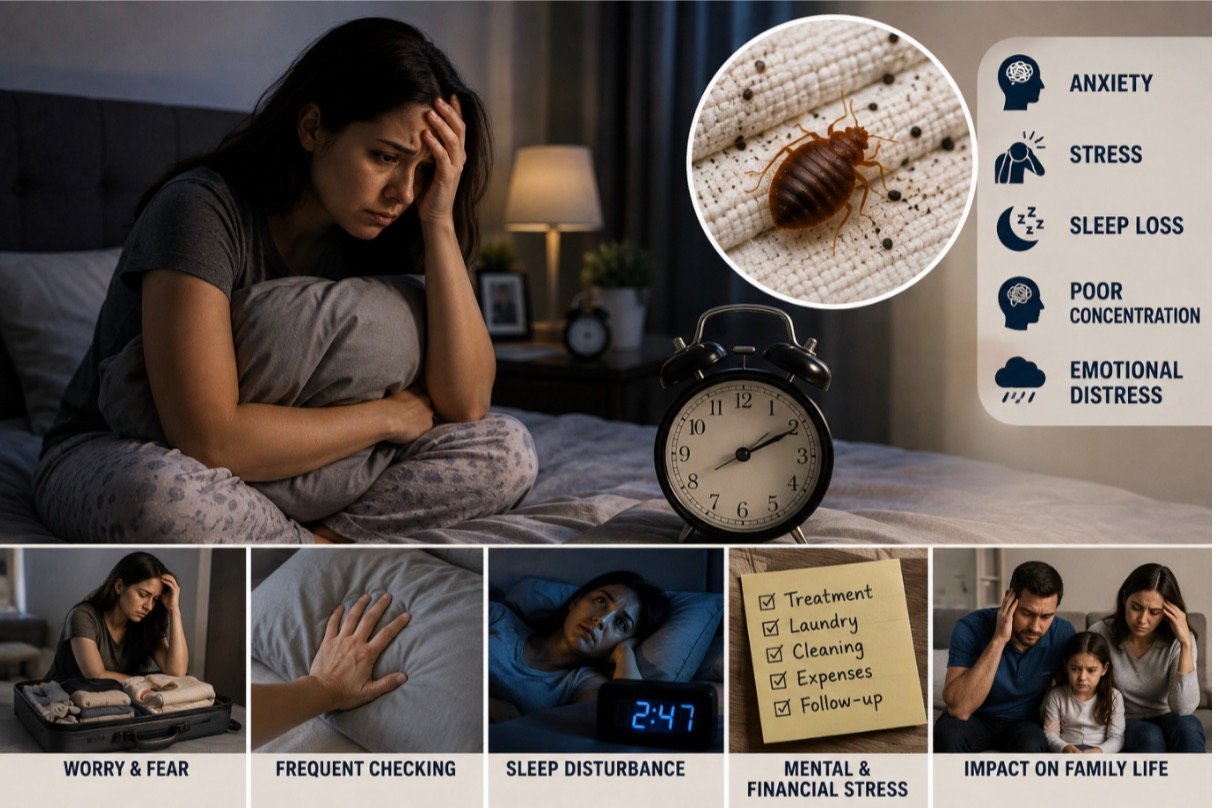
Bed bugs are usually discussed as a pest-control problem, but an infestation can also affect a person's sleep, comfort and emotional well-being.
Knowing that insects may come out while you are sleeping can make it difficult to relax at bedtime. Some people begin repeatedly checking mattresses, waking during the night, worrying about bites, or feeling embarrassed about having visitors. When an infestation continues, these concerns can contribute to stress, anxiety and loss of sleep.
These reactions are understandable, but they can vary greatly from person to person. Bed bugs do not mean a home is dirty, and an infestation can occur in clean homes, hotels, apartments and other buildings.
The most useful response is to replace uncertainty with a clear plan: Confirm the infestation → Identify where bed bugs are hiding → Treat appropriately → Monitor → Follow up
For professional bed bug inspection and treatment in Bangalore, visit Standard Pest Control or the Bed Bug Control Bangalore service page.
Why Can Bed Bugs Affect Mental Well-Being?
Bed bugs are different from many household pests because they are strongly associated with the place where people expect to feel safest — their bed. The thought of insects feeding while you sleep can create a feeling that the bedroom is no longer comfortable or secure.
People dealing with an infestation may experience:
- Worry at bedtime
- Difficulty falling asleep
- Frequent waking
- Repeated checking of the mattress
- Fear of being bitten
- Concern about spreading bed bugs
- Embarrassment
- Frustration with repeated treatments
- Reduced concentration after poor sleep
Not everyone experiences these effects, and their severity can differ considerably.
Bed Bugs and Anxiety
One of the most common emotional responses to a suspected infestation is persistent worry. A person may begin thinking: "Are they still here?" "Will I get bitten tonight?" "Have they spread to another room?" "Did I carry them to work or a relative's house?" "Did the treatment really work?"
The uncertainty can sometimes become almost as distressing as the insects themselves. This is why accurate identification and professional inspection can be valuable. Knowing what is actually happening makes it easier to develop an appropriate plan.
The Bedtime Anxiety Cycle
Bed bug infestations can create a frustrating cycle: Fear of Bed Bugs → Difficulty Sleeping → Fatigue → More Stress → Greater Bedtime Anxiety
Once someone begins associating their bed with insects, they may remain alert instead of relaxing. Even after treatment, it can take time for normal sleep confidence to return.
How Bed Bugs Can Cause Sleep Loss
Bed bugs are generally active when people are resting. Once a person knows this, normal sensations at night can become difficult to ignore.
Someone may wake because of:
- Itching
- Fear of being bitten
- Normal movement of bedding
- A sensation on the skin
- The urge to check the mattress
Repeated interruption can reduce sleep quality. Over time, poor sleep may affect daytime energy, concentration and mood.
Checking the Bed Repeatedly
Inspection is an important part of bed bug management. But there is a difference between planned monitoring and repeatedly dismantling the bed throughout the night.
A useful approach is to create a monitoring schedule with your pest-control provider. For example: Inspect at planned intervals → Record evidence → Follow treatment plan, rather than: Check repeatedly → Find nothing → Worry → Check again
A structured plan provides more useful information.
Do Bed Bugs Cause Stress?
Yes, infestations can be stressful. Stress may come from several sources:
- Persistent bites
- Treatment costs
- Preparing rooms for treatment
- Laundering belongings
- Concern about visitors
- Fear of spreading the infestation
- Uncertainty about treatment success
For families, managing children, pets, clothing and sleeping arrangements during treatment can add further pressure.
The Embarrassment Surrounding Bed Bugs
Some people hesitate to tell anyone about an infestation because they believe others will think their home is dirty. This stigma is based on a misconception. Bed bugs are not a sign of poor personal hygiene.
They can be transported through:
- Luggage
- Used furniture
- Bags
- Clothing and belongings
- Movement between infested environments
A very clean home can still develop a bed bug infestation.
Bed Bugs and Social Isolation
Fear of spreading bed bugs may cause some people to avoid:
- Inviting friends home
- Visiting relatives
- Staying overnight elsewhere
- Social activities
Some caution during an active infestation can be appropriate, but excessive isolation can add to emotional strain. Instead, obtain practical advice about preventing the movement of bed bugs and belongings.
Fear of Spreading Bed Bugs
A common concern is: "What if I carry bed bugs to somebody else's house?" Bed bugs can hitchhike on belongings, so reasonable precautions matter. However, this does not mean every item leaving an affected home automatically contains bed bugs.
Professional advice can help you understand how to manage clothing, bags, bedding and luggage without unnecessary panic.
Not sure what's causing the problem? Get a professional inspection before you decide on treatment.
Book Free Inspection Call NowUsed Furniture Can Increase Worry
People who have experienced an infestation may become extremely cautious about second-hand furniture. Some caution is sensible.
Used mattresses, sofas, upholstered chairs, headboards and bed frames should be inspected before being brought inside. But inspection and risk assessment are more useful than assuming every used item contains bed bugs.
Bed Bug Bites and Psychological Stress
Visible bite marks can add another layer of concern. People may worry about:
- Appearance
- Itching
- Infection
- Whether new bites mean treatment failure
Bed bug bites can cause skin irritation, but bites alone should not be used to diagnose an infestation. See Are Bed Bug Bites Dangerous? Understanding Health Concerns for more on this.
Why Bites Can Increase Anxiety After Treatment
Suppose treatment was completed several days ago and someone notices another red mark. They may immediately think: "The bed bugs are back." But skin reactions can sometimes be delayed, and many conditions can resemble insect bites.
Treatment success should be evaluated through physical evidence and monitoring, not skin marks alone.
Why People May Still Feel Bed Bugs After They're Gone
After living with an infestation, some people remain highly alert to sensations on their skin. Normal sensations from clothing, bedding, hair or dry skin may suddenly feel suspicious. This does not necessarily mean bed bugs are still present.
Instead of relying only on sensations, look for objective evidence.
Physical Evidence Reduces Uncertainty
Monitor for:
- Live bed bugs
- Eggs
- Nymphs
- Shed skins
- New characteristic spotting
Inspect mattress seams, bed frames, headboards and bedside furniture.
Understanding Where Bed Bugs Hide Can Reduce Guesswork
Bed bugs do not normally hide randomly throughout every part of the house. They often concentrate around places where people regularly sleep or rest, particularly during earlier infestations.
Common harbourages include: Mattress Seams → Bed Frames → Headboards → Furniture Joints → Sofas
Understanding their behaviour can make monitoring more targeted.
Treatment Uncertainty Can Cause Stress
One of the most frustrating parts of bed bug control is not knowing how quickly treatment should work. A professional treatment may take a few hours, while complete control can take longer. Some programmes require follow-up.
Knowing this in advance can prevent unnecessary worry when a bed bug is occasionally seen shortly after the initial treatment.
Don't Expect an Instant Result From Every Treatment
A realistic bed bug programme may involve: Day 1: Inspection and Treatment ↓ Following Days: Monitoring ↓ Follow-Up: Reinspection and Additional Treatment if Needed ↓ Continued Monitoring ↓ Confirmation of Control
Knowing the plan beforehand helps replace uncertainty with measurable steps.
How Professional Treatment Can Reduce Stress
A professional pest-control programme can provide something DIY experimentation often cannot: structure.
The homeowner should know:
- What pest has been identified
- Which rooms are affected
- How severe the infestation is
- Which treatment will be used
- What preparation is required
- When follow-up will happen
- What signs to monitor
A clear process makes the problem more manageable.
DIY Treatment Can Sometimes Increase Stress
A homeowner may try: Spray → Wait → See another bug → Buy another spray → Wait → Try another remedy. This can continue for weeks, and meanwhile, uncertainty grows.
If DIY control is not producing measurable improvement, professional assessment may be more practical.
Ready to get this sorted? Ask us about a structured, documented treatment plan.
Book Free Inspection WhatsApp UsBug Bombs Can Add to the Problem
Foggers can appear attractive because they promise a quick solution. But bed bugs often remain protected inside cracks and furniture harbourages. Repeated unsuccessful treatments can increase frustration while delaying a more targeted approach.
Preparing Properly Can Give You More Control
Preparation can initially feel overwhelming. There may be clothes, bedding, furniture, children's belongings and pets to consider. But preparation becomes easier when broken into steps.
Don't try to empty the entire home unnecessarily. Follow the specific instructions given by your pest-control provider.
Don't Move to Another Bedroom Without a Plan
When people become frightened of sleeping in an affected room, they may immediately move to another bedroom. This can involve carrying pillows, blankets, clothes and bags into a previously unaffected room.
Instead, ask your pest-control provider how sleeping arrangements should be managed during treatment.
Don't Throw Everything Away
Another stress response is to begin discarding mattresses, beds, sofas and clothing immediately. This can become expensive and may not solve the problem. Bed bugs can hide beyond the mattress.
Get professional advice before discarding major furniture.
Create a Simple Bed Bug Action Plan
When an infestation feels overwhelming, simplify the problem into clear steps.
Step 1 — Confirm
Make sure the pest is actually a bed bug.
Step 2 — Inspect
Identify affected rooms and harbourages.
Step 3 — Contain
Avoid moving potentially infested belongings unnecessarily.
Step 4 — Prepare
Follow treatment-specific preparation instructions.
Step 5 — Treat
Use an appropriate professional or evidence-based treatment programme.
Step 6 — Monitor
Check at planned intervals.
Step 7 — Follow Up
Complete recommended follow-up services.
This converts "I have bed bugs everywhere!" into "I have a defined problem and a treatment plan."
Keep a Bed Bug Monitoring Record
Instead of relying on memory, keep a simple record of the date, room, evidence found and action taken for each inspection.
| Date | Room | Evidence Found | Action |
|---|---|---|---|
| Day 1 | Bedroom | Live bed bug | Treatment completed |
| Day 4 | Bedroom | One suspected nymph | Recorded for follow-up |
| Day 8 | Bedroom | No confirmed activity | Continue monitoring |
| Follow-up | Bedroom | Technician inspection | Follow plan |
This can help you and the technician see whether activity is decreasing.
Avoid Constant Internet Searching
Online information can be useful, but repeatedly reading alarming stories about severe infestations can increase worry. Focus on information relevant to your actual infestation.
Ask: What evidence do we have? Which rooms are affected? What treatment was performed? When is the follow-up? Is confirmed activity decreasing?
These questions are more useful than imagining worst-case scenarios.
When Should You Seek Additional Support?
For many people, anxiety improves as the infestation comes under control. However, consider speaking with a qualified healthcare professional if stress or sleep problems are persistent, severe, or significantly interfering with daily life, particularly if they continue even after the pest problem has been resolved.
Pest-control professionals can eliminate pests. Healthcare professionals are the appropriate people to evaluate ongoing mental-health or sleep concerns.
Helping Children During a Bed Bug Infestation
Children may become frightened if adults repeatedly discuss insects in their beds. Keep explanations simple and calm. You might explain that: "We found some insects, and professionals are treating them."
Avoid creating the impression that sleeping itself is dangerous. Follow your pest-control provider's instructions about treatment areas, children's belongings and re-entry.
Bed Bugs in Hotels and Guest Accommodation
Bed bugs can create additional stress for hotel operators because of concerns about guest complaints, online reviews, room availability, reputation and possible spread.
A structured hotel programme should focus on: Staff Training → Early Detection → Inspection → Treatment → Monitoring → Documentation
Prompt professional action is more useful than hiding or ignoring suspected activity.
Frequently Asked Questions
Can bed bugs cause anxiety?
Yes. Some people experience significant worry about bites, infestation spread and whether treatment has worked.
Can bed bugs cause sleep problems?
Yes. Fear of being bitten, itching and repeated checking can interfere with sleep.
Can bed bugs cause depression?
A prolonged infestation can be emotionally distressing, but depression is a medical condition with many possible causes. Persistent mood symptoms should be discussed with a qualified healthcare professional.
Why do I keep feeling bugs crawling after treatment?
Heightened awareness can make normal skin sensations more noticeable. Check for objective evidence rather than assuming every sensation indicates bed bugs.
Can bed bugs live on your body?
Bed bugs generally feed and then return to nearby harbourages. They are not typically permanent parasites living on the human body.
Does having bed bugs mean my house is dirty?
No. Bed bugs can infest clean and well-maintained properties.
Should I stop sleeping in my bedroom?
Don't automatically move sleeping areas and belongings. Ask your pest-control professional for guidance based on the treatment plan.
How can I tell whether treatment is working?
Monitor for confirmed physical evidence and look for a decreasing pattern of activity. Complete recommended follow-up inspections. For a realistic sense of timing, see DIY vs. Professional: Why Most Bangalore Homeowners Fail to Kill Bed Bugs?
How long does bed bug anxiety last?
There is no fixed timeline. For many people, worry reduces once treatment is completed and monitoring shows no continuing activity.
When should I seek professional help for stress?
If anxiety or sleep disruption is severe, persistent or significantly affecting daily functioning, consider discussing it with a qualified healthcare professional.
Final Thoughts
One way to reduce uncertainty is to establish whether bed bugs are actually present and develop a clear treatment programme. Standard Pest Control provides professional bed bug inspection and treatment services in Bangalore. For dedicated information, visit the Bed Bug Control Bangalore service page.
A professional bed bug programme should provide clear guidance on: Inspection → Preparation → Treatment → Re-entry → Monitoring → Follow-Up
The impact of bed bugs is not limited to itchy bites. An infestation can disrupt the place where people are supposed to relax and sleep, contributing to stress, worry, embarrassment and sleep loss. But uncertainty often makes the situation harder.
Replace uncertainty with a structured plan: Confirm → Inspect → Treat → Monitor → Follow Up
Avoid repeatedly changing sleeping rooms, throwing away furniture unnecessarily, or trying one unproven treatment after another. And remember: bed bugs are a pest problem — not a measure of how clean your home is.
Once the infestation has been professionally addressed, continued monitoring can provide objective evidence that the problem is under control and help restore confidence in the bedroom.
Related reading: Are Bed Bug Bites Dangerous? Understanding Health Concerns | DIY vs. Professional: Why Most Bangalore Homeowners Fail to Kill Bed Bugs? | Bed Bug Treatment Bangalore: Spot & Stop Infestations Fast | Bed Bug Treatment Bangalore: Can They Travel Through Walls? | Will You Have to Discard Your Expensive Furniture Due to Bed Bugs? Here's the Truth