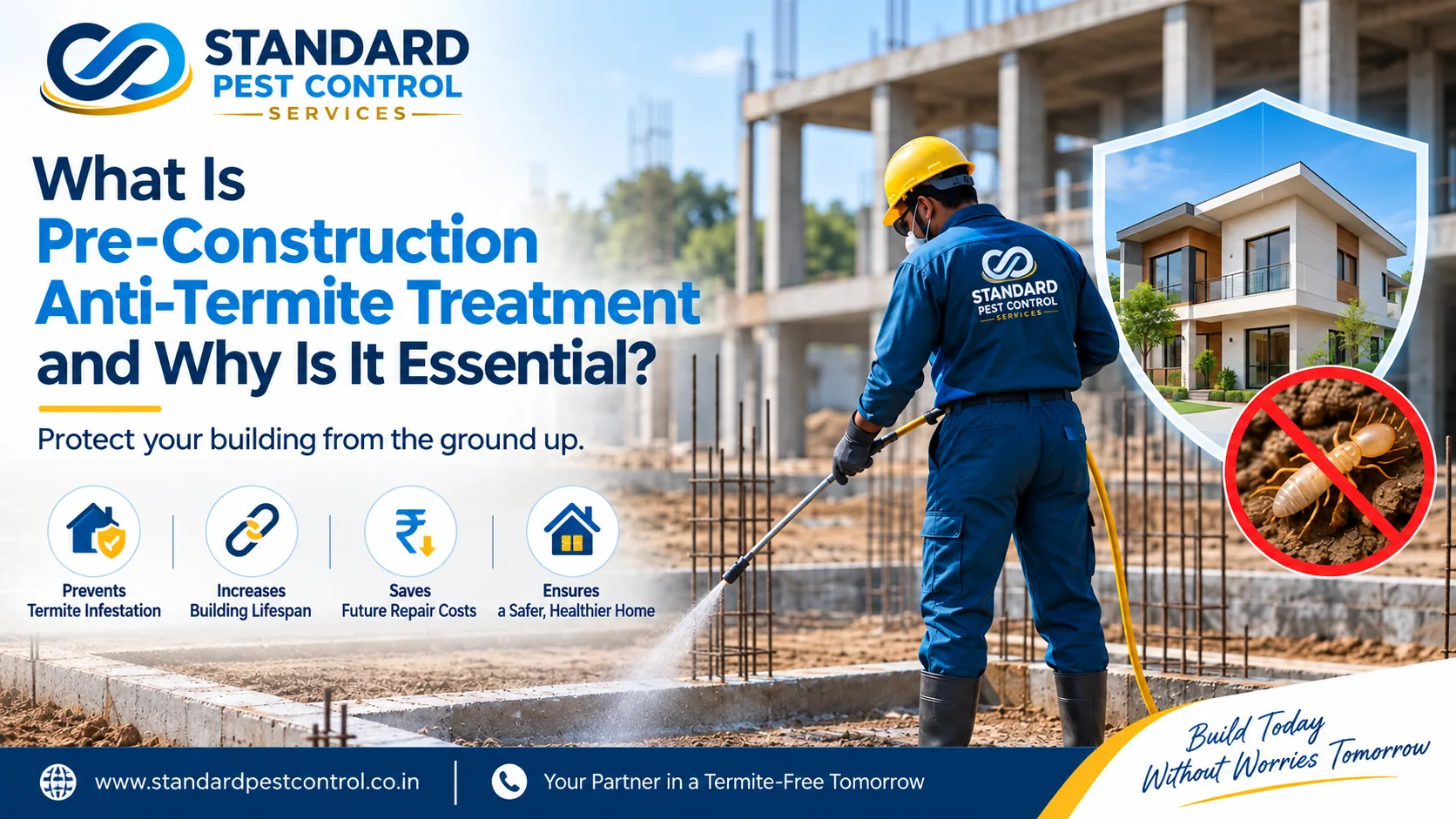
If you are planning a new home or commercial building, pre construction anti termite treatment is one of those line items that looks optional until you see what termites can do to a finished structure. Repairing hidden termite damage later can easily cost ten times more than doing it right before the first brick is laid.
Most owners and even many contractors only think about termites once furniture starts swelling or door frames sound hollow. By that time the colony has already spread through the structure. The only practical way to keep that from happening is to create a treated soil barrier at the right stage of construction, following IS 6313 rather than guesswork on site, the same standard behind any reliable professional termite control in Bangalore.
What Exactly Is Pre-Construction Termite Treatment?
Pre construction termite treatment is a systematic process of treating the soil and key concrete contact points before and during early stages of building. The idea is simple: every place where termites could enter from the ground must pass through chemically treated soil first.
In practice, that means drilling or rodding the soil, applying the right volume of termiticide per square metre, then allowing it to soak in before concrete is poured. Done correctly, this early-stage anti termite treatment can protect the building for many years with minimal disturbance to later finishes.
Why Pre-Construction Anti-Termite Treatment Is Essential
Termites in India are mostly subterranean species that live in soil and move up into buildings through tiny cracks you can barely see. Once they reach wood, paper, or even certain insulation materials, they quietly eat from the inside out.
Skipping termite prevention at the construction stage leaves the building exposed along the entire footing, plinth, and flooring system. Later, treating these same areas requires drilling through tiles, skirting, built-in cupboards, and even structural members, which adds both cost and disruption.
Not sure what's causing the problem? Get a professional inspection before you decide on treatment.
Book Free Inspection Call NowKey Steps In Soil Treatment As Per IS 6313
Indian Standard IS 6313 (Part 2) sets out how pre-construction soil treatment should be carried out. Many builders claim compliance, but on-site shortcuts are common, so it helps to know the basic sequence yourself.
First, the bottom and sides of foundation trenches are treated at a specific rate of termiticide solution per square metre of surface area. This soil treatment must extend to the full depth of the trench and up the sides so there are no untreated gaps where termites can squeeze through. This matters even more on Bangalore's red soil, which drains and behaves differently from other soil types.
Next, after compacting the filled earth around foundations, the backfill in contact with the structure is treated again. This creates a continuous treated zone from the base of the footing up to the finished ground level. If this secondary application is skipped, termite control around plinth walls becomes patchy and unreliable.
Where Builder Termite Treatment Often Goes Wrong
On busy sites, pest contractors are usually called in late and told to finish fast so concreting is not delayed. That is the easiest way to waste money on builder termite treatment without actually getting long-term protection.
One common issue is under-dosing the chemical to save cost. The crew might spray a fine mist over the soil instead of properly flooding it to the depth specified. Another problem is treating puddled or waterlogged soil; the pesticide gets diluted and washed off, so the barrier breaks within a season.
Pre Construction Anti Termite Treatment: Spotting Proper Work
If you are on site, there are simple checks that show if pre construction anti termite treatment is being done properly. You should see calibrated sprayers or pressure cans, not just a bucket and mug. The operator should move methodically, covering every square metre instead of only walking along the centre.
Look for records of which anti termite chemicals are being used, their concentration, and total litres applied in each area. A professional contractor keeps basic site logs, while a casual operator often cannot even name the active ingredient in the product.
Anti Termite Chemicals Commonly Used In India
Modern termiticides used for termite proofing in India fall into two broad groups: repellent and non-repellent. Repellent products drive termites away from the treated soil, while non-repellent ones are undetectable so termites pass through, pick up the active, and carry it back to the colony.
Fipronil, imidacloprid, and chlorpyrifos are typical active ingredients, each with different dosage rates and safety profiles. Whatever is chosen must be approved for construction pest control, mixed exactly to label directions, and applied only by trained technicians wearing proper protective gear.
Ready to get this sorted? Ask us about a structured, documented treatment plan.
Book Free Inspection WhatsApp UsHow Long Does Pre-Construction Treatment Last?
On a well-prepared site, a correctly applied pre construction termite treatment can give reliable protection for around 8-10 years, sometimes longer depending on soil type and drainage around the building.
Heavy landscaping changes, plumbing leaks near foundations, or repeated flooding can disturb the treated soil and shorten that period. That is why post-construction inspections and spot treatments still matter, even when the initial barrier was done well.
Planning Termite Control In Your Construction Schedule
Termite protection is easiest when it is part of the construction programme from day one. The treatment stages should be scheduled into the bar chart so that pest work, concreting, and backfilling are coordinated instead of fighting each other.
As a client, you should have a clear line item for termite control in your contract documents, including references to IS 6313 and the specific areas to be treated. That reduces arguments on site about who pays for re-treatment if rain or delays disturb treated soil.
Costs And Practical Budgeting
For most small to mid-size residential projects in India, pre-construction anti termite treatment usually works out to roughly 1-2% of the total civil cost. That is for a full barrier under foundations, plinths, and floor slabs, not just a token spray. Weighed against the cost of repairing termite damage after the fact, that upfront spend is modest.
Compared with the expense of drilling every room and refixing tile skirting in a finished home, that upfront spend is modest. On commercial sites, tenders should spell out termite proofing scope clearly so it can be compared fairly between bidders.
What To Ask Your Termite Treatment Contractor
A few direct questions can separate serious professionals from token service providers. Ask which standard they follow for termite control and request a copy of their treatment layout or method statement for your building.
Then ask for details of the termiticide brand, active ingredient, and warranty terms. A contractor who handles construction pest control regularly will answer these without hesitation and will usually walk you through key areas like lift pits and expansion joints that need extra attention.
Frequently Asked Questions
How much does pre-construction anti-termite treatment cost?
For most small to mid-size residential projects, it usually works out to roughly 1-2% of the total civil cost for a full barrier under foundations, plinths, and floor slabs, not just a token spray.
How long does pre-construction termite treatment last?
On a well-prepared site, a correctly applied treatment can give reliable protection for around 8-10 years, though heavy landscaping changes, plumbing leaks, or repeated flooding can shorten that period.
What standard governs pre-construction termite treatment in India?
Indian Standard IS 6313 (Part 2) sets out the soil treatment sequence, including the rate of termiticide solution per square metre for foundation trenches and a secondary treatment for the backfill around the structure.
What chemicals are used in pre-construction termite treatment?
Fipronil, imidacloprid, and chlorpyrifos are typical active ingredients. Termiticides fall into repellent products, which drive termites away from treated soil, and non-repellent ones, which termites carry back to the colony.
What mistakes do builders commonly make with termite treatment?
The most common issues are under-dosing the chemical to save cost, spraying a fine mist instead of properly flooding the soil to the specified depth, and treating puddled or waterlogged soil, which dilutes the pesticide and washes it off.
What should I ask a termite treatment contractor before hiring?
Ask which standard they follow, request a copy of their treatment layout or method statement, and get details of the termiticide brand, active ingredient, and warranty terms.
Conclusion
Pre construction anti termite treatment is one of the few chances you have to build long-lasting protection against termites into the very foundation of your property. When the soil is treated correctly, to the right depth and coverage, you greatly reduce the risk of hidden damage and expensive repairs later.
If you are about to start a project, insist on a clear, IS 6313-based treatment plan in your contract and choose an experienced operator such as Standard Pest Control to carry it out. A few hours of well-planned work before concreting can save you years of structural headaches, so speak to a qualified termite specialist before excavation begins.
Related reading: The Unseen Shield: Pre Construction Anti Termite Treatment | Fortifying Your Foundation: Methods and Chemicals in Pre Construction Anti Termite Treatment | Building a Termite-Proof Future: Pre Construction Treatment Stages | Why Do Termites Love Bangalore's Red Soil So Much? | Can a ₹15,000 Treatment Save You ₹5 Lakhs in Furniture Repairs?