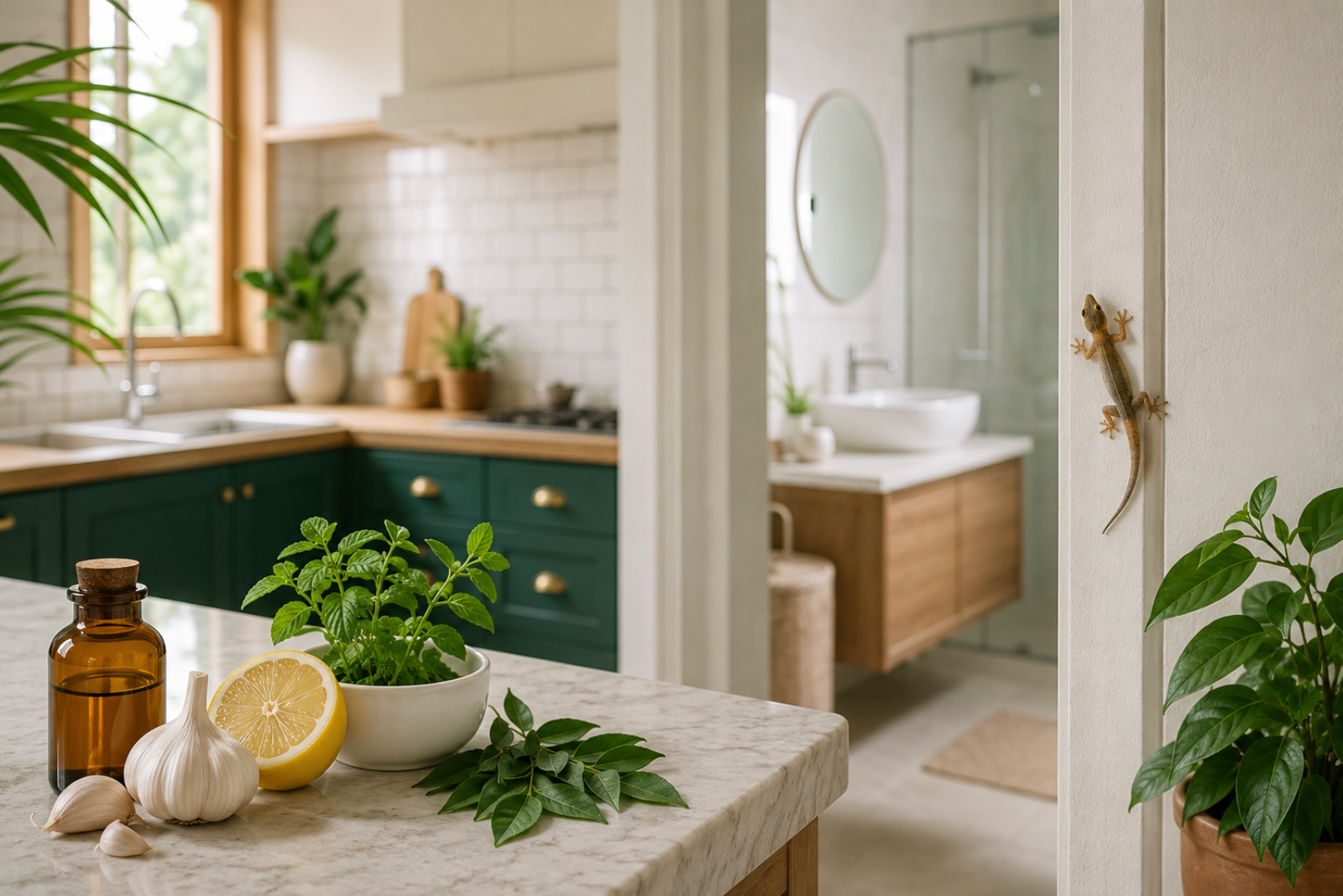
If you’re googling how to keep lizards away, chances are you’ve just spotted one on your kitchen wall or above the bathroom door and now you can’t relax. Lizards may eat insects, but no one wants them near food, toothbrushes, or kids.
The good news is you don’t need harsh chemicals or constant panic with a broom in hand. With a few natural tricks and small habit changes, you can make your kitchen and bathroom far less attractive to wall lizards and send them looking for a more welcoming place.
Why Lizards Love Kitchens And Bathrooms
Lizards don’t come into your home to scare you. They come for food, water, and hiding spots, which is why kitchen lizard control starts with removing those three things. If you handle that, half your problem is already solved. Understanding why lizards enter homes in the first place makes every other step in this guide easier to apply.
In Indian homes, tube lights, ceiling corners, and open windows create a perfect hunting ground for geckos. They wait near light sources, eat the moths and mosquitoes that gather, then rest in cracks behind cupboards or wall tiles.
Seal The Entry Points First
You can light all the incense and keep all the eggshells you want, but if your house is full of openings, any bathroom lizard control trick will only work for a few days. Physical blocking is the most reliable long-term fix.
Check for gaps around exhaust fans, broken windowpanes, torn mesh, and spaces under doors. Even a gap the width of a pencil is enough for a small gecko to squeeze through. Use door sweeps, silicone sealant, and proper window screens to limit access.
Natural Smells That Lizards Dislike
Strong smells confuse a lizard’s sense of direction and make an area uncomfortable for them. That’s where a simple natural lizard repellent routine can help you nudge them out without harming them.
You don’t need exotic oils. Ingredients already present in most Indian kitchens usually work well when used consistently for a couple of weeks, and they fit well alongside the safe, child- and pet-friendly lizard control habits worth building into any home.
Not sure what's causing the problem? Get a professional inspection before you decide on treatment.
Book Free Inspection Call NowHow To Keep Lizards Away With Common Ingredients
Many Indian families quietly use home remedies for house lizard removal and pass them down like secret recipes. Some work better than others, but a combination often gives the best results.
- Crushed garlic cloves placed near windowsills and exhaust fans.
- Onion slices in small plates near corners where you often spot lizards.
- Dry red chilli mixed with water and sprayed on exterior walls, not on the lizard.
- Pepper or clove oil drops on cotton balls in cupboard corners.
Always keep sprays and strong smells away from children, pets, and exposed food. The idea is to make zones uncomfortable for reptiles, not to turn your kitchen into a gas chamber.
Light, Moisture, And Insect Control
If your tube light turns your balcony into a moth festival every night, you’re sending an open invitation to geckos. Effective gecko control often begins with limiting the insect buffet that keeps them coming back.
Switch to warmer LED bulbs that attract fewer insects near doors and windows. Fix leaking taps and pipes, especially under the kitchen sink and near bathroom drains. Damp corners plus light plus flying insects is exactly what lizards are searching for.
Simple Night Routine To Cut Lizards By Half
If you can spare five minutes at night, you can build a predictable lizard prevention habit that actually works. It doesn’t require any special products.
- Shut kitchen and bathroom windows by sunset or use mesh.
- Wipe food spills, especially sugar, jaggery, and oil near the stove.
- Empty open buckets of water in bathrooms or cover them.
- Turn off unnecessary outdoor lights that attract insects.
Do this daily for a month and you’ll notice lizards gradually shifting to other parts of the house where food and light are still easy to find.
Keep Surfaces Clean And Clutter Low
Lizards are shy. They love places where they can sit undisturbed for hours. That’s why good home pest control always comes back to how much clutter and dust you allow to build up in corners.
Move heavy gas stoves, fridges, and storage bins once a week if possible. Wipe the tiles behind them. Pull out items from under the sink and clean that area too. A torch and a long-handled mop are your best friends here.
Ready to get this sorted? Ask us about a structured, documented treatment plan.
Book Free Inspection WhatsApp UsKitchen Habits That Quietly Invite Lizards
We don’t usually connect daily kitchen routines to reptile control, but they’re linked. Lizards come for insects, and insects come for crumbs, spills, and uncovered food — which is exactly why cockroaches and other insects attract lizards into homes that seem otherwise clean.
- Keep fruit in covered baskets instead of open plates overnight.
- Store grains and flour in sealed containers, not torn packets.
- Clear the sink before bed; leftover food attracts ants and roaches.
- Take out the garbage each night, not once in two or three days.
These steps cut cockroaches and ants, which quietly reduces the lizards that feed on them.
Gentle Ways To Remove Lizards Already Inside
Sometimes you walk into the bathroom and there’s a gecko staring back from the wall. At that point, DIY lizard control means helping it leave without hurting it or smashing half your tiles in fear.
The simplest trick is the container method: place a transparent plastic box or steel dabba over the lizard, slowly slide a stiff cardboard sheet underneath, then carry it out and release it in a garden or open area away from the house.
Safe Traps And What To Avoid
Many people are tempted by sticky boards or harsh sprays, but responsible reptile control avoids causing unnecessary suffering. Most glue traps leave lizards stuck, stressed, and often dying slowly.
If you must use a trap, choose simple cardboard tunnels with food bait where the lizard can be released later. Check them frequently. Avoid chemical sprays and powders marketed for lizards, especially in kitchens and bathrooms where water and food are present.
When To Call A Professional
If you’re seeing several wall lizards every single day, or spotting droppings on shelves and near toothbrushes, home remedies may not be enough. In such cases, structured home pest control from a local expert can save you a lot of stress — our comparison of professional lizard control vs. home remedies explains when it's genuinely worth the call.
Professionals look at the whole picture: drainage lines, outdoor vegetation, cracks in external walls, and insect breeding spots around your building. They can suggest non-toxic options, safer repellents, and sealing work that actually holds up through one monsoon to the next.
Frequently Asked Questions
How can I keep lizards out of my kitchen naturally?
Remove their food, water, and hiding spots, seal entry points around exhaust fans and windows, and use strong natural smells like crushed garlic, onion slices, dry red chilli spray, or pepper and clove oil to make the area uncomfortable for them.
What natural ingredients repel lizards?
Crushed garlic near windowsills and exhaust fans, onion slices in corners where lizards are often spotted, dry red chilli mixed with water and sprayed on exterior walls, and pepper or clove oil drops on cotton balls in cupboard corners.
How do I stop lizards from entering my bathroom?
Seal gaps around exhaust fans, broken windowpanes, torn mesh, and spaces under doors. Even a gap the width of a pencil is enough for a small gecko to squeeze through, so door sweeps, silicone sealant, and proper window screens make the biggest difference.
Does keeping the kitchen clean really reduce lizards?
Yes. Lizards feed on the insects drawn to crumbs, spills, and uncovered food, so covering fruit, storing grains in sealed containers, clearing the sink before bed, and taking out the garbage nightly cuts the insect supply that attracts lizards in the first place.
How do I safely remove a lizard that's already inside?
Use the container method: place a transparent plastic box or steel dabba over the lizard, slide a stiff cardboard sheet underneath, then carry it outside and release it in a garden or open area away from the house.
When should I call a professional for lizard control?
If you're seeing several wall lizards every day, or spotting droppings on shelves and near toothbrushes, home remedies may not be enough. A professional can inspect drainage lines, external cracks, and insect breeding spots for a longer-term fix.
Conclusion
Keeping lizards out of kitchens and bathrooms isn’t about one magic spray. It’s about understanding how to keep lizards away by cutting off their food, water, hiding places, and easy entry points in a steady, practical way.
If your efforts still aren’t enough and lizards keep returning, consider calling a local expert like Standard Pest Control to inspect your home and guide you on safer, long-term fixes.
Related reading: Why Lizards Enter Your Home and 12 Proven Ways to Keep Them Away | Safe Lizard Control for Homes with Children, Pets & Elderly Family Members | Complete Guide to Lizard Control in Bangalore: Safe & Effective Solutions for Every Home | Professional Lizard Control vs Home Remedies: Which Solution Works Best? | Why Cockroaches and Other Insects Attract Lizards into Your Home | 10 Common Myths About Lizards You Should Stop Believing | Are Lizards Dangerous? Health Risks, Diseases & Prevention Tips